
ADELAIDE PARK LANDS ASSOCIATION
Newsletter No. 124 — 10 June 2026
If this email is not displaying properly (e.g. if it is truncated or there are no pictures) then click here to view this email in your web browser.
“I think we have just demonstrated that support for the Adelaide Park Lands runs deep and wide through the South Australian community.” — Tim Jackson, Vice President, Adelaide Park Lands Association at the Stop the Chop Yellow Ribbon Alliance Rally on Saturday June 6
1. Yellow Ribbon Coalition forms to Stop the Chop
2. What is the Plan? And what can I do?
3. The Full Monti
4.Know Your Park Lands: Banyans, Bunyas and Moreton Bay Figs
5. Accidental Icon – by Mij Tanith
6. Park Lands Poetry: A Piece of Work – Mij Tanith
7. Resident Thinkers: Hope In the Time Of Malinauskas – Stewart Sweeney
8. Shane Sody – A True Park Lands Champion
9. Yes We Still Do Guided Walks
10. Thank you to all our Volunteers
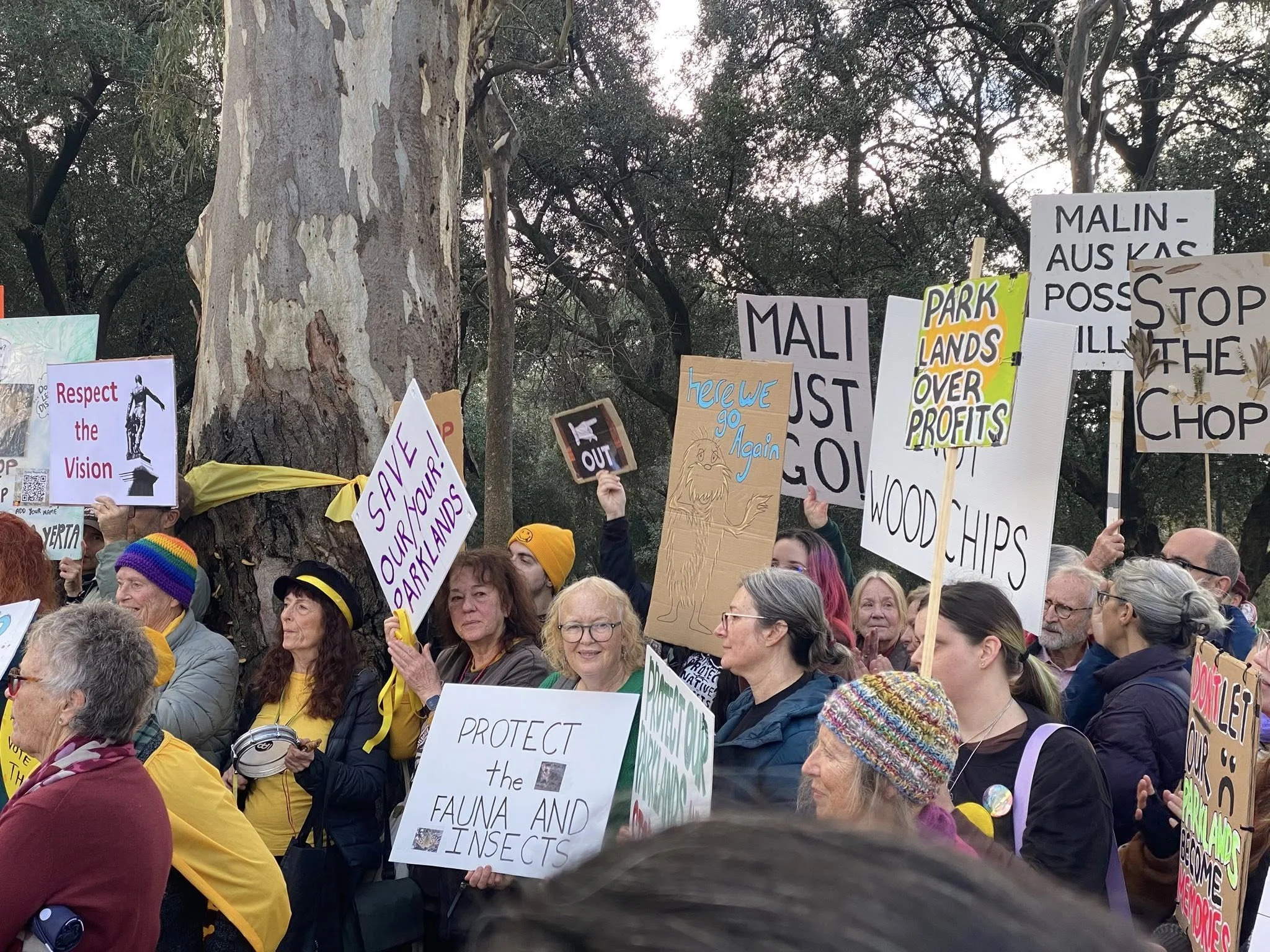
A small section of the crowd at the Stop the Chop Moto GP event on June 6. Image from
1. Yellow Ribbon COALITION FORMS TO “STOP THE CHOP” ahead of MotoGP
David Winderlich
“I think we have just demonstrated that support for the Adelaide Park Lands runs deep and wide through the South Australian community.” — Tim Jackson, Vice President, Adelaide Park Lands Association
On Saturday 6 June, King Rodney Park / Ityamai‑itpina (Park 15) became a sea of yellow as hundreds gathered to tie ribbons to trees likely to be destroyed in the construction of the MotoGP track. The aim: to create a visible corridor of dissent from East Terrace to Wakefield Road, and from Fullarton Road to Bartels Road — a daily reminder of what is at stake.
This event also saw the formation of one of the broadest coalitions of community organisations in recent history - all united to Stop the Chop and protect our environment, communities and public spaces from undemocratic and ill-conceived planning and development.
The following organisations supported the Stop the Chop (MotoGP):
Mount Barker & District Residents Association represented by Diane Van Eyck
Saving Skye Hills Face Zone - represented by Anne Chapple
Preserving Pirltawardli - Pirltawardli Collective - represented by Jeanette Milera
Community Alliance SA - represented by Sandy Wilkonson
Southeast Community Residents Association (SECRA) - represented by Doug McEvoy
Anti‑Poverty Network SA - represented by Samantha Skinner
Chequered Copper Butterfly Conservation Association - represented by Gerry Butler
Save Festival Plaza / Stop Walker Tower was unable to attend but were with us in spirit, Edwin Attrill, and Jeanette Milera who are taking court action to save Possum Park under the EPBC Act were also there. You can donate to the fighting fund for that action here.
The breadth of this movement was a clear rebuttal to the Premier’s charges of rat bags and extremists. As our President Mat Monti said, “The Premier wants to paint us as North Adelaide NIMBYs, but we now have a broad movement — and we have only just begun.”
As the campaign progresses you’ll hear from other important partners in the movement, big and small, who want to stop the chopping and demand more integrity from our political leaders.
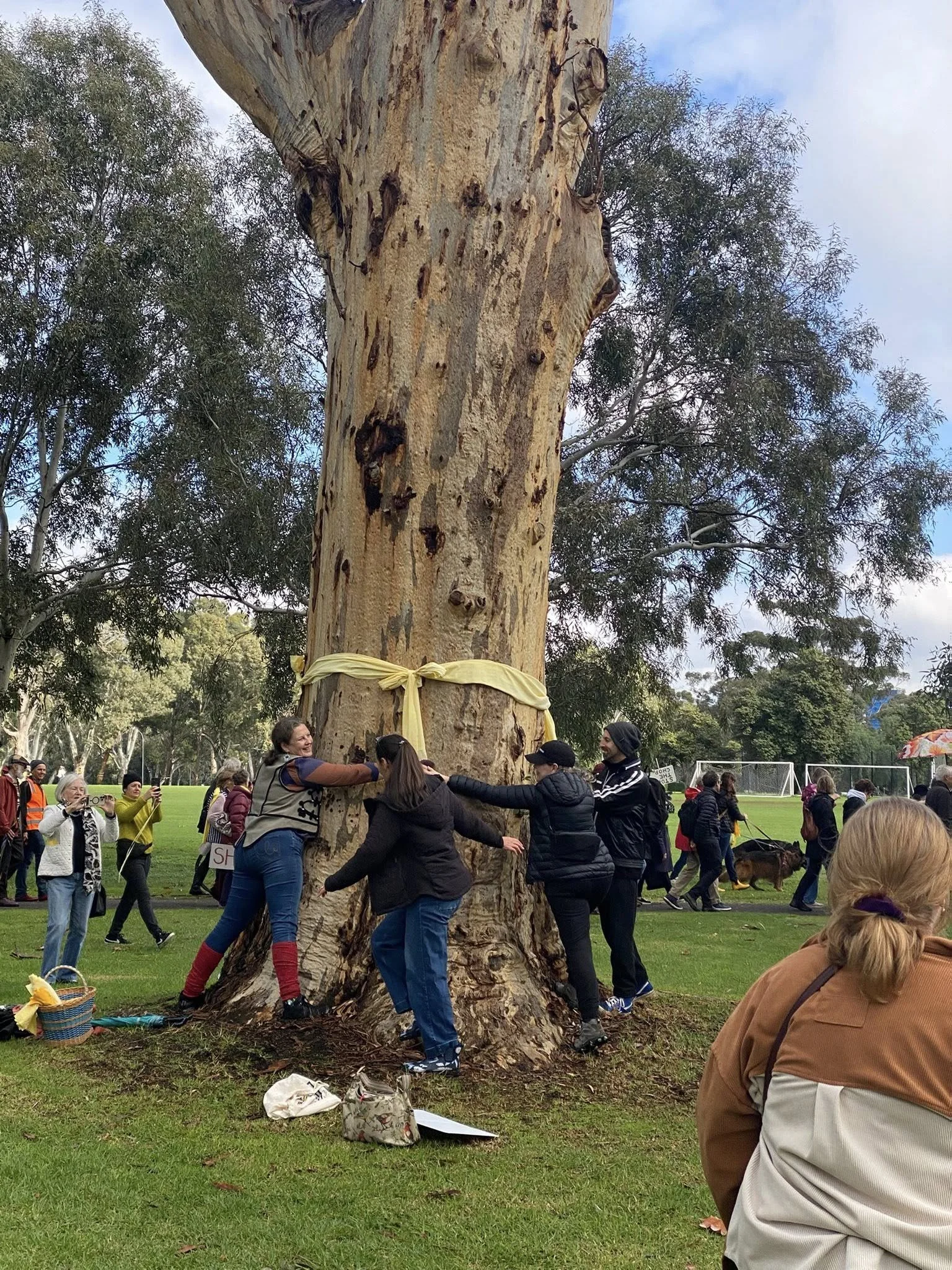
Tree huggers… and proud of it!
2. What is the Plan? And what can I do?
APLA will continue to oppose the destruction of the Park Lands for MotoGP. Our long‑term goal: by the 2030 State Election, every political party must be competing to protect the Park Lands. But in the meantime, members of the public can take any one of these actions.
1. Tie Yellow Ribbons: Keep adding ribbons around King Rodney Park and Victoria Park / Pakapakanthi. Retie or remove fallen ribbons responsibly.
2. Sign the Parliamentary Petition: A formal, paper‑only petition initiated by Councillors Patrick Maher and Kieran Snape. If the petition reaches 10,000 valid signatures the parliament is required, under the petitions act, to conduct an inquiry into the matters raised in the petition. You can download a copy and read the instructions for how to collect and return petition sheets here.
3. Contact MPs: Phone calls to electorate offices can often be more effective than emails but emails create a written record so do both, if you can. You can find contact details here. If you are contacting your local MP possible contact their electorate office, because they know that locals are their voters.
4. Contact the media. If you listen to talk back radio, ring or text in in the chat line and let them know how much you want to stop the chop! Media outlets also have social media pages where you can contribute to the debate and of course you can always write letters to the editor.
5. Keep monitoring developments on Possum Park/Pirltawardli and John E Brown Park. Post updates on social media.
3. The Full Monti
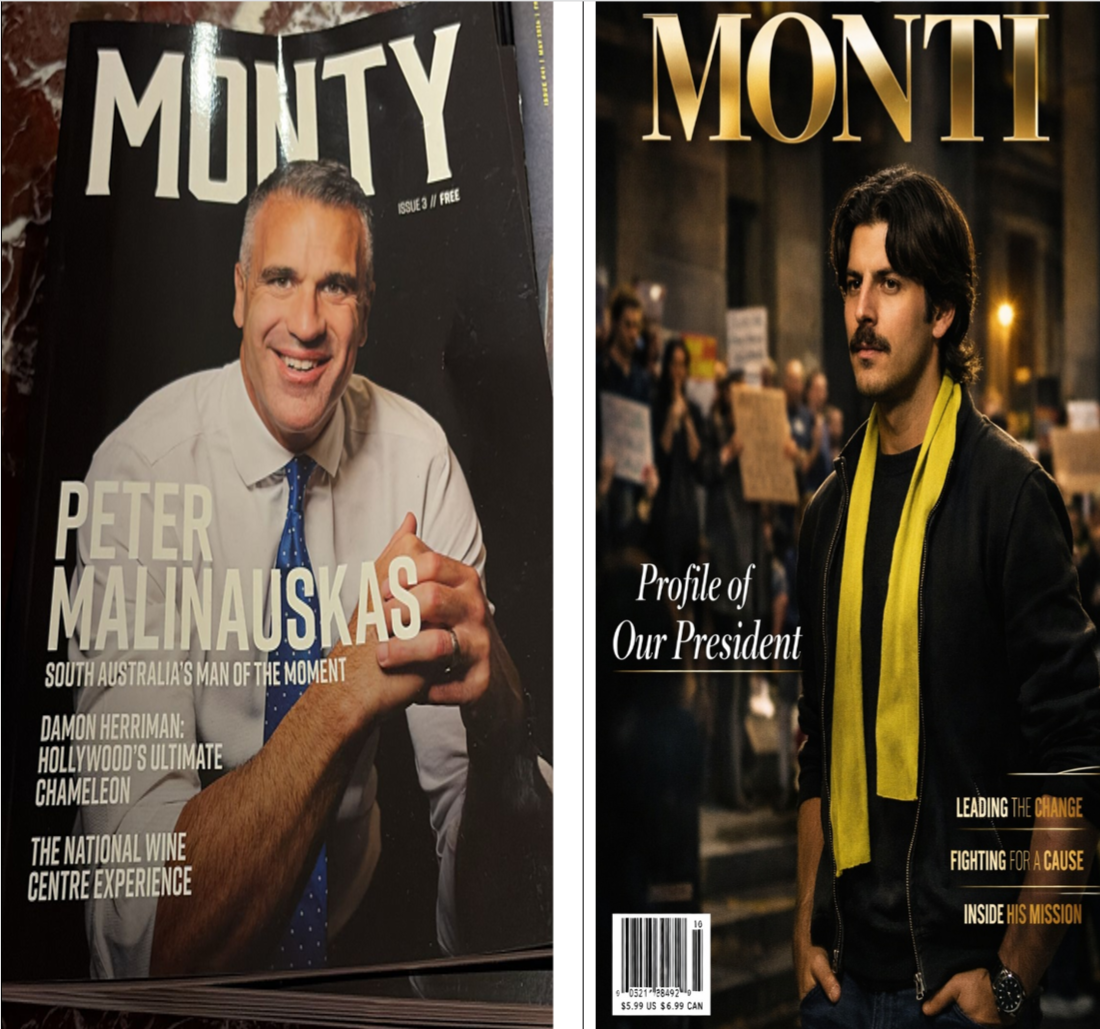
Premier Malinauskas is undeniably a political star. With a record-breaking election under his belt, initiator of the Social Media ban for under 16-year-olds that is attracting international attention and appearances on one of the world’s leading politics podcasts it was not surprising to see him on the cover of glossy magazine Monty.
But the Adelaide Park Lands Association is willing to raise the Premier’s Monty and beat with our own Full Monti, Mat Monti our President, and quite possibly his nemesis.
Although divided by park lands, they would be able to chat about footy (even though the Premier barracks for Port and Mat follows the Crow)s. But we think Mat Monti deserves his own glossy magazine cover so here it is.
4. Know Your Park Lands: Bunyas, Banyans, Figs, and Pines
David Winderlich
If Isaac Newton had been sitting under a Bunya Pine — and a bowling-ball-sized, ten-kilogram cone had dropped from thirty metres onto his head — the world would have had to wait for someone else to discover gravity. The Bunya Pinecone is no gentle nudge from nature: it is one of the heaviest seed cones on Earth, capable of killing a person and frequently earning the tree the nickname "widowmaker."
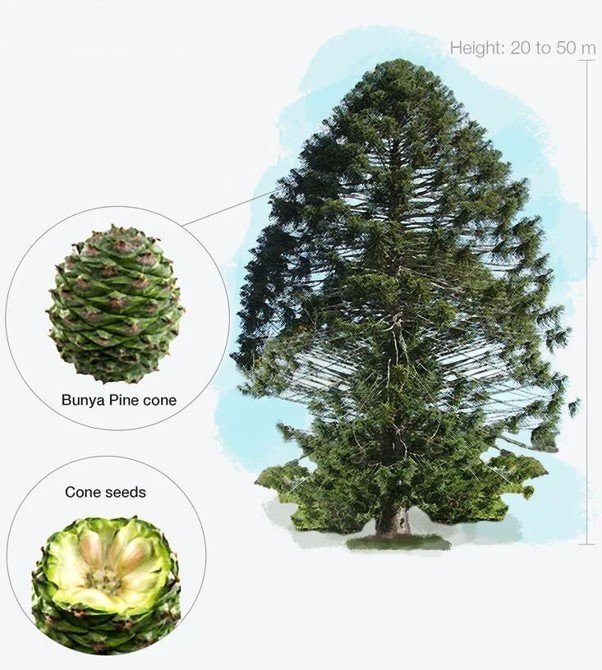
Adelaide Parklands Association
Bunya Pines, most common in Blue Gum/ Kurangga Park, should not be confused with what are sometimes called Banyan trees or more correctly Ficus macrophylla, or the Moreton Bay Fig.
The monumental, buttress-rooted Moreton Bay Figs dominate Botanic Park / Tainmuntilla, forming one of the city's most recognisable landscapes.
They are distinguished by immense spreading canopies, dramatic buttress roots, broad glossy evergreen leaves, and a cathedral-like presence in public spaces. The Art Gallery of South Australia's Lisa Slade has likened their interconnected canopy to Gothic architecture — the same structural principle of buttressing that allows vast spans of space to be enclosed overhead.
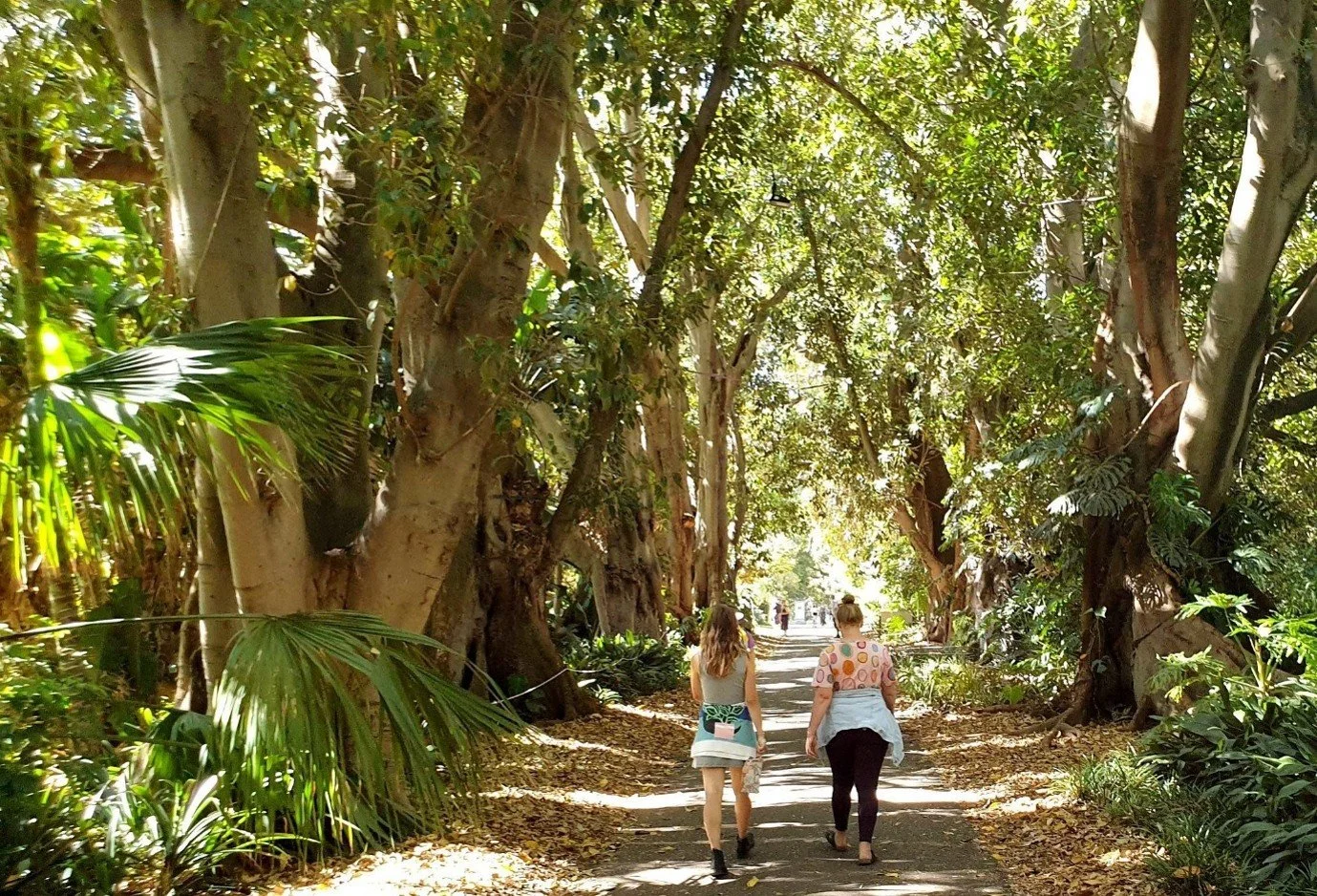
Photograph from Adelaide Park Lands Association
These figs are native to eastern Australia, from southern New South Wales through to Queensland. The Adelaide Botanic Garden's famous Ficus Avenue was planted in 1866, and the Botanic Park trees followed in 1874, planted in what was then the Police Paddock as an extension of that original avenue. Their scale and sculptural form reminded early settlers of the Indian banyan, and the nickname stuck.
They can be found in, Botanic Park / Tainmuntilla, Possum Park / Pirltawardli (Park 1) and scattered throughout the northern Park Lands
Another iconic giant of the Adelaide Park Lands, the Araucaria, conifers, usually one of two species: Norfolk Island Pine (Araucaria heterophylla) or Cook Pine (Araucaria columnaris) are also sometimes called Banyan Pines.
These trees are tall, straight, and symmetrical, with tiered branches that give them a distinctive spire-like silhouette. They belong to the ancient Araucariaceae family — Gondwanan conifers that predate flowering plants and coexisted with dinosaurs.
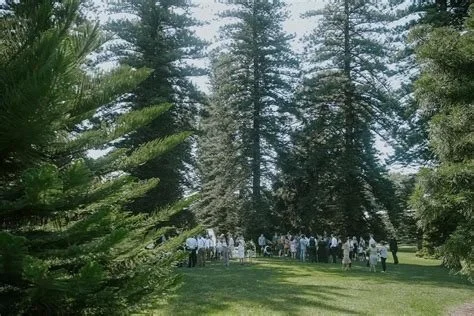
Photograph from Adelaide Parklands Association
Norfolk Island Pines in Botanic Park
In the late 19th century, Araucarias were fashionable as formal avenue trees, coastal markers, and skyline accents. Their tropical appearance and stately form made them popular in public gardens and institutional grounds across Australia.
They can be found in: Adelaide Botanic Garden with several prominent specimens and Victoria Park / Pakapakanthi (Park 16). There are also scattered formal plantings across the Park Lands and older boulevards
Why the Confusion?
The mix-up between Moreton Bay Figs and Araucarias comes from three overlapping factors.
The shared "banyan" association. The Moreton Bay Fig is sometimes called the Australian banyan, and Araucarias are sometimes (incorrectly) called "banyan pines" for their tropical appearance.
A shared planting era. Adelaide's early planners imported dramatic, exotic trees to create a grand park belt. Figs and Araucarias were both fashionable choices in the second half of the 19th century, often planted within walking distance of each other.
A shared visual impact. To a casual observer, both species read as "big old trees", but botanically they could hardly be more different. One is a fruiting fig in the mulberry family; the other is an ancient conifer more closely related to the Bunya Pine than to any flowering plant.
Where to See Both on One Walk
A simple loop lets you compare the two species directly.
Start in Botanic Park under the giant Moreton Bay Figs.
Walk into the Adelaide Botanic Garden, where Araucarias stand near the Palm House and main lawns, and where the historic Ficus Avenue shows what the Park Lands' earliest plantings looked like.
Continue south to Victoria Park to see more Araucarias in an open setting.
This short walk reveals just how different (and how complementary!) these two iconic tree groups are.
5 .Accidental Icon
Mij Tanith
Mij Tanith, one of a number of people arrested at Possum Park tells why she was moved to take Non-Violent Action in defence of our Park Lands.
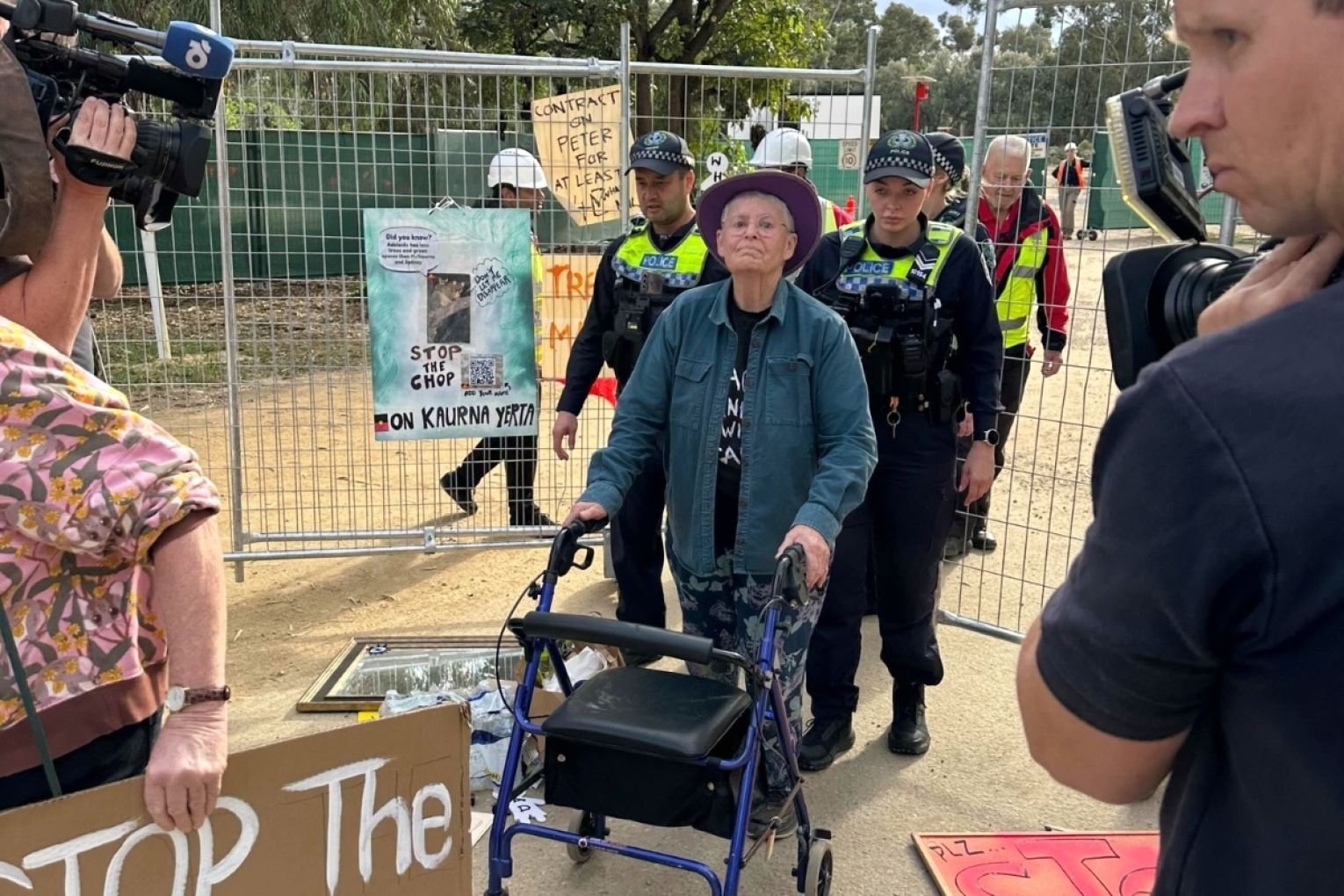
Photofgraph courtesy of InDaily
I never intended to become one of the faces of this campaign. It is just that I happened to be in the right place at the right time. Reporters from the ABC, Channel 9 and Channel 7 were standing at the gate, chatting to protesters – just a handful at 9 in the morning. There were a couple of police officers, also chatting with us in a friendly manner. The original plan was for four of us grannies and our walkers to amble slowly back and forth in front of the gate to stop the trucks, but the gate was locked and no trucks were entering or leaving.
Then came Plan B, decided spontaneously when someone asked if I was willing to be arrested. I said yes. What followed, happened very quickly. Along with two other women, I was helped into the park through a hole in the fence. This was not an act of courage on my part, but an act of bravado. I knew I was in no physical danger because the police officers who I knew would arrest me were friendly and non-aggressive.
Inevitably, I was arrested, and the optics of an old woman with a walker being led away to a paddy wagon seemed to stir something deep in the public imagination. The media coverage of the incident surprised me.
The request for an interview with InDaily further surprised me, and the granny-with-the-walker cartoon actually left me wondering, what the hell was going on? I want to take the opportunity of acknowledging the other two women who were arrested with me. They are equally deserving of all this publicity and support.
I have had time to reflect on it all, time to read and respond to the dozens of messages of gratitude, the offers of help that flooded my phone and my laptop. Time to understand the diversity and the depth of outrage people are experiencing in reaction to all that has been happening. Yes, we are appalled by the destruction of all those beautiful, mature trees in Possum Park, by the lack of transparency around the whole project, by the warp-speed legislation that saw control of the parklands snatched from the Adelaide City Council, and by the purported cost of 45 million dollars, which surely could be spent on any number of more deserving programs.
But we are also appalled by the sheer arrogance of Malinauskas and his Labor government. This arrogance, this refusal to even listen to the concerns of the public around handing more and more of our parklands over to elite motor sport and corporate profit, has lit a fire in our bellies. The very idea of an old woman being arrested for peaceful protest has added fuel to that fire. And that fire is unquenchable.
I am an accidental icon. But if this unlooked-for outcome inspires others to lay their bodies on the line to protect our precious Parklands, then it is an honour I am happy to accept.
6. PARK LANDS POETRY
The Extremist Granny Mij Tanith provides our first poem in a while. She says of the poem:
True story: I have just come back from a trip to the Salvos in search of yellow fabric. Came across this old man sitting on the footpath … and then I turned that encounter into a poem.
In the late grey afternoon
I wander down to the Salvos shop.
something on the footpath makes me
stop
a golden yellow something
in a nest of detritus
and from the nest
a bearded man calls out.
In his politest
voice
I ask about the yellow
a sheet he says
to bundle up my clothes
I’ll swap it for another -
red, he says
But there are no red sheets
In the Salvos
Told you so he says
And gives me a choice
I’ll sell you yellow for
a couple of bucks
I give him five
what’s it for he says
as he tucks the note away
to tie around a tree
he chuckles then with glee
ah that man he says
what a piece of work
7. Resident Thinkers Hope in the Time of Malinauskas
Stewart Sweeney
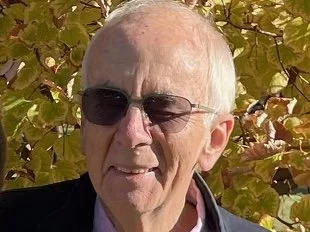
Our newsletter is a place to think as well as to report on developments. Well known Adelaide “thinker in residence” Stewart Sweeney kicks off what will be a regular feature where we encourage people to think and dream big.
The Adelaide Park Lands are not just open space. They are Adelaide’s founding democratic promise made visible: a city held within a public common.
That is why the current moment feels so grave. Under Peter Malinauskas, the Park Lands are being treated less as a civic inheritance and ecological foundation than as available land: land for major events, land for sporting deals, land for hospitals, land for profit, land to be negotiated away in the name of “progress.”
This is not simply bad governing and planning. It is a failure of imagination.
The Park Lands are the place where South Australia’s future is being tested. Are we still capable of defending public land for public purpose? Can we imagine a city shaped by shade, trees, walking, culture, ecology, First Nations truth and democratic life? Or will every irreplaceable public asset eventually be subordinated to deals, spectacle, and development?
Hope is not optimism. Optimism would require us to believe that Festival Plaza, Walker Tower, the LIV Golf/Australian Open, MotoGP, tree loss, high-rise boosterism and the steady normalisation of private capture are separate events. They are not. They are symptoms of the same narrow Malinauskas politics and economics.
Malinauskas Labor talks constantly of delivery. But delivery of what? A city made hotter, harder, more privatised, more unequal, and less democratic? A capital shaped by property interests and event managers rather than citizens? A future in which the Park Lands survive only as branding while their substance is steadily eaten away?
This is why hope matters.
Hope is the citizen who says the Park Lands are not surplus land.
Hope is the protester who stands under a tree marked for removal.
Hope is the Kaurna voice reminding government that Country is not a backdrop for announcements.
Hope is the planner, architect, ecologist, historian, resident, worker, or small business owner who knows Adelaide’s advantage is not height, spectacle, or concrete, but scale, balance, beauty, access, public land, liveability, and sustainability.
Hope is also economic. South Australia cannot build a world-class future by sacrificing its best civic and ecological assets while relying on risky defence contracts, mining hopes, property deals, population growth, and major events. That is not transformation. It is dependency with better spin .A better future would protect the Park Lands, not raid them. It would build public housing without destroying public commons. It would create green industries, cultural infrastructure, research capacity, care work, ecological repair, and human-scale neighbourhoods. It would understand that liveability is not a slogan but the foundation for an economic, social, and cultural future.
The Park Lands should be the anchor of Adelaide’s next century: a climate shield, a cultural landscape, a democratic common, a living Kaurna place, a public health asset, a biodiversity corridor, and the foundation of a genuinely distinctive city.
By 2036, Adelaide could choose that path. It could mark the bicentenary not with more towers and deals, but with restored Park Lands, a Democracy Hub beside Parliament, shaded streets, public housing worthy of the name, First Nations leadership, and a low-rise green CBD surrounded by an expanded Park Land and a model admired around the world.
That will not come from waiting politely for the government to change its mind. Hope is a discipline. It is organised refusal and patient construction of an alternative. It is saying no to the destruction of what cannot be replaced, and yes to a better city that has not yet been built.
In the time of Malinauskas, the Park Lands have become the line in the grass. If South Australia cannot defend them, it will struggle to defend anything.
But if citizens can defend them and reimagine them as the heart of a just, cool, democratic, and beautiful Adelaide then hope and the future wins.
And while you are having big thoughts check out John Schumann’s contribution in Pearls and Irritations, Poets, philosophers, parklands, and parliament
8. SHANE SODY: A TRUE PARK LANDS CHAMPION
"If I have seen further, it is by standing on the shoulders of Giants." Issac Newton 1657
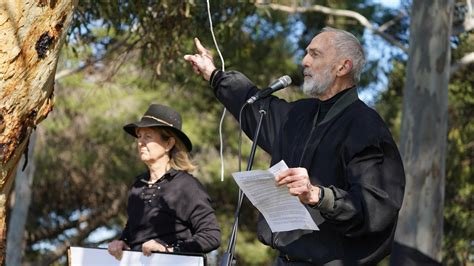
Longstanding former President Shane Sody and newsletter editor recently stepped down because of health problems. This article pays tribute to his remarkable legacy.
Under an exciting new President and a skilled and hard-working committee the Adelaide Park Lands Association has suddenly, explosively grown into the leading opposition to Government policy in South Australia.
But we all know the foundations of this sudden influence were laid over years of stubborn hard work by former President Shane Sody.
Recently some health challenges forced Shane to accelerate his plans to hand over the reins to a new generation.
Shane was a man who has spent so many years defending the Adelaide Park Lands that people probably thought he lived in them. And to be fair, given the number of kilometres he cycled through them each year, and all the time leading guided walks, it is possible he spent more time there than at home.
Shane’s advocacy career has been long, loud, and occasionally exasperating — mostly for governments who thought they could quietly nibble away at the Park Lands without him noticing. They were wrong. Shane noticed everything. If a blade of grass leaned suspiciously toward a development site, he was on it.
His interviews over the years have revealed a man of principle, passion, and a truly impressive ability to explain complex planning issues in a tone that suggested he was trying very hard not to roll his eyes. He fought for the Park Lands with the tenacity of a terrier and the barely concealed impatience of a man who has attended far too many council meetings.
His legacy includes overseeing the process of modernising and crystallising the branding of the Association; helping to establish the program of Guided Walks that is such a feature of the Park Lands; establishing a remarkable communications infrastructure that is the basis of our Stop the Chop Campaign today; and above all, instilling a stubborn fighting spirit.
He may not be the wind beneath the wings of the current leadership, but he is certainly the angry cartoon angel on our shoulders urging us to Fight! Fight! Fight! any threat to the Park Lands.
Shane Sody has made a remarkable contribution to Adelaide’s civic life and when we can win this war that Shane began with the Government, our great grandchildren will play under great spreading trees in expanses of park lands that were saved because of Shane.
9. YES, WE STILL DO GUIDED WALKS
Walking the Adelaide Park Lands: Guided Tours Through Adelaide’s Green Heart
David Winderlich
The campaign to protect our Park Lands has not stopped the Park Lands Association from continuing to offer Guided Walks that help us enjoy our unique park lands.
Adelaide is the world’s only city designed entirely within a ring of Park Lands — a visionary 1837 plan that still shapes the city today. The Adelaide Park Lands Association (APLA) runs guided walks that reveal the hidden wetlands, heritage sites, Kaurna stories, and ecological pockets that make this landscape unique.
A Living Cultural Landscape
Every walk begins with an acknowledgement of the Kaurna people, the Traditional Owners of the Adelaide Plains. The Park Lands are not just green space — they are a cultural landscape shaped by thousands of years of custodianship.
APLA’s guided walks run for 90 minutes to two hours and explore:
Biodiversity and remnant native vegetation
Colonial surveying and Adelaide’s original city plan
National Heritage–listed Park Lands features
Wetlands, creeks, and restored ecological zones
Community stories, art, and contemporary uses
Walks are led by trained volunteer guides who specialise in ecology, history, and civic design.
You can see a schedule of our walks from June 14th to August here on our webpage where you can also browse or book a walk.
Members attend free; non‑members pay $9, concessions $6, and children under six are free. However, for a $30 annual membership you can enjoy every walk for free.
10. Thank you to all our Volunteers
Pauline Bradford
Volunteer Week was celebrated between the 18th and the 24th of May. We want to express our sincere thanks and appreciation for the many people that volunteer their time, skills and energy to ensure the Adelaide Park Lands Association remains vibrant and relevant. We are only as strong as our members and volunteers.
Volunteers help others to Explore, Inspire, Protect and Restore your Park Lands.
The following is just a sample of the areas of engagement.
• Tour Guides for Guided Walks
• Administration
• Communicating through the newsletter and Social Media
• Photographers and video creators sharing their passion and skill
• Fundraising
• Re-greening areas of the Park Lands
• Committee Members
If you would like to volunteer alongside these champions, please register at
www.adelaide-parklands.asn.au/volunteer or email David at exec@adelaide-parklands.asn.au.

