

by Carla Caruso
APA’s Guided Walk on 1 August 2021 was led by father-and-son team, Ted and Nate Jennings.
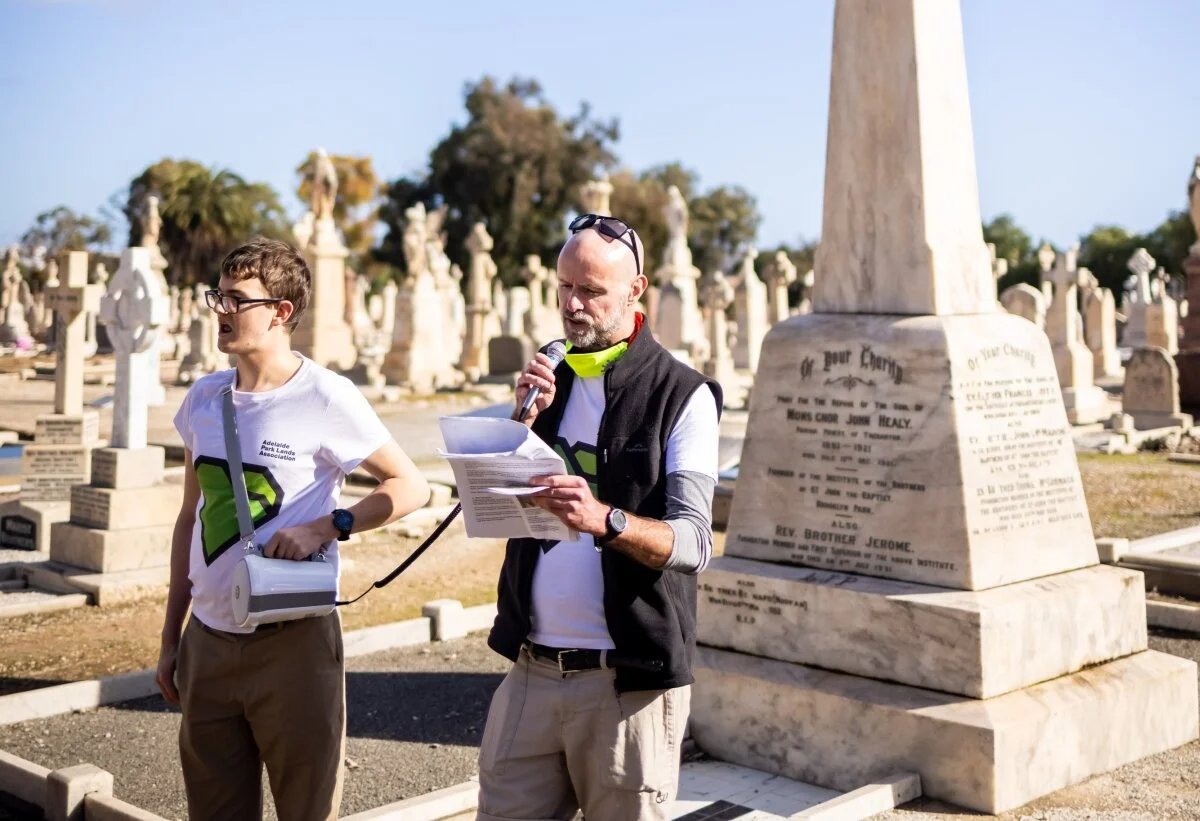
Nate (left) and Ted Jennings . Pic: Carla Caruso
The walk, weaving through GS Kingston Park /Wirrarninthi (Park 23), was delayed a week due to SA’s seven-day COVID-19 lockdown in July. However, the sun was out the following Sunday and about 30 park lovers, in masks, joined in.
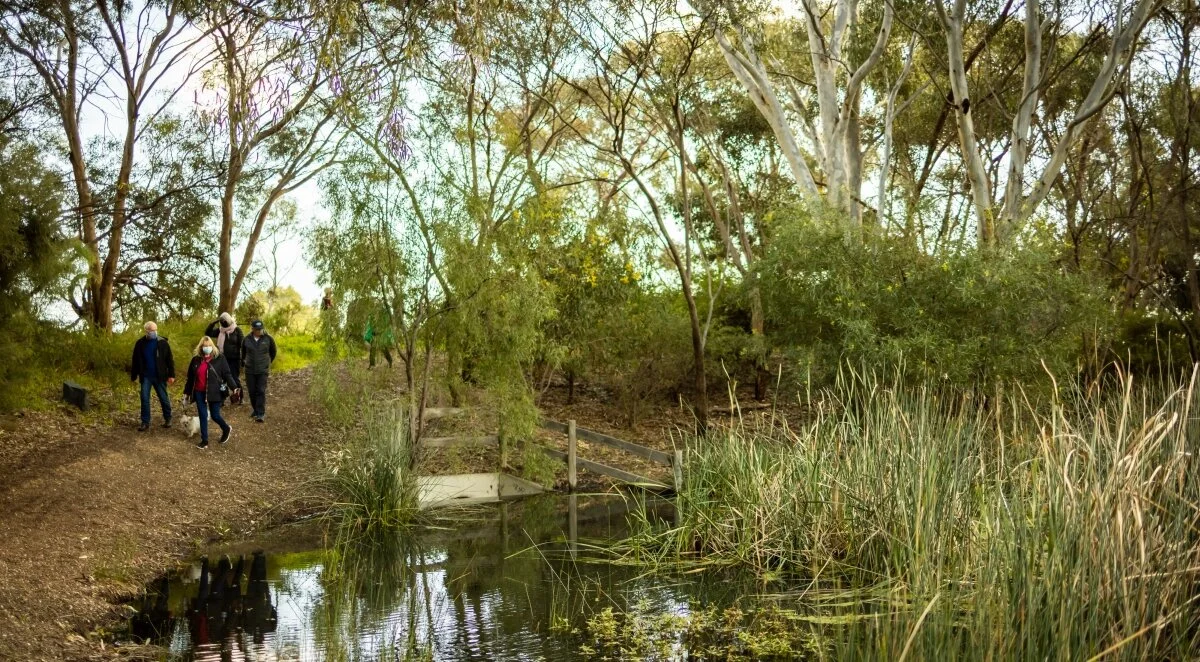
Wetlands on the Wirrarninthi Environmental trail Pic: Carla Caruso
The Wirrarninthi environmental trail, among wetlands, is “perhaps the biggest drawcard of Park 23,” according to Nate. “The trail is 2.5km long [and] has four different themes – fire, earth, wind and water, each having their own area of the trail… It is a valuable area of biodiversity with wood ducks, parrots of all colours, and a variety of indigenous plants.”
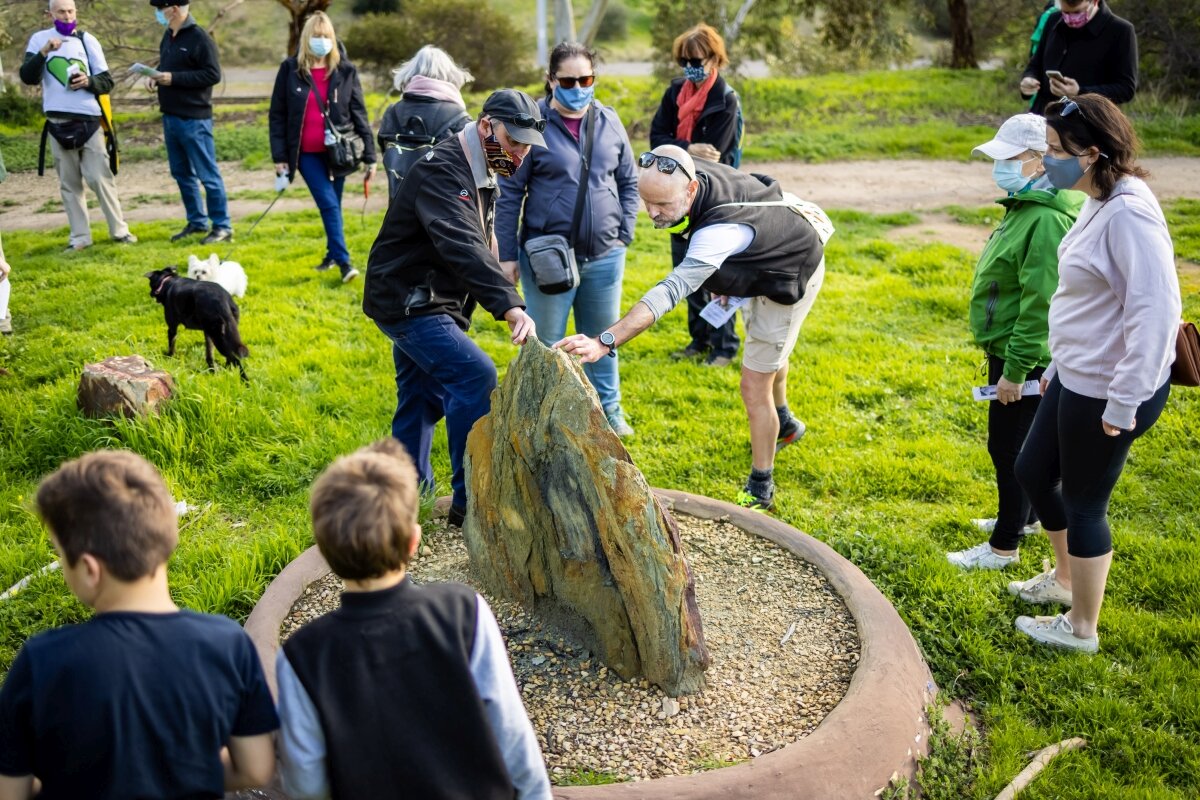
The fire sculpture on the Wirrarninthi Environmental trail. Pic: James Elsby
The trail was developed in 2015 by a team of four, participating in a community leaders’ program. It also features a number of bronze animal statues by sculptor Silvio Apponyi.
“There is a distinctive bronze statue of a cat that has caught a bird and a lizard – a comment on the problem of pet cats, hunting native animals in Australia,” Nate said.
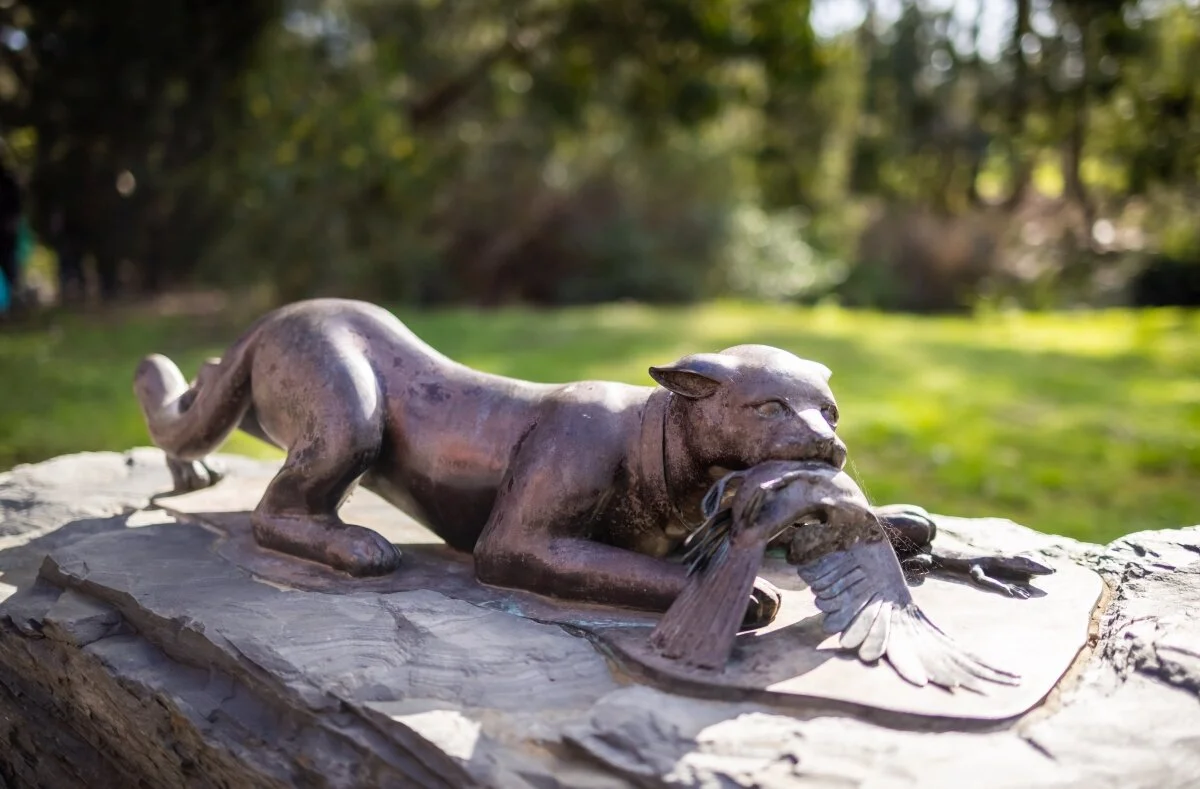
Cat sculpture by Silvio Apponyi on the Wirrarninthi Environmental Trail. Pic: Carla Caruso
From here, it was onto the West Terrace Cemetery – Australia’s oldest metropolitan cemetery still operating, which sprawls over almost half of the park.
“It’s often described as one of most significant cemeteries in the state because it contains the remains of many citizens who helped shape the origins of South Australia,” Ted said.
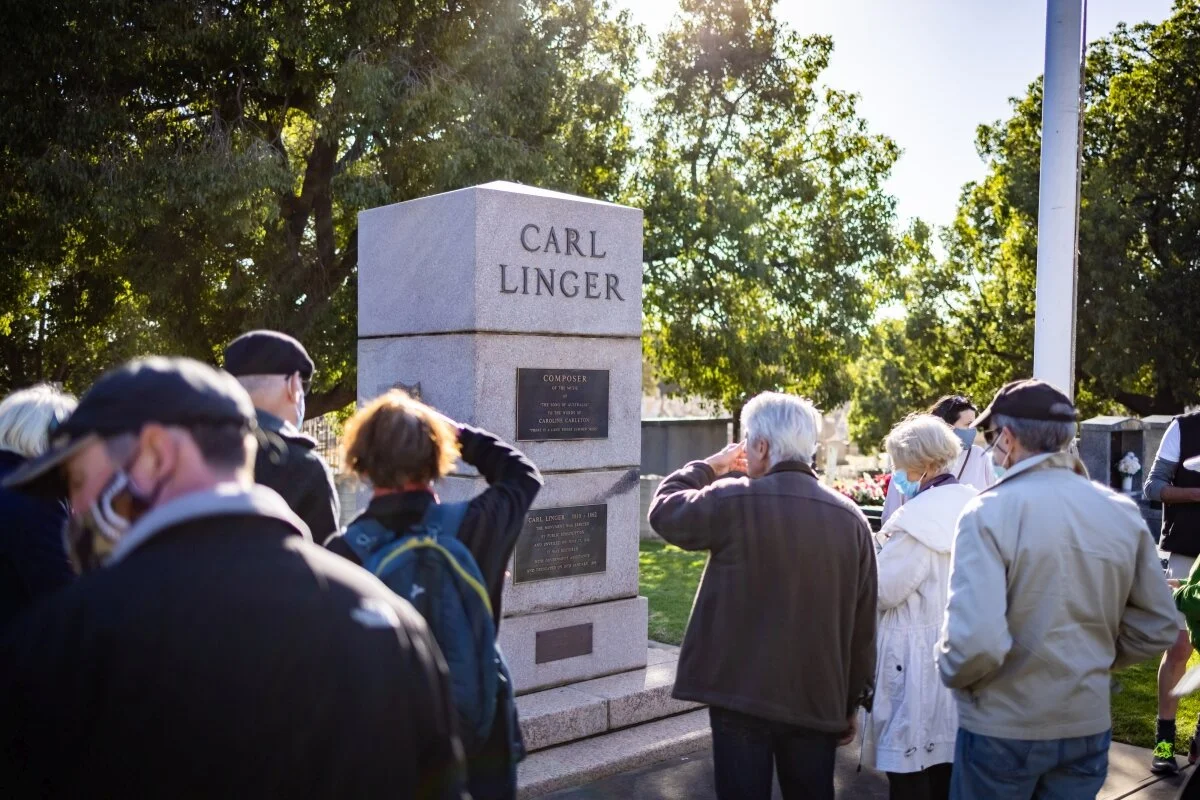
Walkers at the Carl Linger memorial in West Terrace cemetery on the Park 23 Guided Walk. Pic: Carla Caruso
This includes a memorial for Carl Linger, who composed the famed Song of Australia sung in SA public schools for a century. Walkers also got up-close with the Smyth mortuary chapel commemorating Reverend John Smyth, Australia’s first dedicated military cemetery, and the remains of the first crematorium in the southern hemisphere.
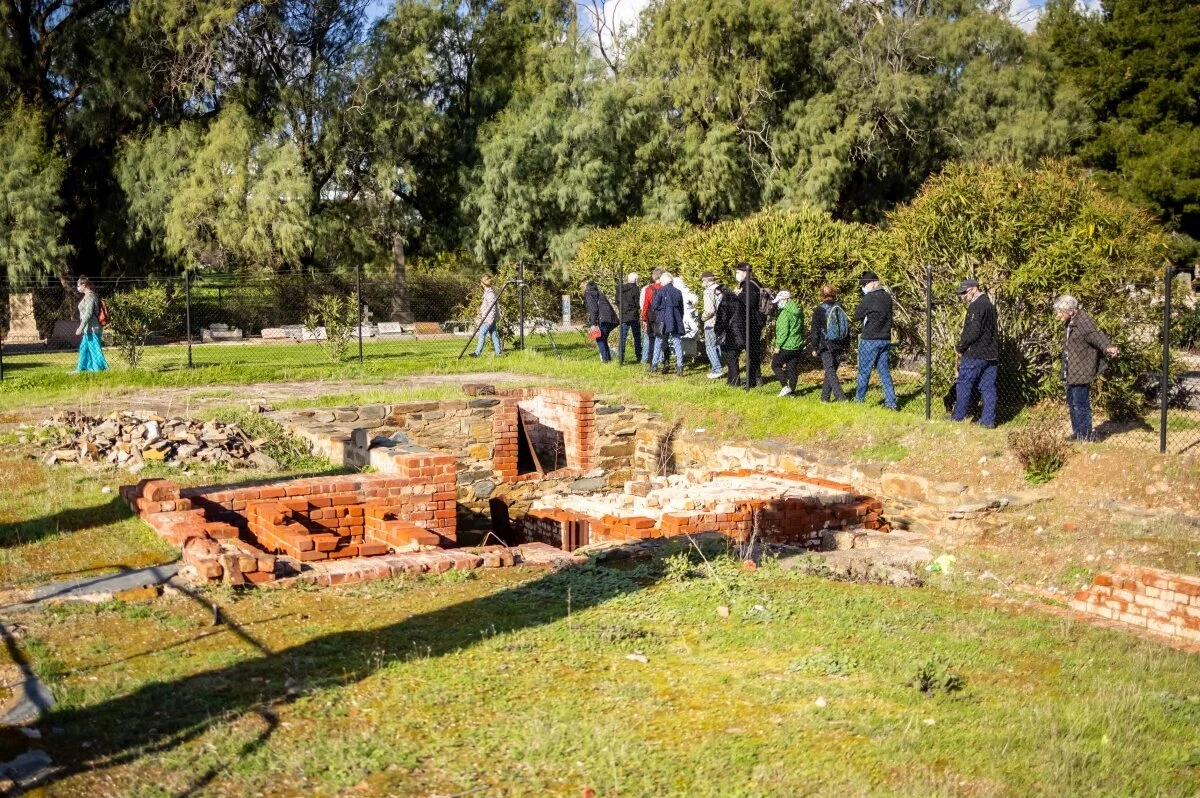
Examining the excavated ruins of the 1903 crematorium during the Guided Walk. Pic: Carla Caruso
“These days, cremation is very common, but back then [in 1903], SA was the first state to legalise the procedure,” Nate said. “The first human cremation attracted a crowd of about 200 people.”
Among the graves, rare native apricot trees and a quandong grove were also pointed out. Although, native vegetation laws prevent visitors from sampling the produce.
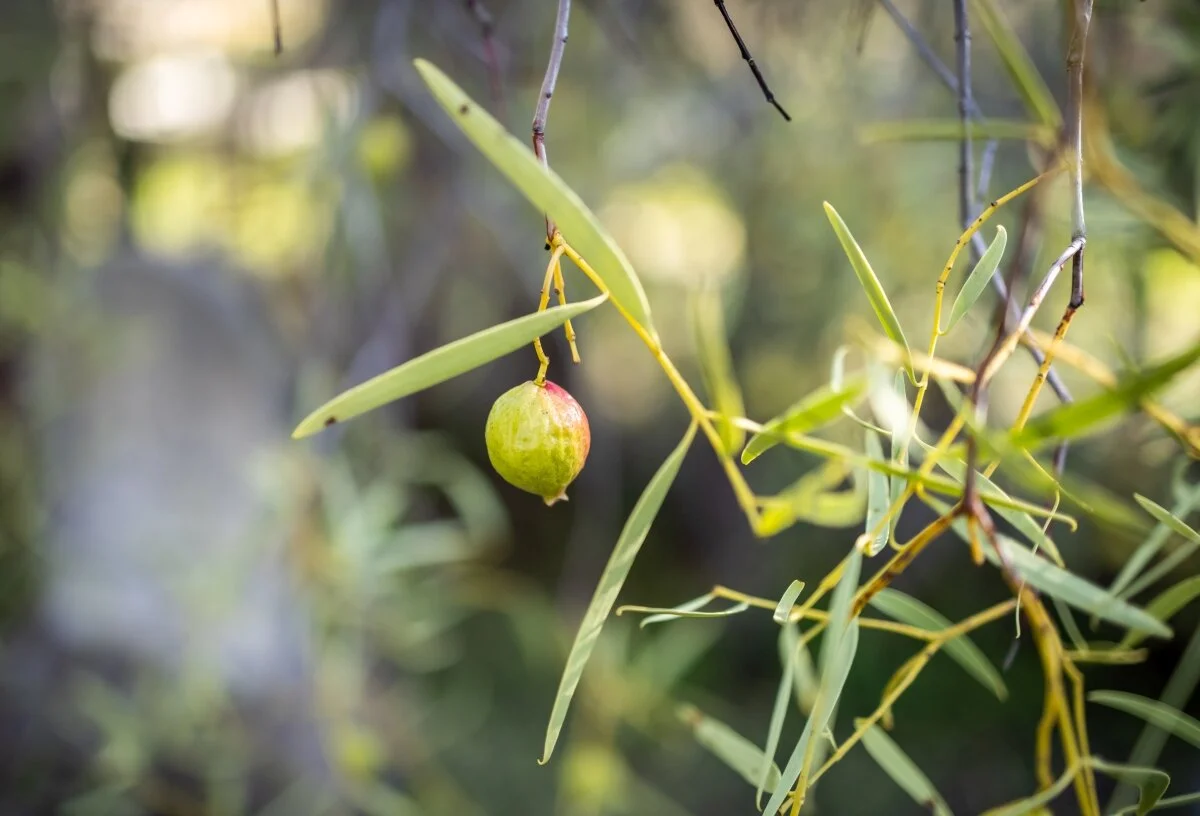
A quandong about to ripen alongside 19th century graves. Pic: James Elsby
Walkers also got to see the site, which once housed the grave of the mysterious ‘Somerton Man’. His remains were exhumed by police for DNA testing in May 2021. The unidentified man was found dead on Somerton Park Beach in 1948 and the case remains unsolved.
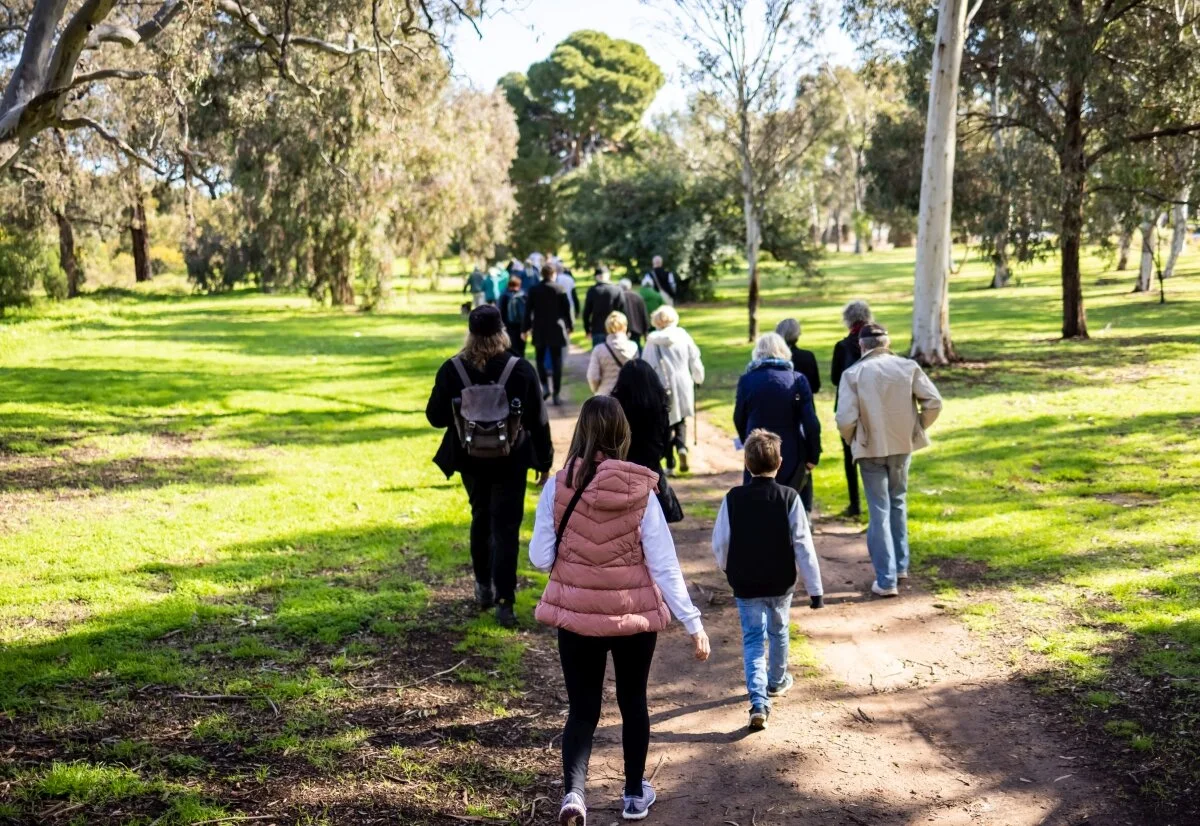
Pic: Carla Caruso
For our upcoming guided walks, click here.

