
by Shane Sody
One of the most common trees in your Adelaide Park Lands is the iconic hardwood Spotted Gum (Corymbia maculata).
There are more than one thousand Spotted Gums growing in your Adelaide Park Lands. They are renowned for their distinctive mottled bark and exceptional timber strength.
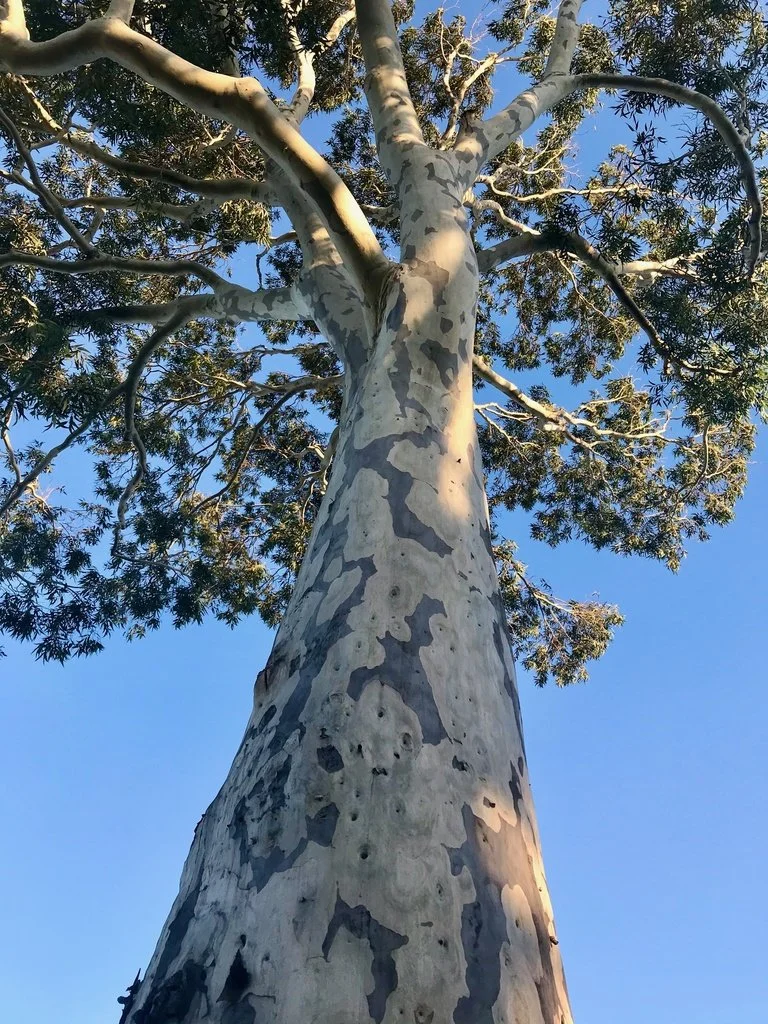
A Spotted Gum / Corymbia maculata in Sydney. Pic: @gaelyn / iNaturalist Creative Commons licence.
The Spotted Gum is one of many so-called “bloodgum” species. They get that moniker because of distinctive dark red, blood-like sap that they exude when their bark is damaged. Bloodgums are commonly called “eucalypts” but since 1995, scientists have classified the genus “Corymbia” as separate and distinct from “Eucalyptus” species.
The Spotted Gum’s close relatives, (other “Corymbias”) include the Lemon-scented gum (Corymbia citriodora) and Red bloodwood (Corymbia gummifera).
Natural Range and Introduction
Before European settlement, the Spotted Gum was found only in the coastal regions of south-east Australia, from Bega in New South Wales northwards along the coast to Taree. A small, isolated natural population also existed in eastern Victoria near Orbost.
Due to its resilience and rapid growth, the Spotted Gum has been widely introduced across Australia, such as in Western Australia, and South Australia, including in your Adelaide Park Lands.
Internationally, Spotted Gums are cultivated in plantations for timber and honey production in South Africa, Brazil, India, China, and the United States.
Identification
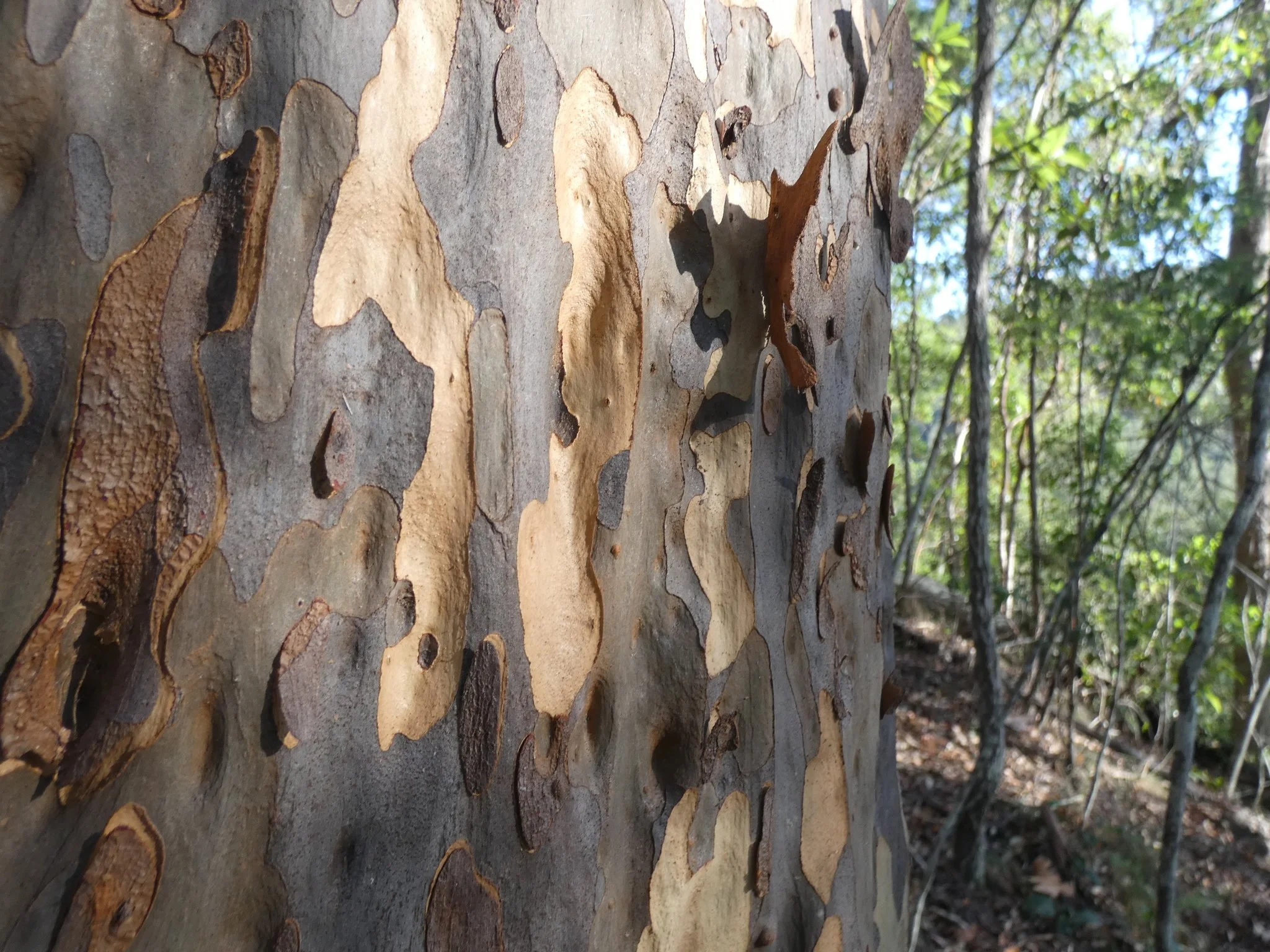
The Spotted Gum is a tall, straight tree that can reach heights of 45 to 60 meters. It is most easily identified by its smooth, dimpled bark, which sheds in irregular circular patches during summer to create a mottled cream, grey, and pink appearance.
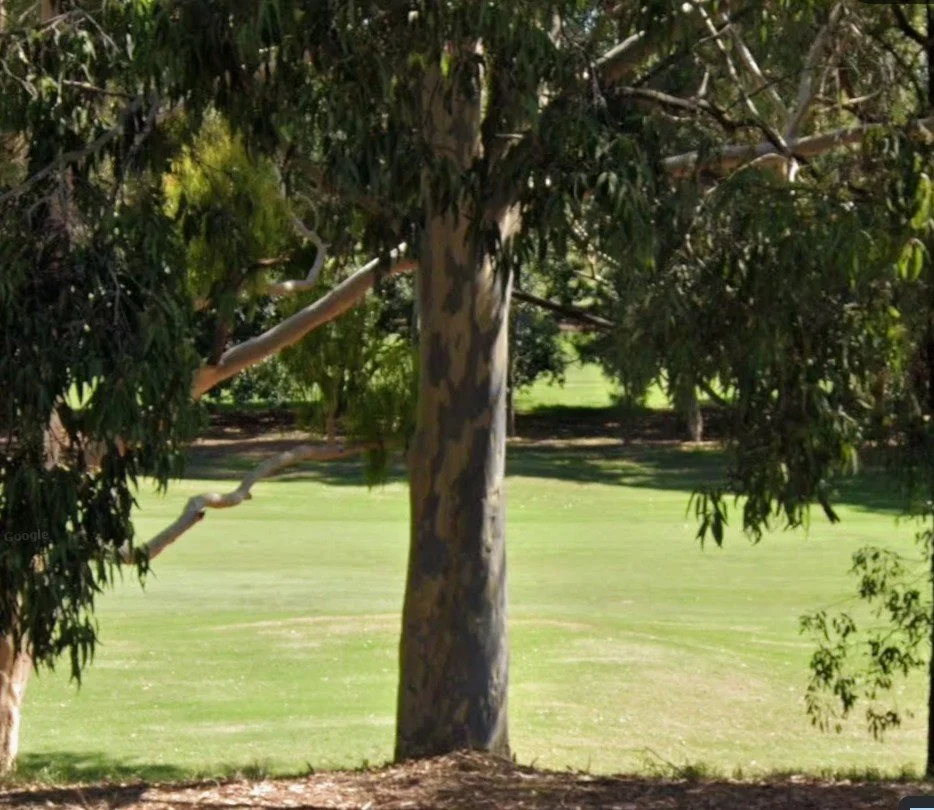
A Spotted Gum off Montefiore Rd in Possum Park / Pirltawardli (Park 1) on the edge of the North Adelaide golf course. Pic: Google Streetview
It looks similar to the Lemon-Scented Gum (Corymbia citriodora) but of course its leaves don’t have the lemon aroma. Spotted gum trunks are more heavily mottled than the trunks of Lemon-scented gums.
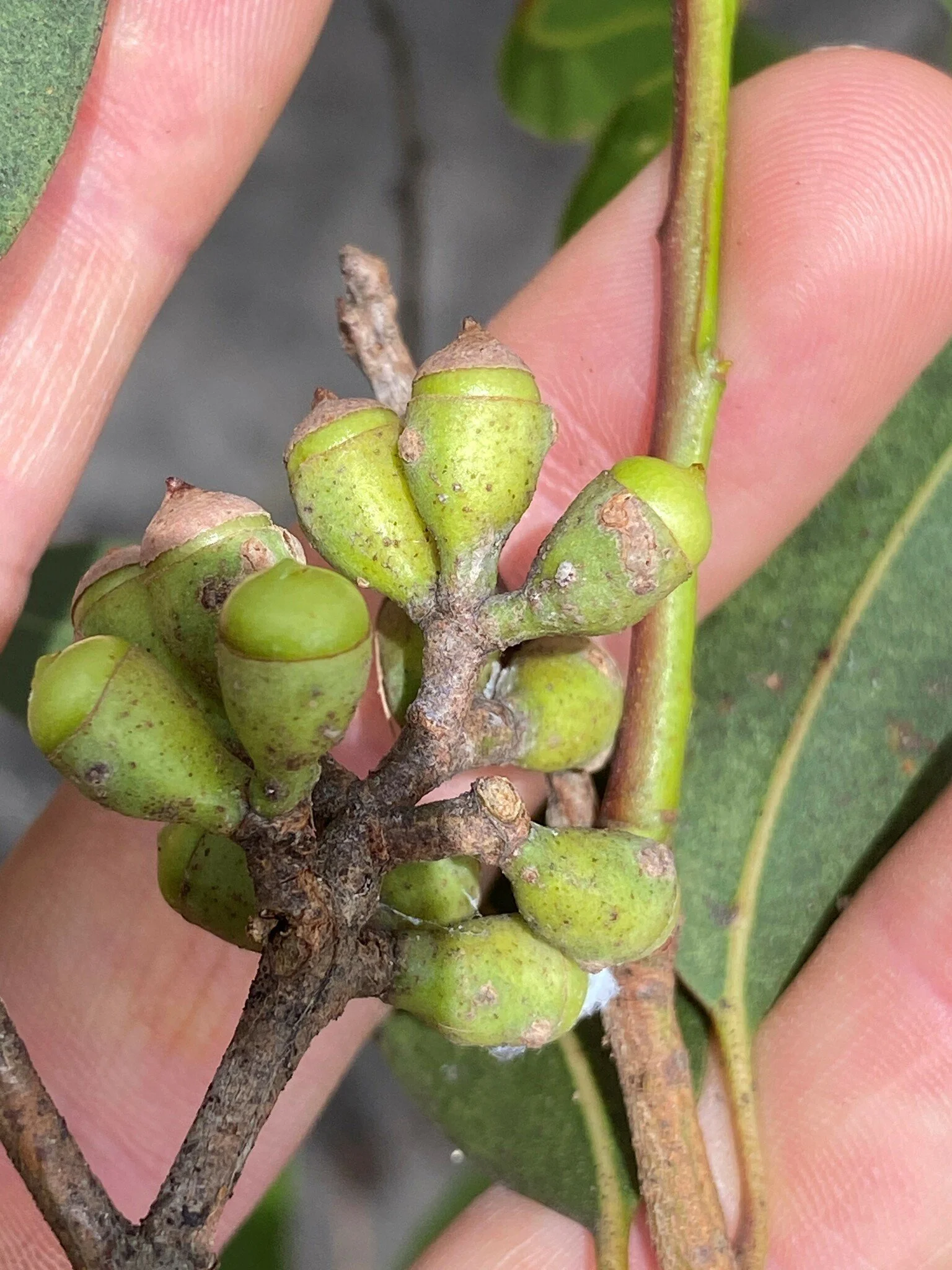
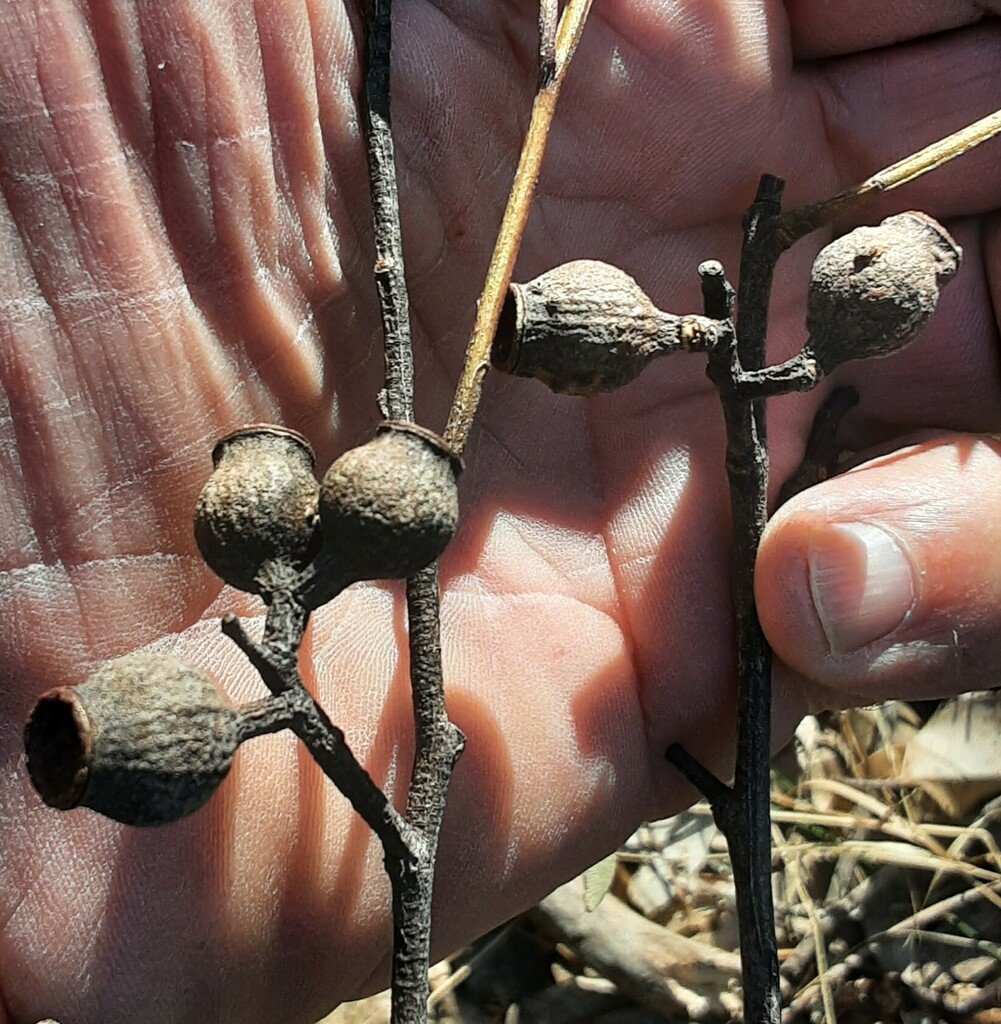
Its woody capsules are distinctly urn-or barrel-shaped with enclosed valves. Flower buds generally form in groups of three.
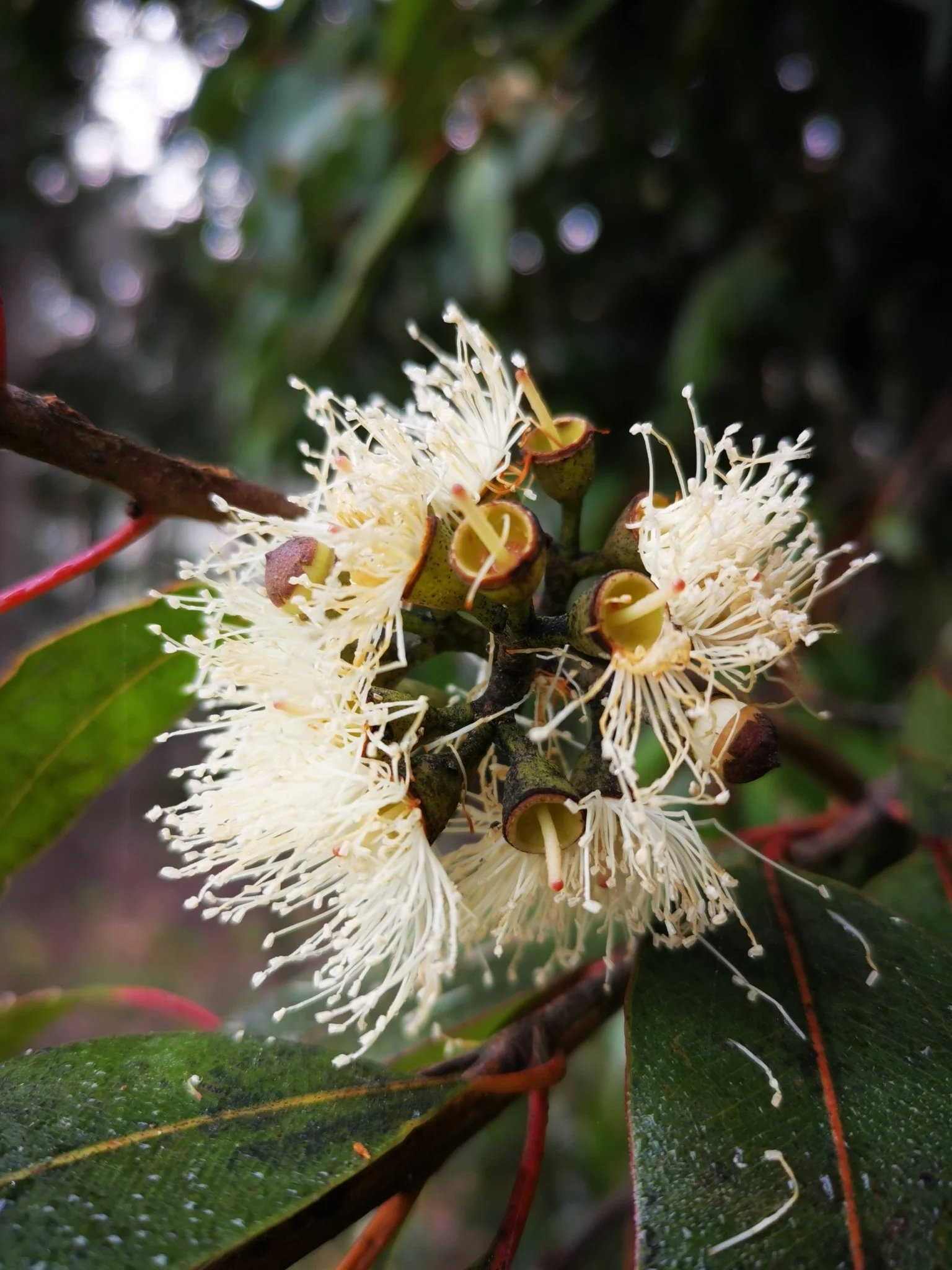
While flowering can occur throughout the year, the peak period is typically from late autumn through winter and into spring (March to September). During these months, the tree produces clusters of creamy-white, fragrant flowers that are highly attractive to honeybees and nectar-feeding birds.
Annually in early summer, the tree undergoes a dramatic bark shed, revealing vibrant new layers beneath and creating its signature "spotted" look for the coming year., which helps separate it from other eucalypts.
There are many Spotted Gums in Possum Park / Pirltawardli (Park 1 of your Adelaide Park Lands, and there are fears that some might be chopped down in 2026 for a State Government-funded golf course re-development.
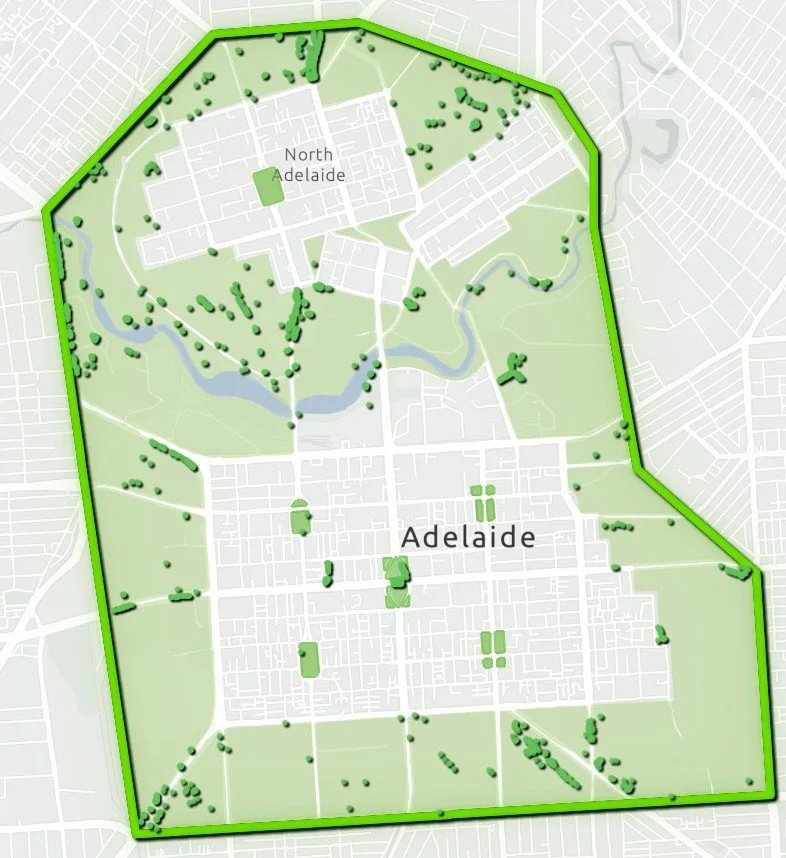
The City of Adelaide’s Tree Map lists 1,017 Spotted Gums, in these locations:
Top (banner) image: @Nick Lambert / iNaturalist. Creative Commons licence.
Read more about the Spotted Gum:
Want to know more about the plants and other biodiversity in your Park Lands? Head over to iNaturalist where you can record, share and discuss your findings with fellow naturalists.
See the other plants featured in this series here:

