
by Shane Sody
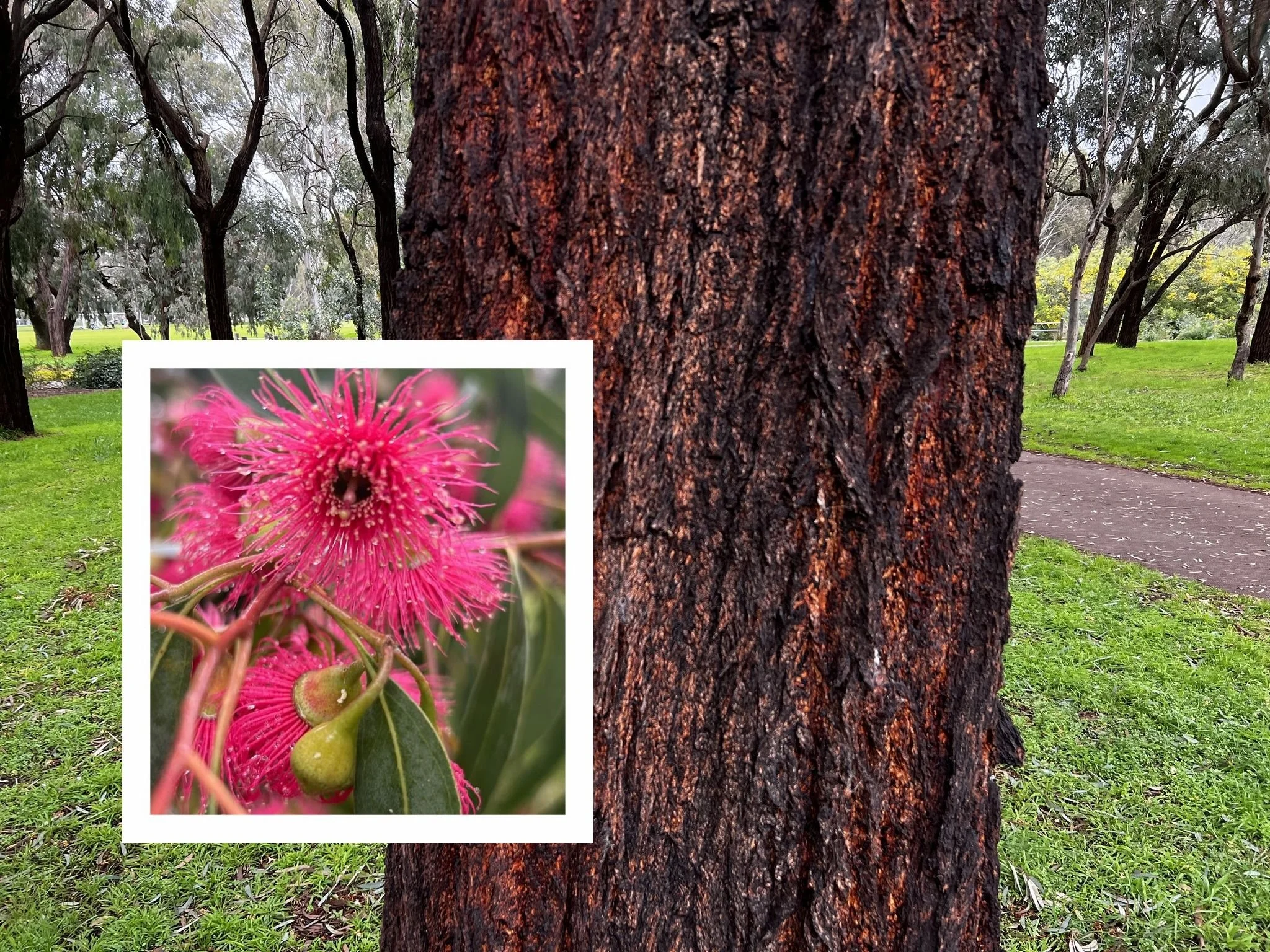
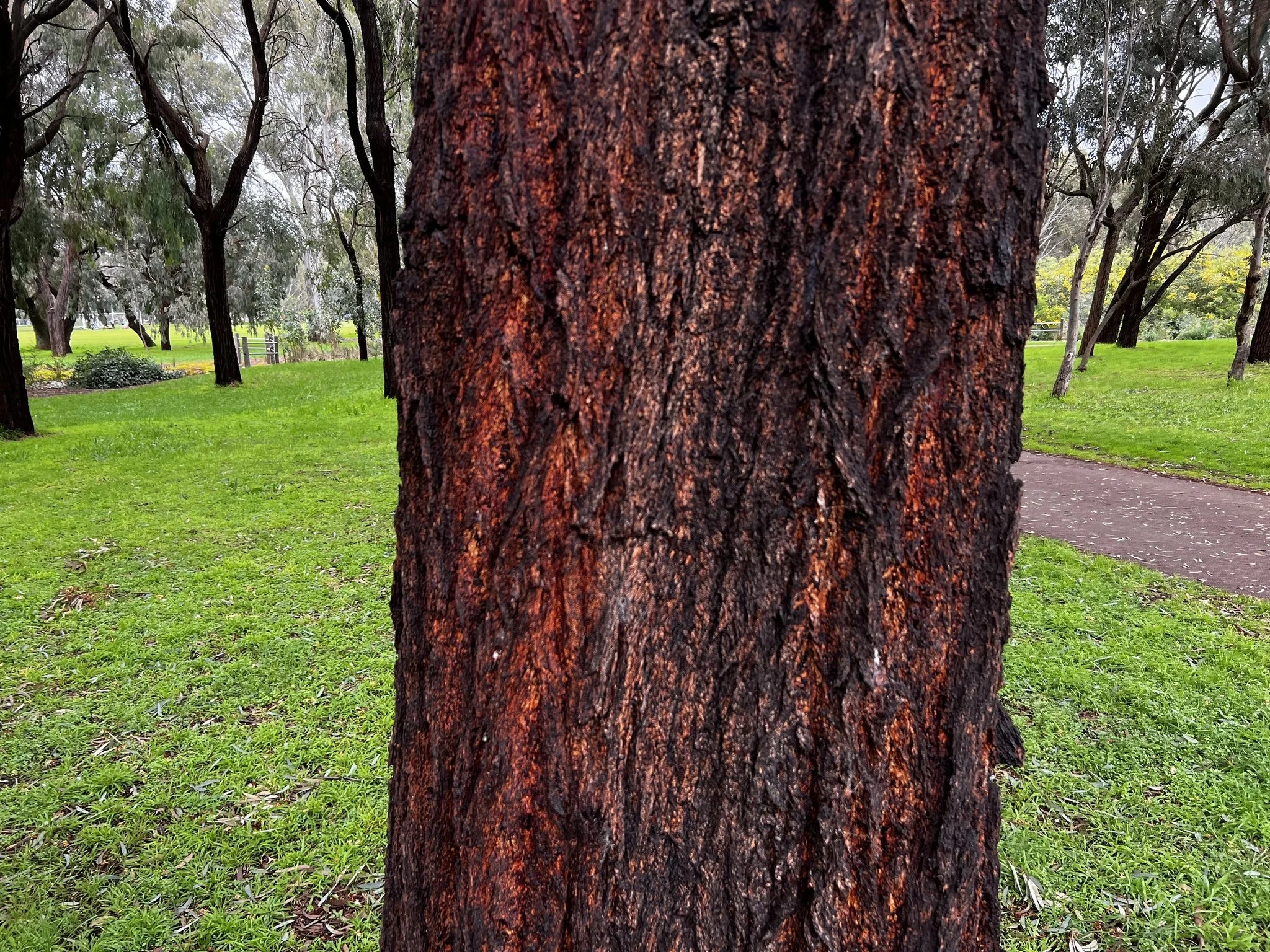
Is this tree trunk made of iron? That’s what it looks like, but these trees in your Park Lands are notable for other reasons as well.
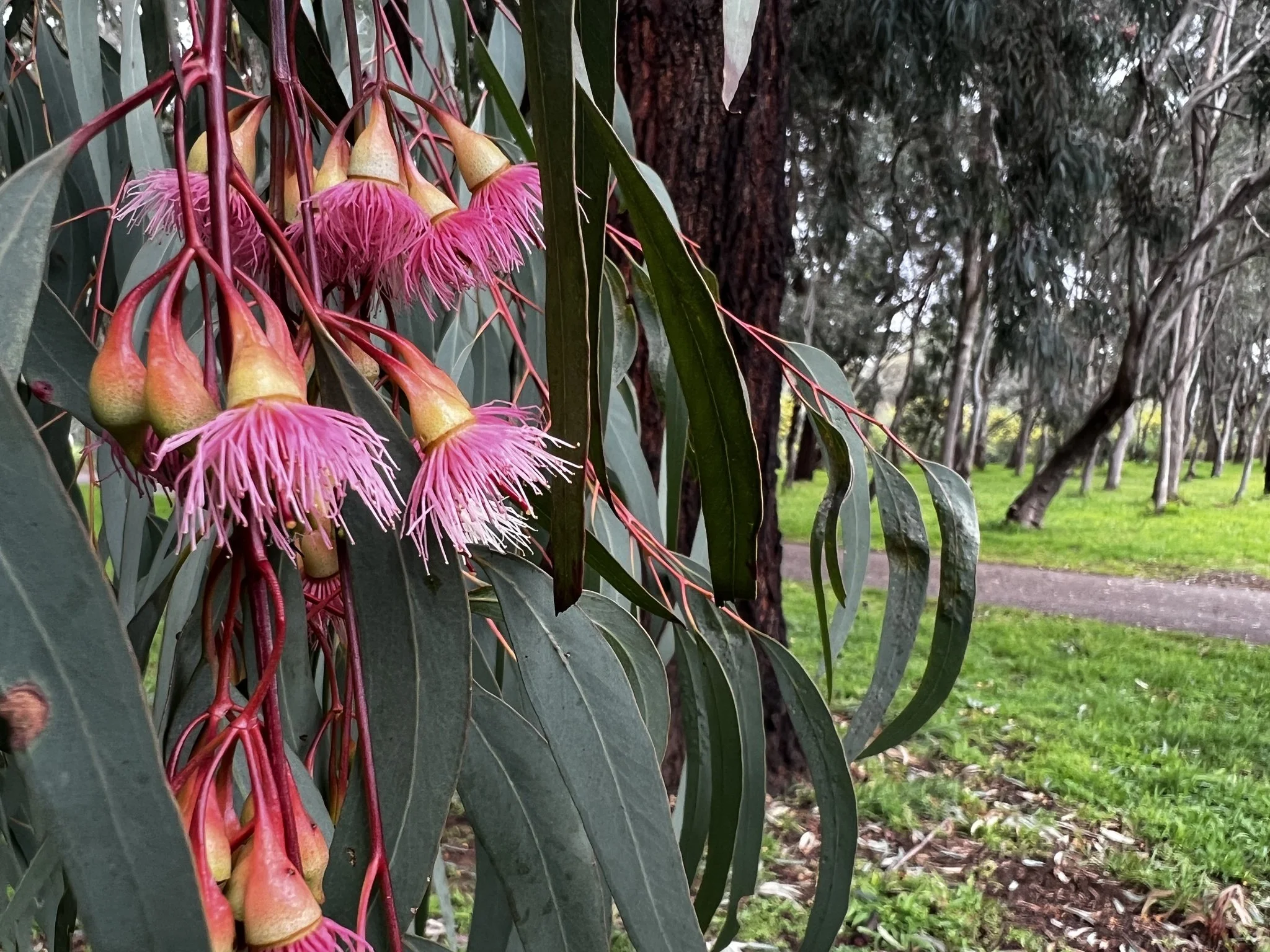
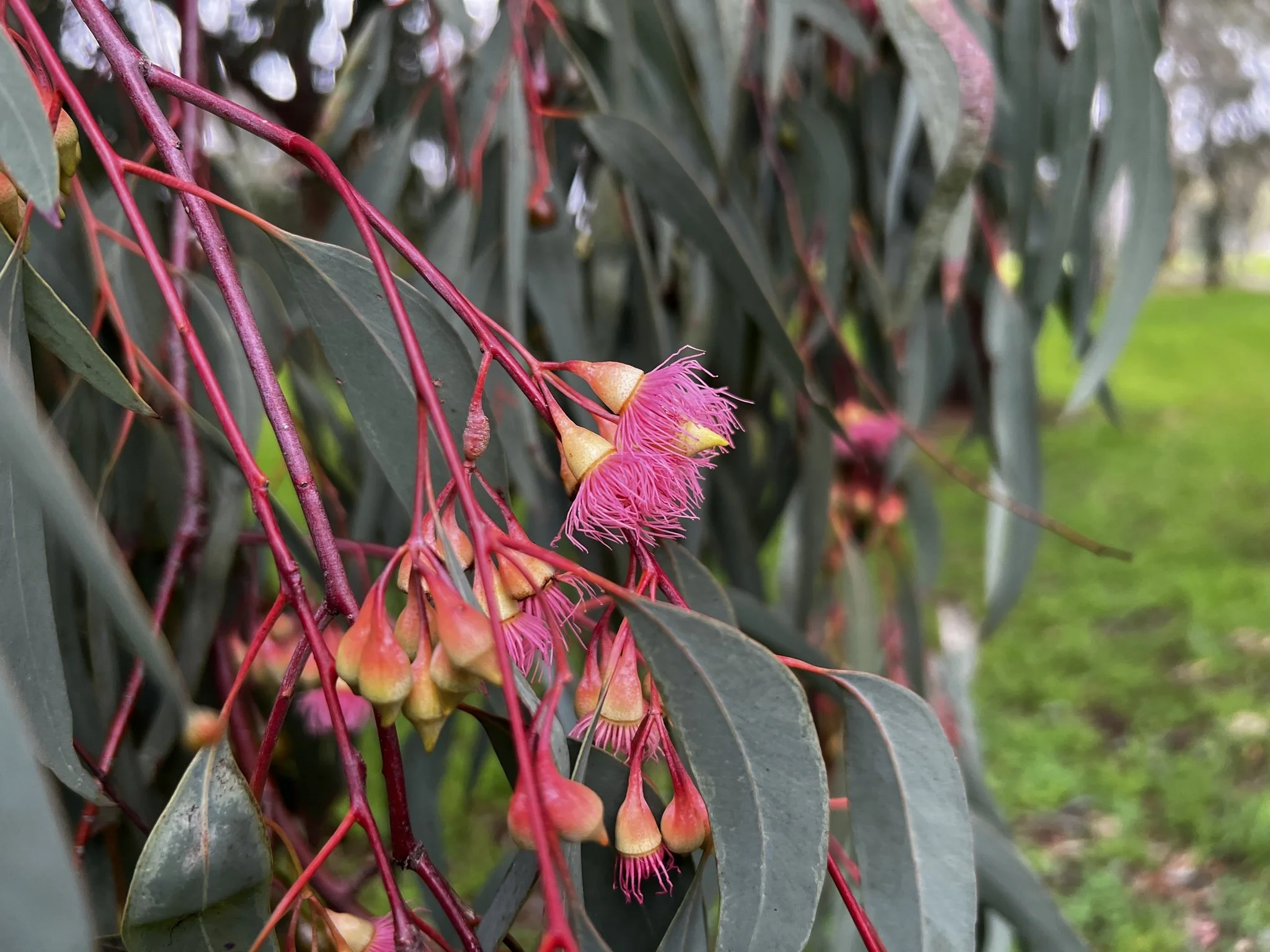
The Red Ironbark (Eucalyptus sideroxylon), is one of Australia’s most distinctive and admired eucalypts, renowned for its striking bark and abundant pink flowers.
Its native range is inland eastern Australia; across New South Wales, southern Queensland, and parts of northern Victoria, typically in drier forest and woodland environments.
While adapted to these semi-arid landscapes, the species has been successfully introduced to many other regions of Australia—including South Australia. It’s also been planted in temperate and Mediterranean climates worldwide, including parts of California, southern Europe, and South Africa.
In the Adelaide region, Red Ironbark can be found in several Parks within your Park Lands.
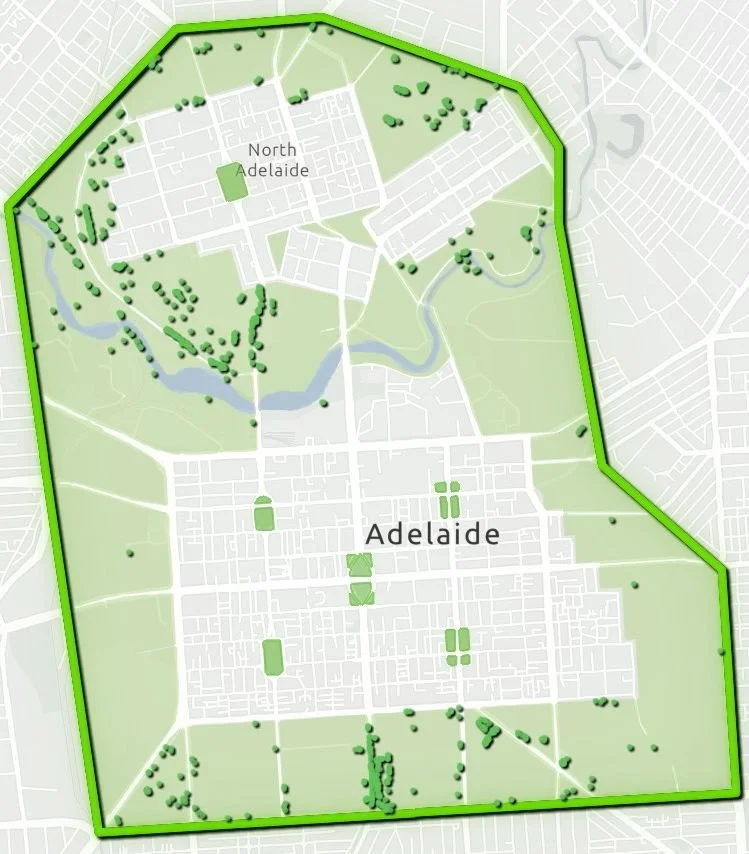
Locations of Red Ironbark trees in your Adelaide Park Lands, as marked on the City of Adelaide tree map.
As this map makes clear, there is a line of Red Ironbark trees along the edge of Peacock Road, next to the tram line in Veale Park / Walyu Yarta (Park 21).
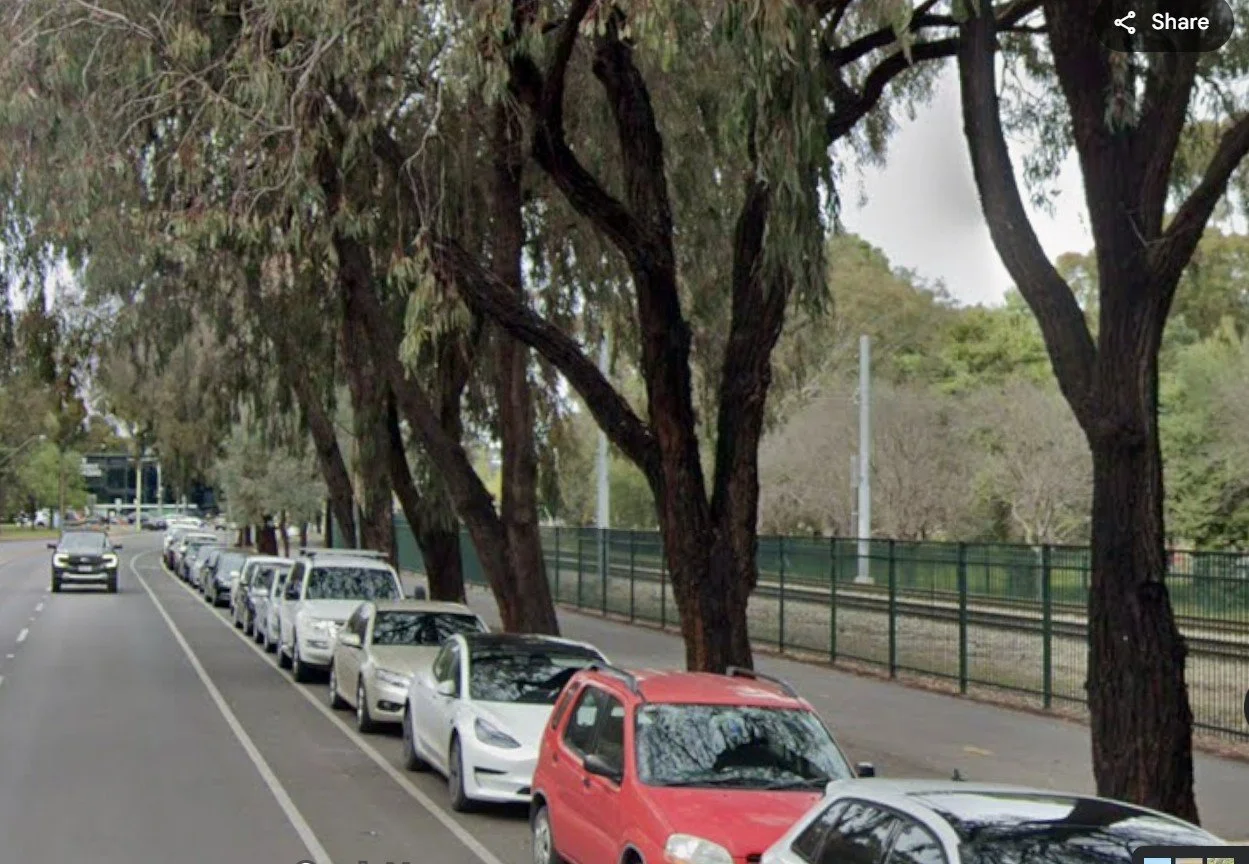
The Red Ironbark avenue of trees alongside the tram line on the edge of Peacock Rd in Veale Park / Walyu Yarta (Park 21). Pic: Google Streetview
Dozens of others Red Ironbark trees may be found between the horse paddocks in Lefevre Park / Nantu Wama (Park 6), and near the netball courts in Josie Agius Park / Wikaparntu Wirra (Park 22).
But one other Park Lands location where Red Ironbark trees make a striking statement, is between the fairways of the North Adelaide golf courses on Possum Park / Pirltawardli (Park 1).
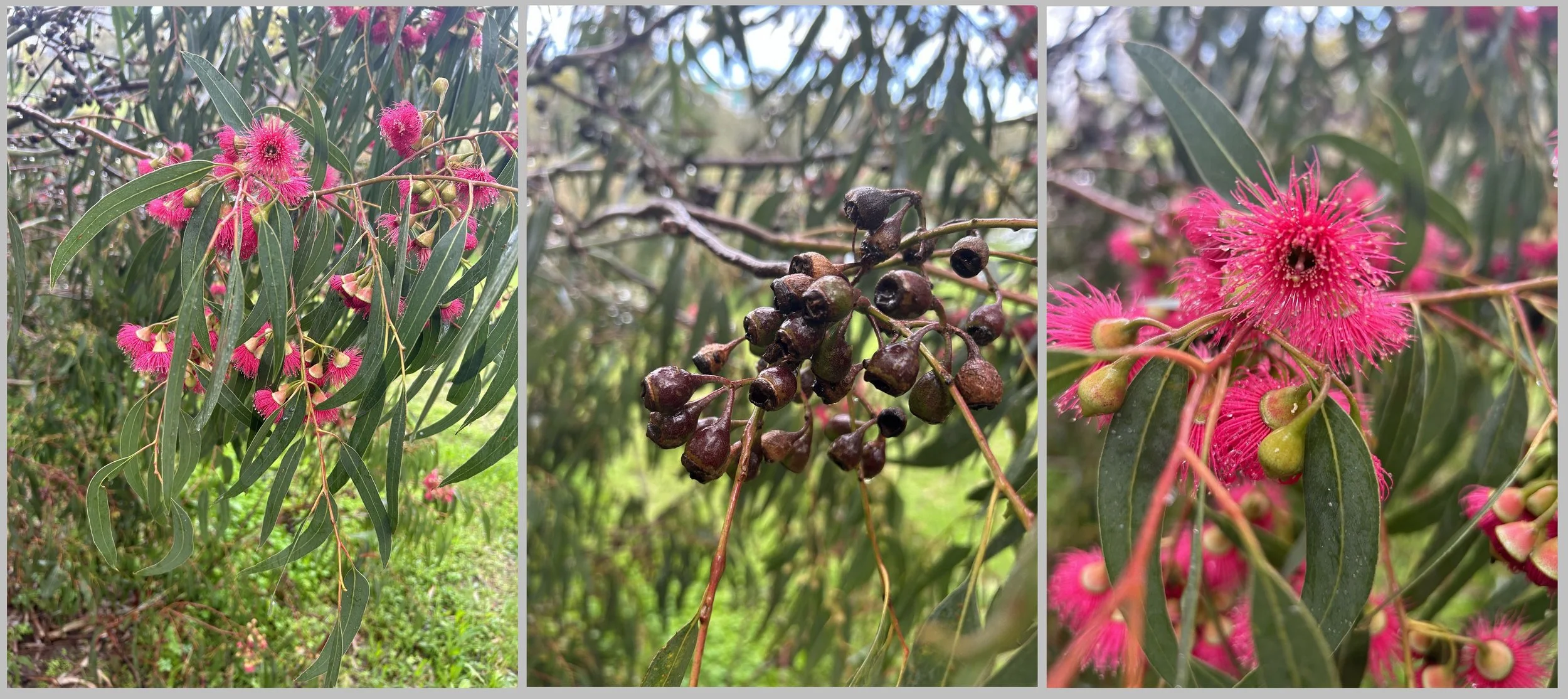
Red Ironbark in Possum Park / Pirltawardli (Park 1) Pics: @alexander_raffetto / iNaturalist. Creative Commons licence.
Red Ironbark can be readily distinguished from other eucalyptus species by a combination of its bark, foliage, and flowers. The trunk and branches are covered in deeply furrowed, rough bark that is almost black in colour and rich in iron-like hardness—a characteristic that gives the tree both its common and botanical names (from the Greek sideros, meaning “iron”).
This rugged texture contrasts sharply with the smoother bark of many other eucalypts. The adult leaves are narrow, lance-shaped, and dull to dark green, often with a greyish tinge, arranged alternately along the stems.
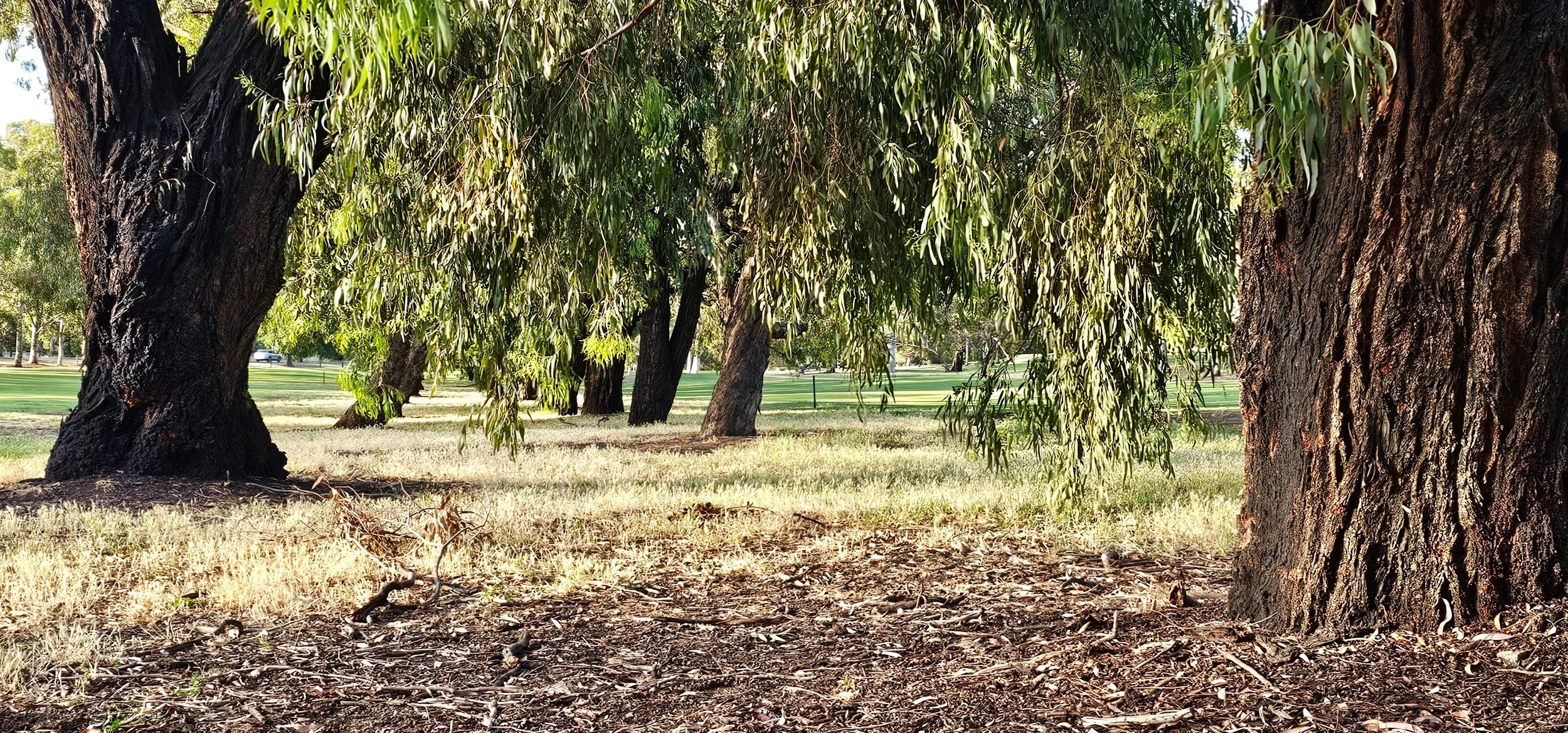
Two rows of Red Ironbark trees in-between fairways in Possum Park / Pirltawardli (on the North golf course) between Mills Terrace and War Memorial Drive.
Flowering typically occurs from winter through to late spring, producing clusters of showy blossoms that range from pale pink to deep crimson. The combination of vivid flowers and dark bark creates a striking visual effect, particularly when viewed in sunlight.
Young Red Ironbarks display noticeable differences from mature trees. Juvenile foliage is generally broader, rounder, and arranged in opposite pairs, while the bark of saplings is smoother and lighter before developing the dense, fissured ironbark with age. Over time, the tree may reach heights of 20 to 35 metres, forming a sturdy, upright crown.
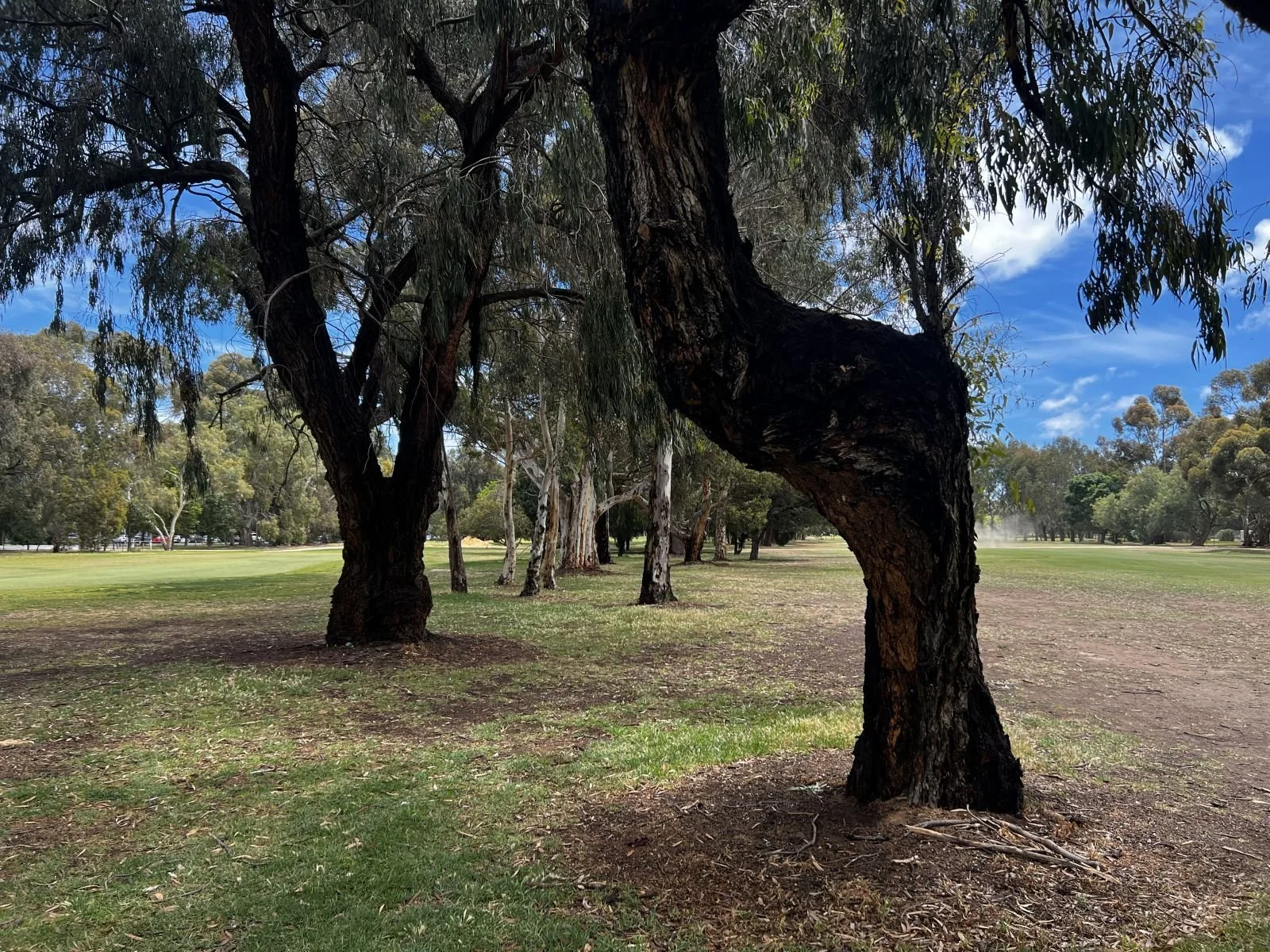
Two Red Ironbark trees in-between fairways in Possum Park / Pirltawardli (on the South golf course) near War Memorial Drive.
Want to know more about the plants in your Park Lands? Head over to iNaturalist where you can record, share and discuss your findings with fellow naturalists.
See the other plants featured in this series here:

