
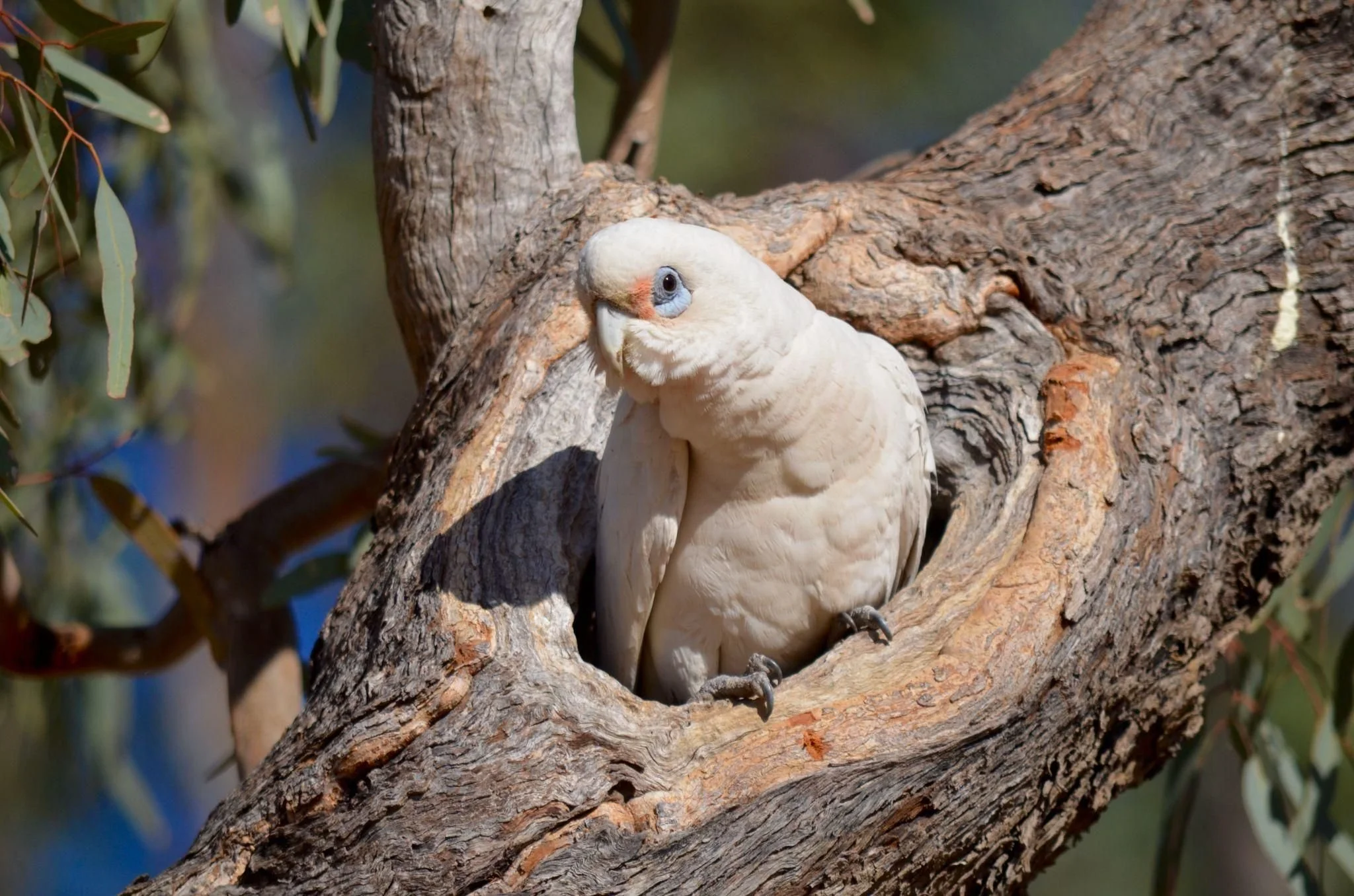
by Nick Munday, Adelaide Urban Birding
The subject of this article is a bold and audacious member of your Adelaide Park Lands avifauna: the Little Corella (Cacatua sanguinea).
This small, mostly white cockatoo, about the same size as a Galah, is hyper-abundant in the Adelaide region (notoriously so in some places).
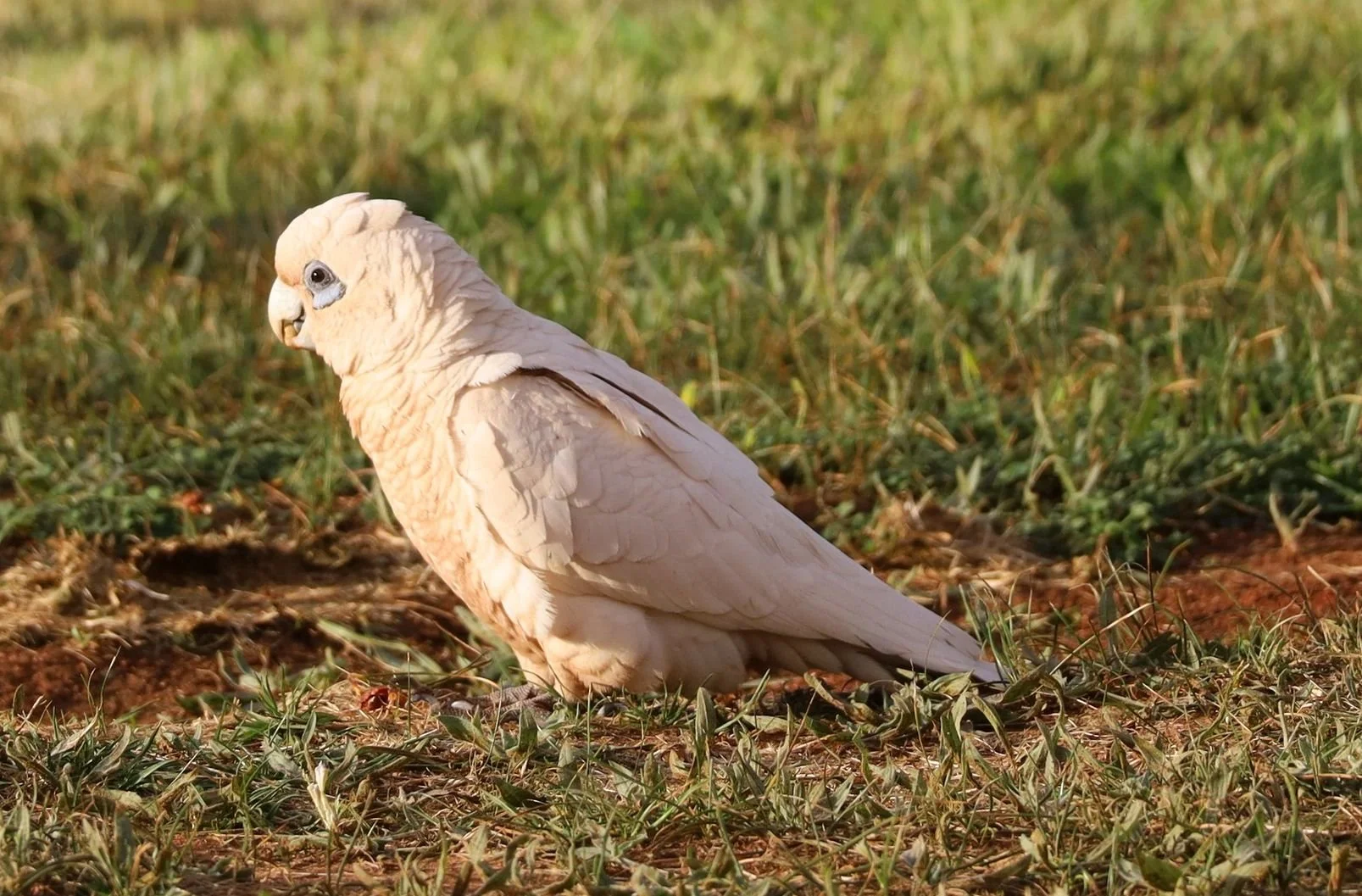
A Little Corella in Victoria Park / Pakapakanthi (Park 16). Pic: Jan Bowman
Corellas are naturally a woodland and grassland species, abundant across the interior of the Australian continent. Their preference is for a habitat consisting of a mix of open grass for feeding with old-growth trees for nesting, usually along inland watercourses.
However, your Adelaide Park Lands are an ideal substitute.
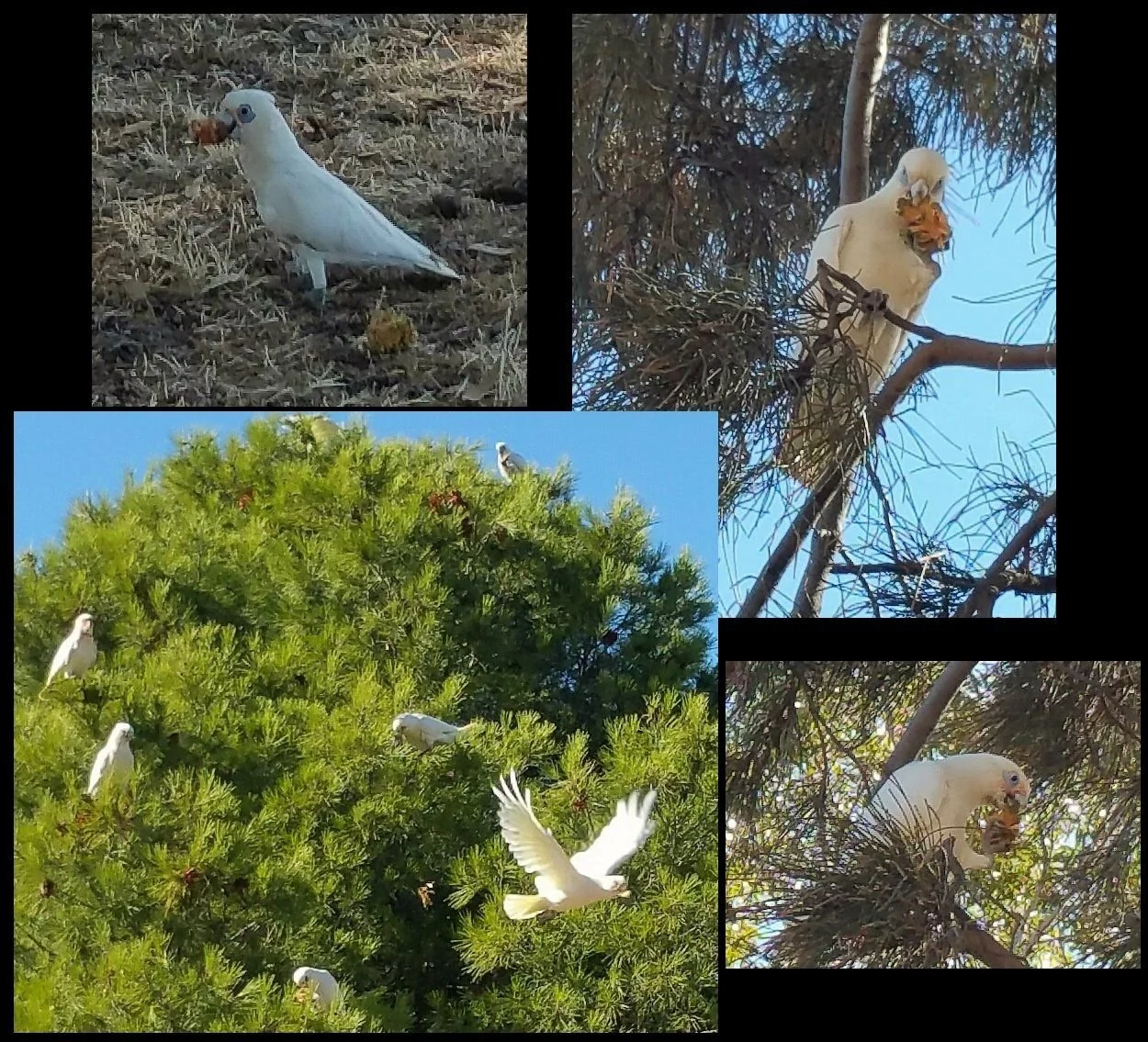
Little Corellas feeding on pine trees in Josie Agius Park / Wikaparntu Wirra (Park 22). Pics: Shane Sody
The wide-scale clearance of natural vegetation, in favour of cropping, across the Adelaide Plains and River Murray region has been to the detriment of many species, but not the Little Corella. On the contrary, it has led to a population explosion of these birds, which are now a serious pest in many agricultural areas.
Many of South Australia’s cropping townships now face ‘plagues’ of Corellas on a regular basis during harvest time, as the birds descend en masse in search of easy meals and access to water. As grass and seed feeding specialists, cereal crops have become the new staple diet of Corellas across the southern states.
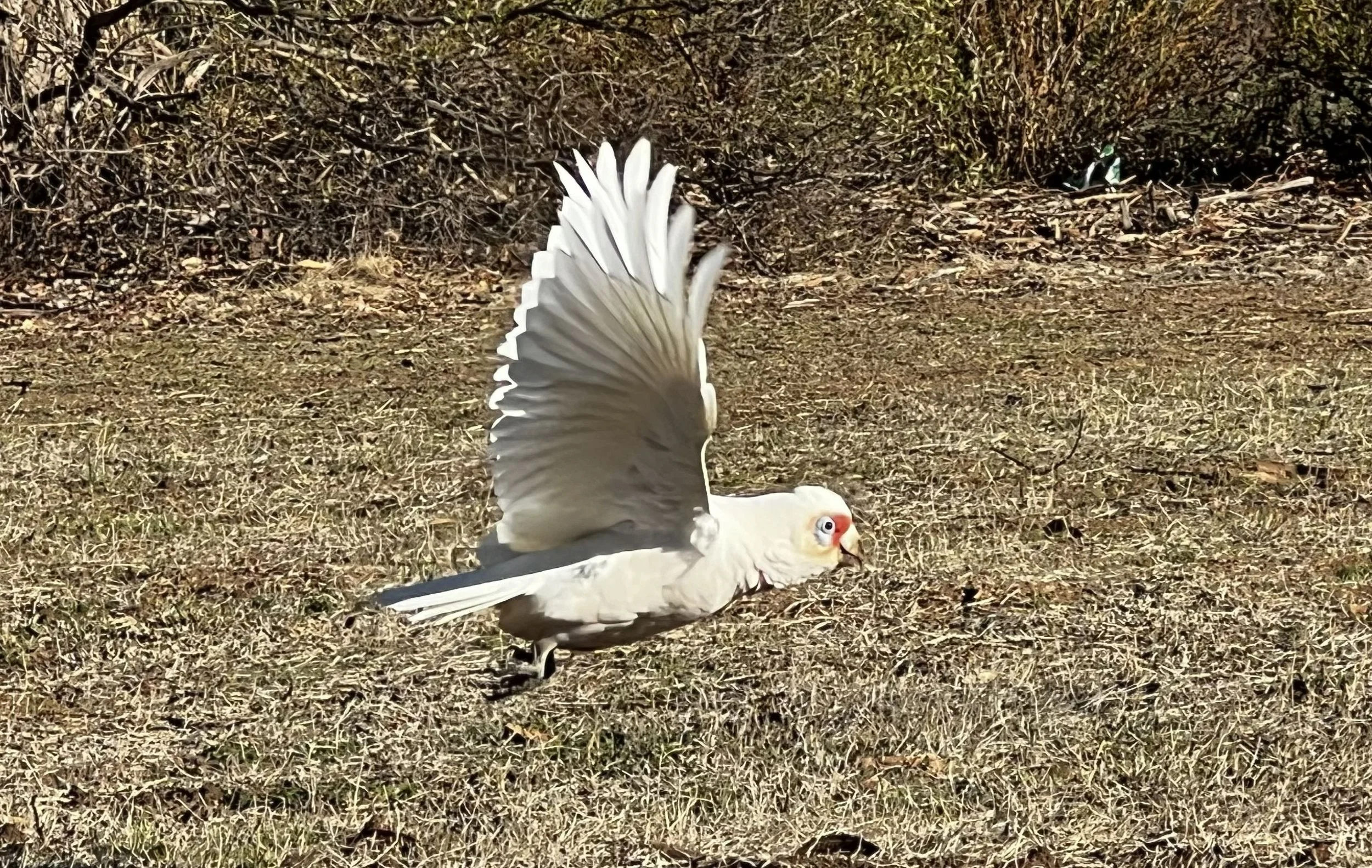
A Little Corella in flight in Golden Wattle Park / Mirnu Wirra (Park 21 West). Pic: Shane Sody
Of the three species of Corella, the Little Corella is both the smallest and the most widely distributed, being found across the majority of the Australian continent.
It can be easily confused for the two other species: the larger Long-Billed Corella (Cacatua tenuirostris) and the Western Corella (Cacatua pastinator).
Historically, only the Little Corella had been recorded in the Adelaide region, with the Long-Billed Corella confined to the south-east of the continent and the Western Corella confined to the south-west.
However, the Long-Billed Corella has undergone a dramatic range expansion in recent decades and can now be found across much of the eastern seaboard and into the Mount Lofty Ranges (although much of this range expansion could be attributed to escaped or released caged birds from the pet industry).
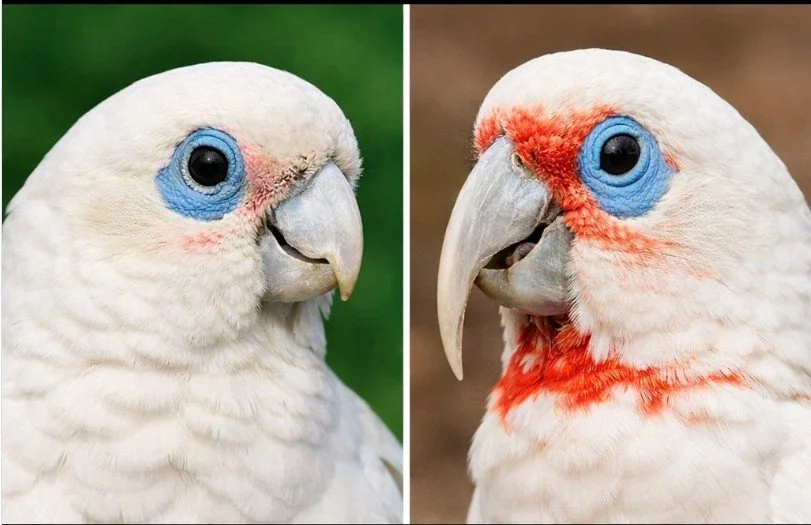
Little versus Long-billed corella. Pics: David Marr @healthwealthandthebird
It is now a common occurrence to find both the Little Corella and the Long-Billed Corella feeding together in your Adelaide Park Lands, and hybrids between the two species may sometimes occur.
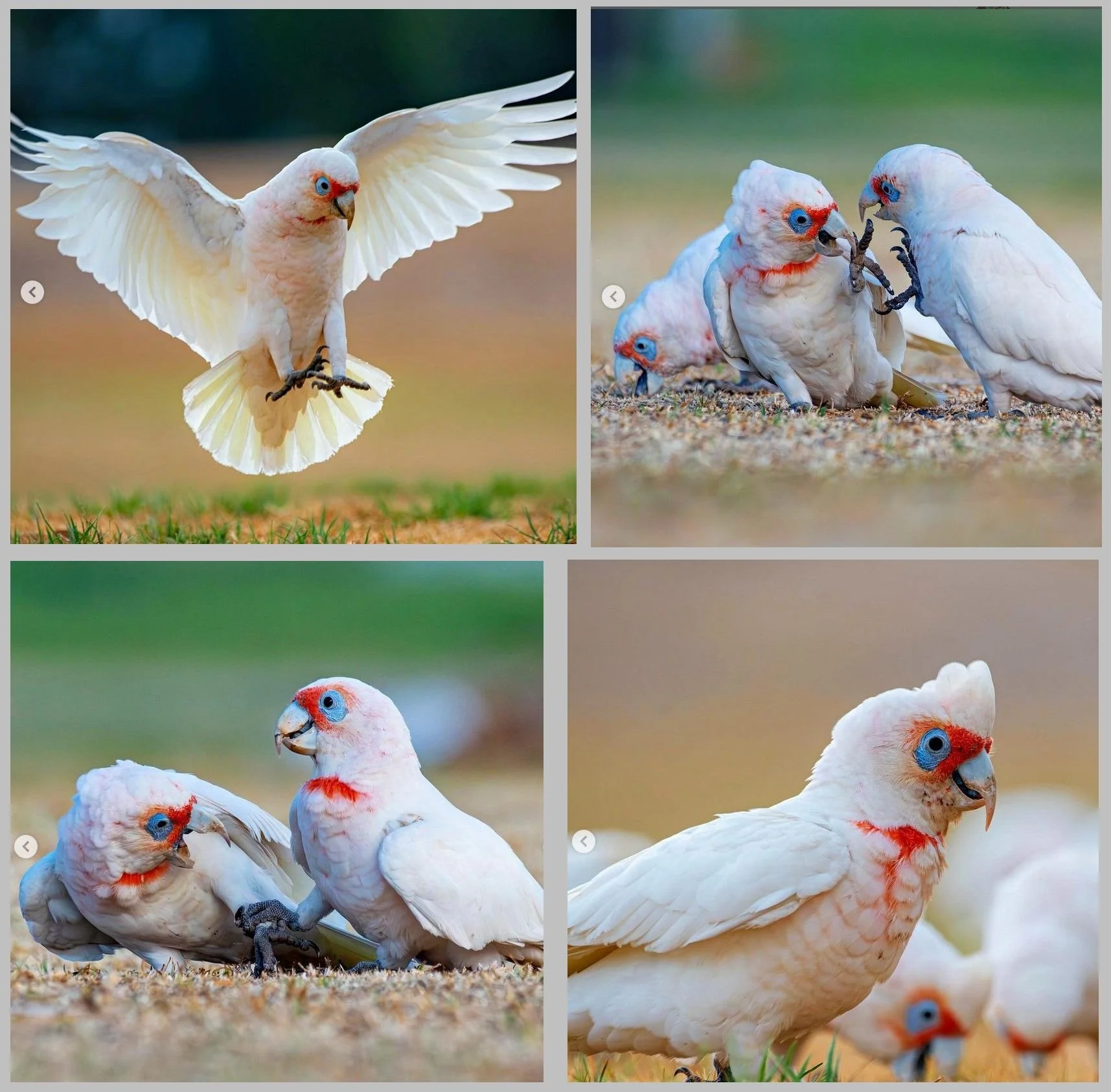
Long-billed Corellas (not to be confused with Little Corellas) in Victoria Park / Pakapakanthi (Park 16). Pics: @dr.birdnerd
Corellas, like most parrots, are highly social birds and form close familial ties. Corellas typically congregate in large flocks, sometimes very large, consisting of multiple hundreds if not thousands of birds.
It is not uncommon to encounter these enormous flocks in your Adelaide Park Lands during the summer months when natural food sources are more scarce and smaller flocks begin to converge together.
A large flock of Little Corellas on Ellis Park / Tampawardli (Park 24)
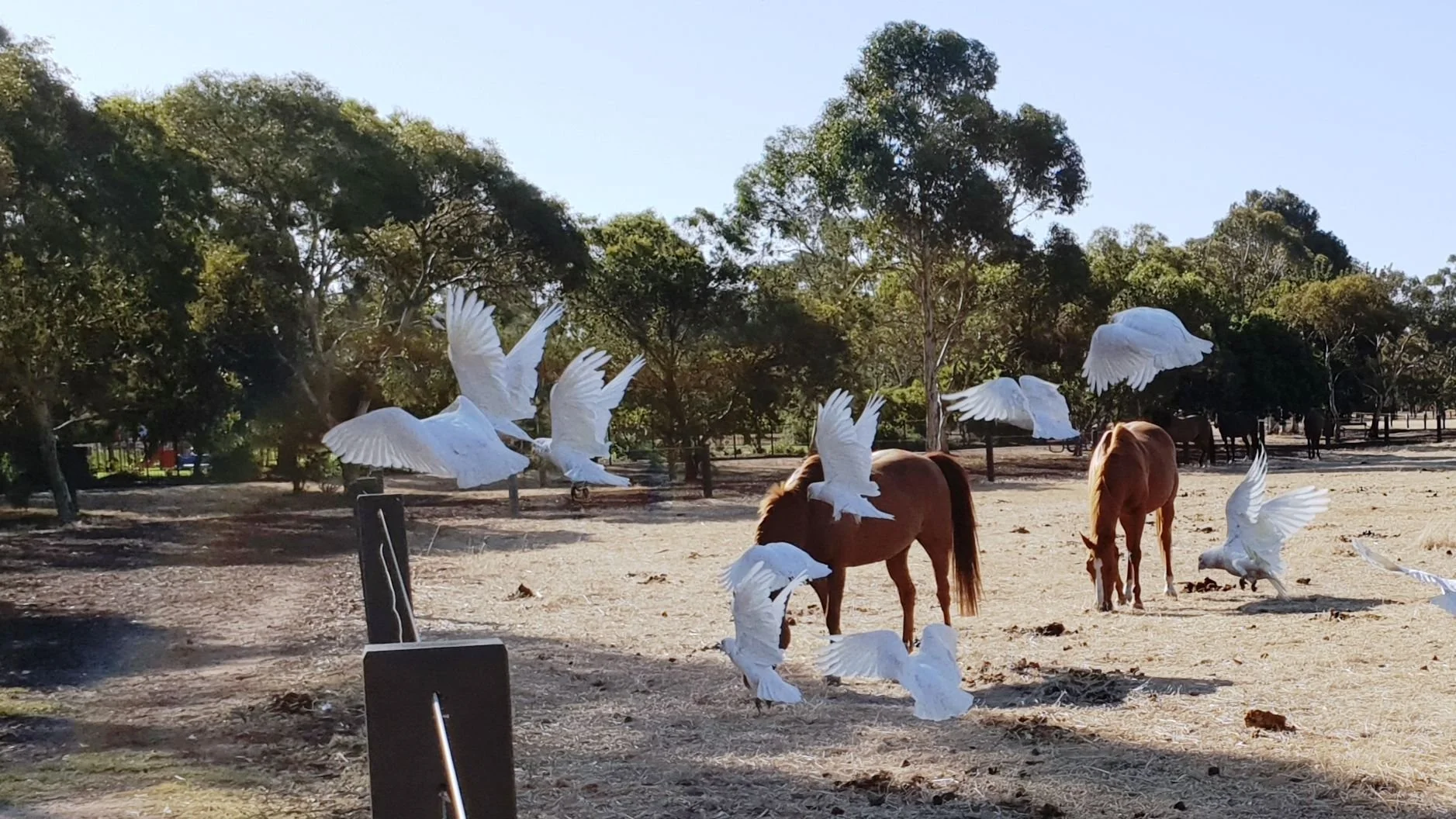
A smaller corella flock in Lefevre Park / Nantu Wama (Park 6). Pic: Shane Sody
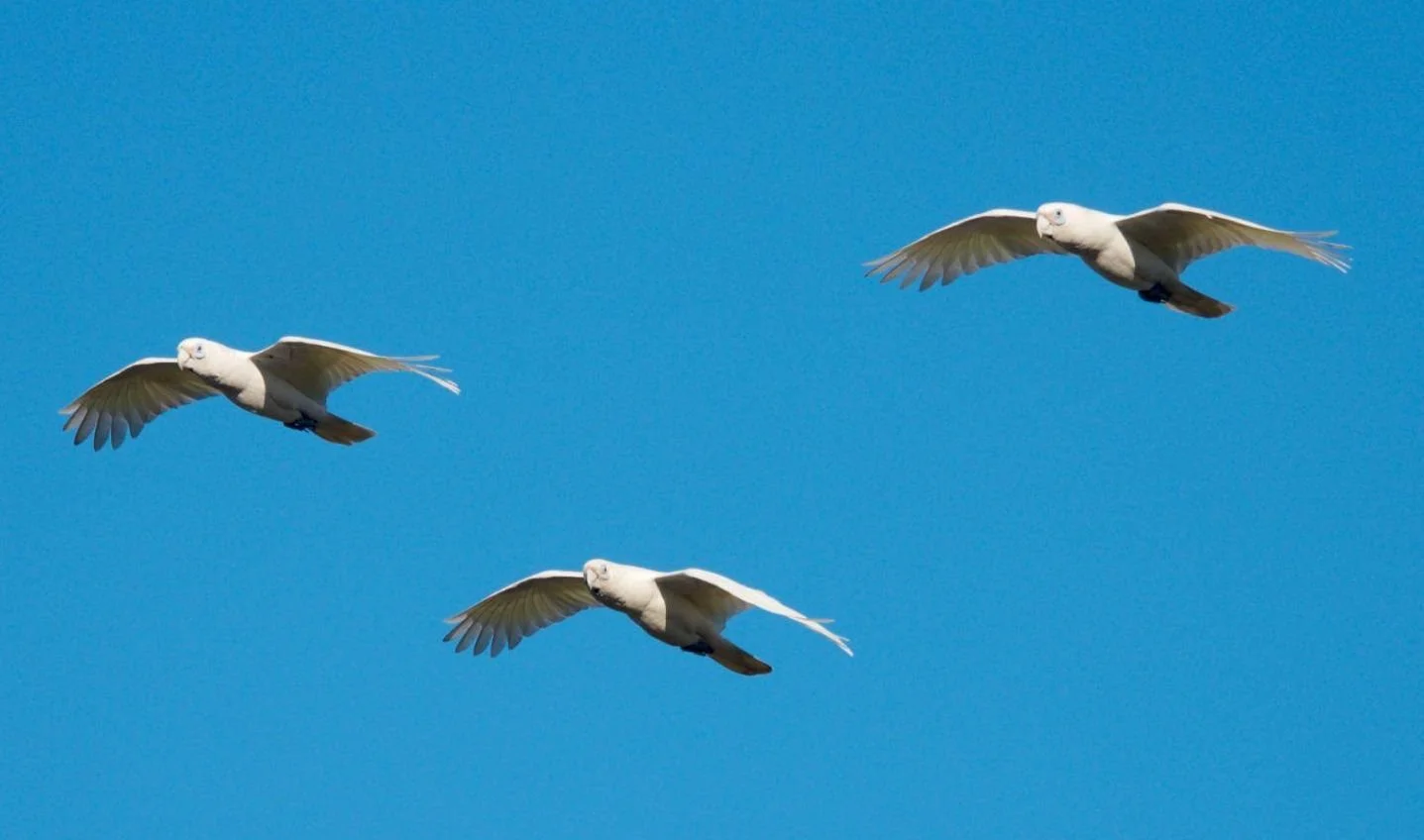
A small flock of Little Corellas in your Park Lands: Pic: Nicholas Munday, Adelaide Urban Birding
Corellas usually mate for life, and in their natural environment will commence breeding any time after significant rain events. Within suburban Adelaide, their breeding habits can be more sporadic with water and food being widely available. Nesting occurs in tree hollows, with both parents brooding the eggs until hatching, and thereafter raising the chicks until fledged.
Little Corellas can be found across virtually all of your Adelaide Park Lands, including the city squares. Good places to look for these birds include Botanic Park (Park 11), Rymill Park / Murlawirrapurka (Park 14), Victoria Park / Pakapakanthi (Park 16), and Veale Park / Walyu Yarta (Park 21).
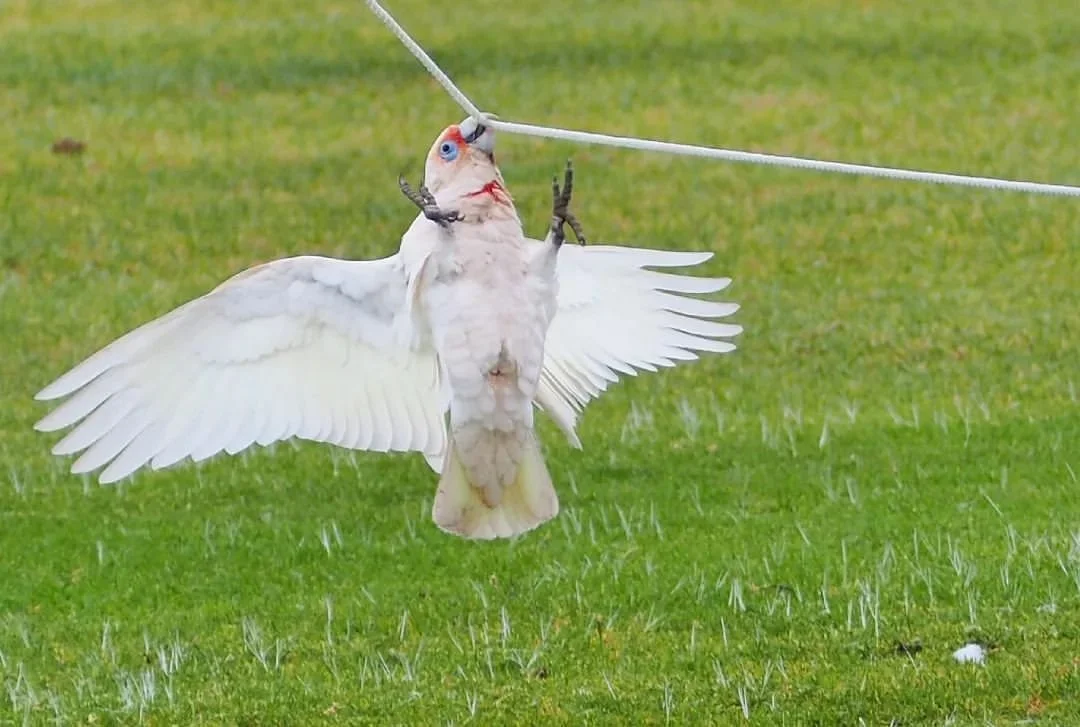
A Long-billed Corella having fun in Veale Park / Walyu Yarta (Park 21). Pic: Tully Haines
To find out about other birds in your Adelaide Park Lands, check out our What Bird is That? series.
Top (banner) photo: Nicholas Munday, Adelaide Urban Birding
Nicholas Munday is an environment and planning lawyer with degrees in law and science (evolutionary biology and ecology) from the University of Adelaide.
He has a strong interest in biodiversity conservation and runs the ‘Adelaide Urban Birding’ Instagram account (@adelaideurbanbirding), dedicated to his photography of native birds in the Adelaide metropolitan area.
In his free time, Nicholas is well-known in the Adelaide choral music and theatre communities and also enjoys bushwalking, writing, and, of course, photography.
The opinions expressed in this article are entirely those of the author. This author is not affiliated with the Adelaide Park Lands Association.


