
By Mij Tanith
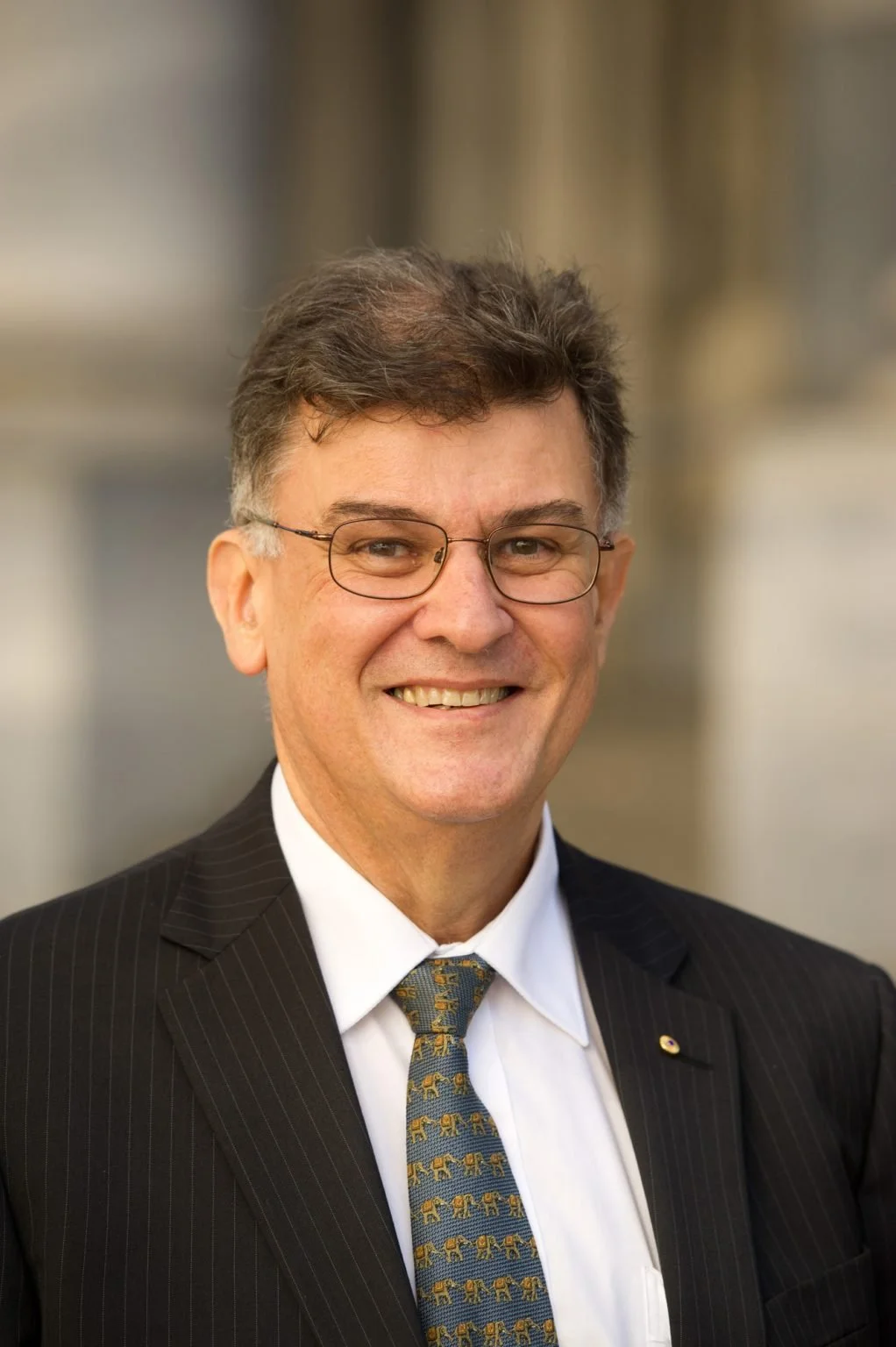
The Hon Reverent Dr Lynn Arnold AO is a man of great compassion. After a fifteen-year career as a Labor MP, including eleven as a member of Cabinet and a brief stint as Premier, he held senior leadership roles in World Vision [1997-2007] and Anglicare SA [2008-2012]. In recent years he has chaired a number of community organisations in the fields of social justice, reconciliation and sustainable development, and is currently serving as an assistant priest at the St Peter’s Anglican Cathedral.
He has also recently been appointed Patron of the Adelaide Park Lands Association. This is a timely role for Dr Arnold, as it will bring together his years of experience, his pursuit of social justice, and his belief in maintaining of our unique parklands as pubic space for the enjoyment of all.
“Our Park Lands must not be seen as a land bank by this or any other government,” he says. “We are unique, we are famous throughout the world in having our city surrounded by green space – public green space. And we need the overlay of World Heritage status to protect this space for future generations.”
Asked what advice he would give to Peter Malinauskas in the current stand-off between the government and the people of Adelaide, Dr Arnold makes a number of pertinent points.
“Firstly,” he says, “the lack of transparency, and the argument that plans for development of areas of Park Lands are ‘Commercial in Confidence’ has led to a smell of corruption. One example is the building of a 39-storey tower block on the Festival Plaza, with the Walker Corporation paying just one dollar a year in rent for this public space. Secondly,” he continues, “surely the Premier, like every political leader, wants to be remembered for the good he has done for his constituents, and for the environment. Right now, his legacy looks to be quite toxic. His vision of turning Adelaide into the motor sport capital of Australia is not shared by the people. His plans to sell off sections of the Park Lands for commercial development, and his extreme incapacity to listen to any opposing views, pose a genuine threat to democracy.”
And so, is the “Stop the Chop” campaign winnable? “Winning or losing,” says Dr Arnold, “Is perhaps not the question. There’s a concept,” he says, “called Hopeful Pessimism. Basically, it is the idea that, when it comes to activism, you don’t necessarily need to believe you can win. The chances of success might look small, but you can still hope for positive change. The more intractable Malinauskas is in his pursuit of elite sport and commercial development of our Park Lands, the more he refuses to listen to our concerns, the stronger the opposition will become. And so, as this movement continues to grow, if we keep up the pressure on the government, if we refuse to give up, or feel defeated by apparent lack of success, then it is entirely possible that what may look like an unwinnable campaign can suddenly be won.”
Our new patron, then, is not just a figurehead. He is a man of ideas, of passionate conviction, a man who is already fighting for the preservation of public access to all of our Parklands.
The concept of Hopeful Pessimism is explored in a book of the same name by Mara van der Lugt.

