
By Nicholas Munday, Adelaide Urban Birding
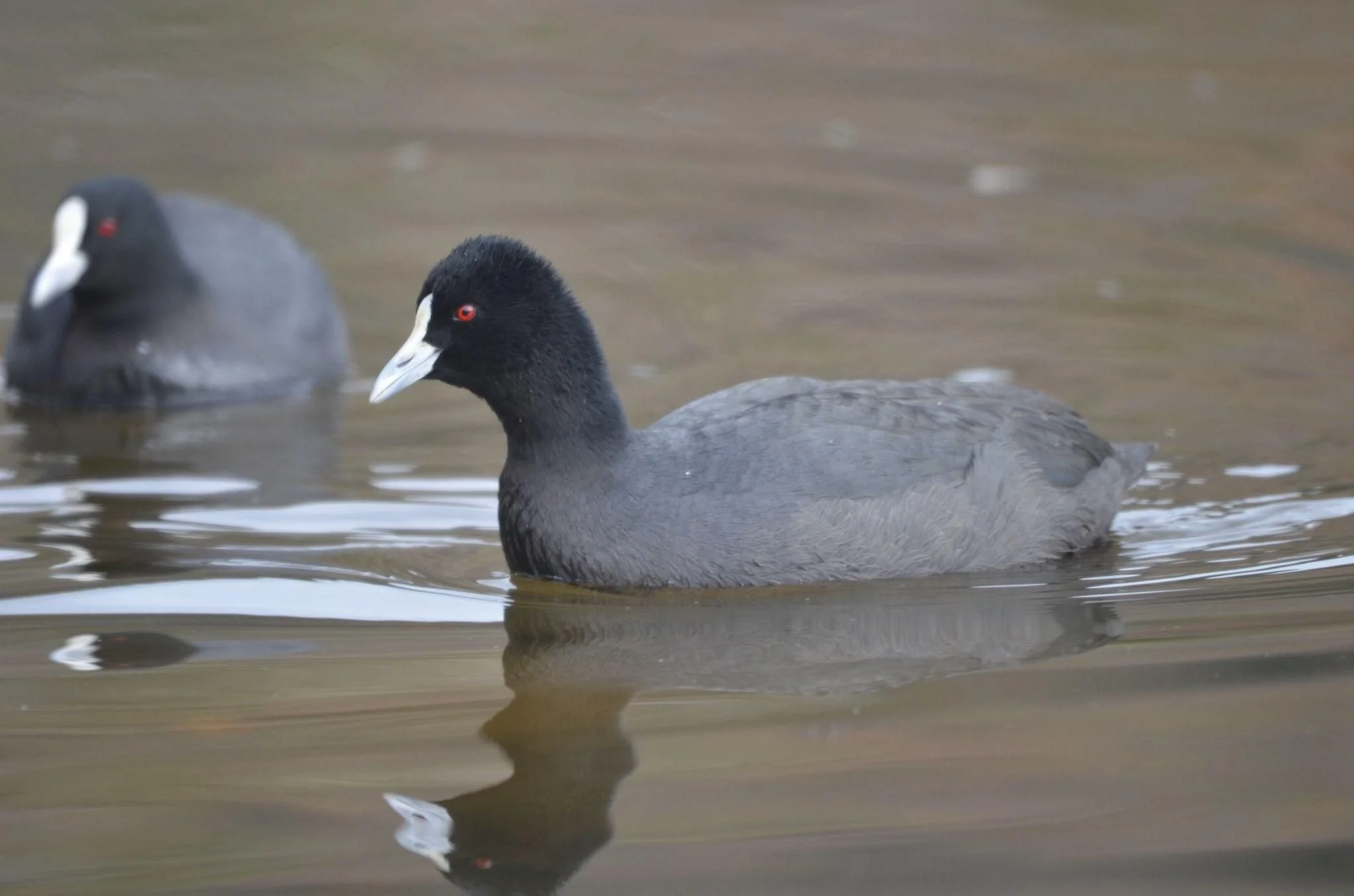
The subject of this article is a native bird with a deceptively foreign-sounding common name: the Eurasian Coot (Fulica atra).
An exceptionally widespread species, found across the majority of the Australian continent as well as (unsurprisingly) Indonesia, Asia, and Europe, the Eurasian Coot is a truly adaptable bird.
With striking uniform sooty-black plumage and contrasting white beak with a red eye, the Eurasian Coot is unmistakable, although from a distance its silhouette could be confused with one of its close relatives, such as the Dusky Moorhen (Gallinula tenebrosa) or the Black-Tailed Native Hen (Tribonyx ventralis), which are also found in your Adelaide Park Lands.
Neither of these close relatives, however, possess the stark-white beak, which is a diagnostic feature of the Coots.
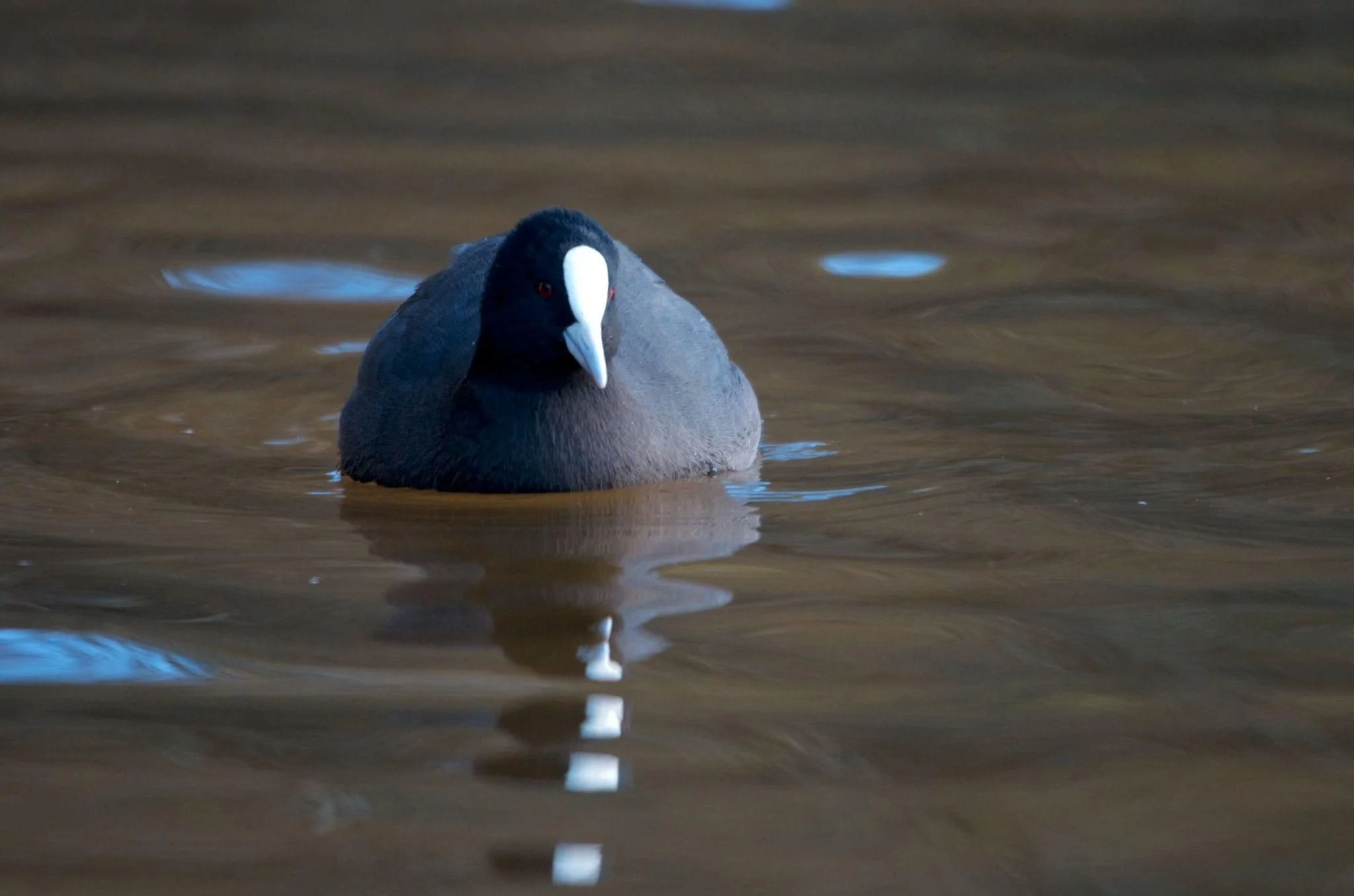
Eurasian Coot with its brilliant white beak and frontal ‘shield’; an easily recognisable feature of this bird that can be made out at a distance. Photograph: Adelaide Urban Birding.
Coots are specialist waterbirds belonging to the rail family (Rallidae), a diverse and cosmopolitan family of birds that include everything from diminutive and skittish crakes, weighing less than 50 grams, to the stocky and flightless South Island Takahe of New Zealand which weighs several kilograms.
The family contains nearly 150 species across nearly 40 genera, including some truly bizarre flightless species, such as the Lord Howe Island Woodhen or the Tasmanian Native Hen (often better known as the ‘Turbo Chook’). Many species feature allusions to landfowl in their common names, being known as ‘cocks’ and ‘hens’ (e.g. ‘Moorhen’) despite not being particularly closely related to fowl.
One feature that easily distinguishes Coots from other rails are their uniquely shaped feet; rather than having webbing between the toes, Coots have flattened lobes spanning the length of each of the phalanges. These look ridiculous and impractical on land, but which are clearly sufficient for swimming, and Coots are among the best adapted of all the rails for life on the water (rather than merely proximate to it).
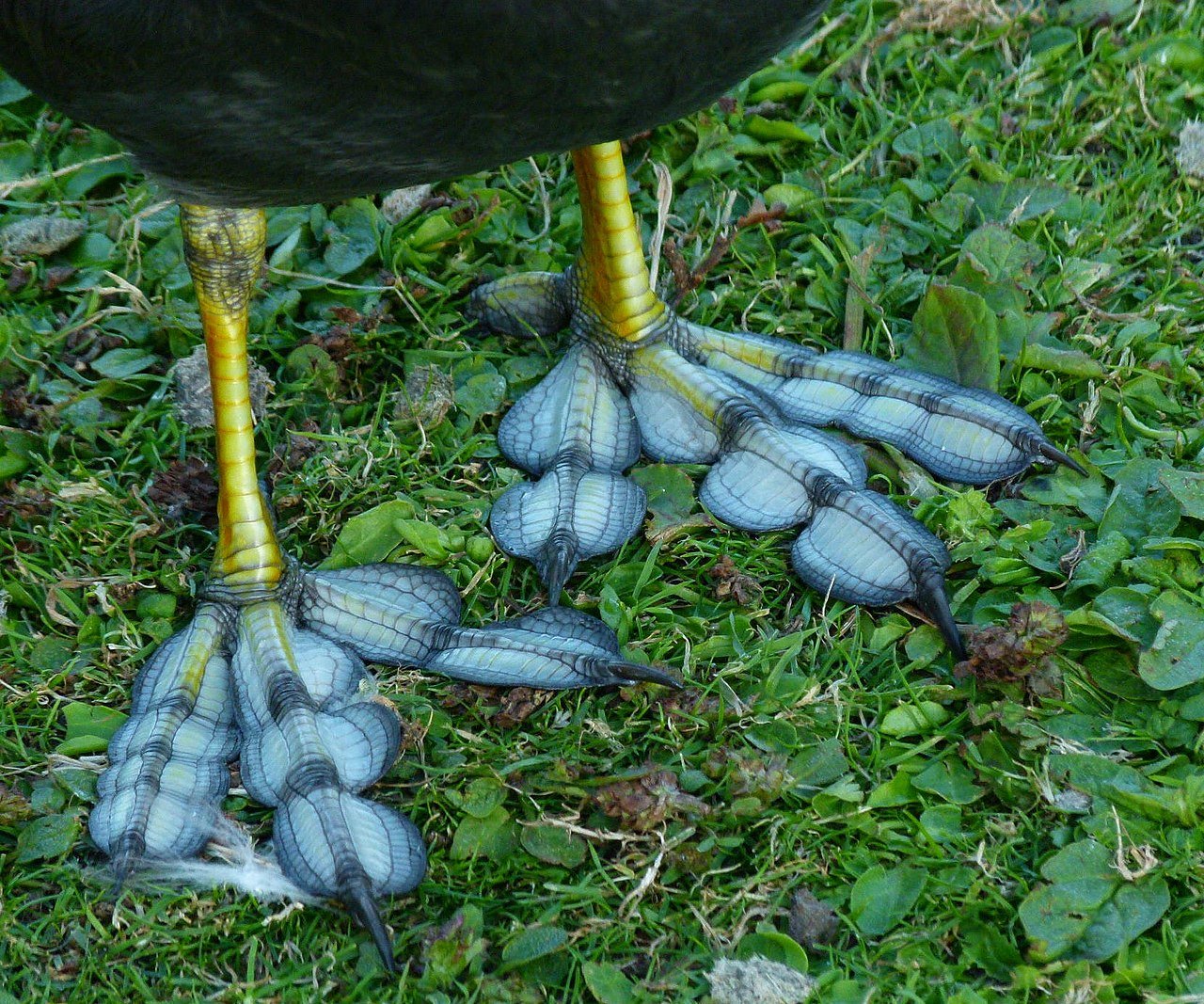
A Eurasian coot’s feet. Pic: Shyamal, Wikipedia Creative Commons licence
Coots spend most of their time consuming aquatic vegetation, although they will occasionally supplement their diet with invertebrates. They prefer dabbling and plucking vegetation from the surface of the water, but they are also well adapted to dive for vegetation at the bottom of lakes or lagoons, soaking their feathers to allow them to submerge to depths of up to seven metres.
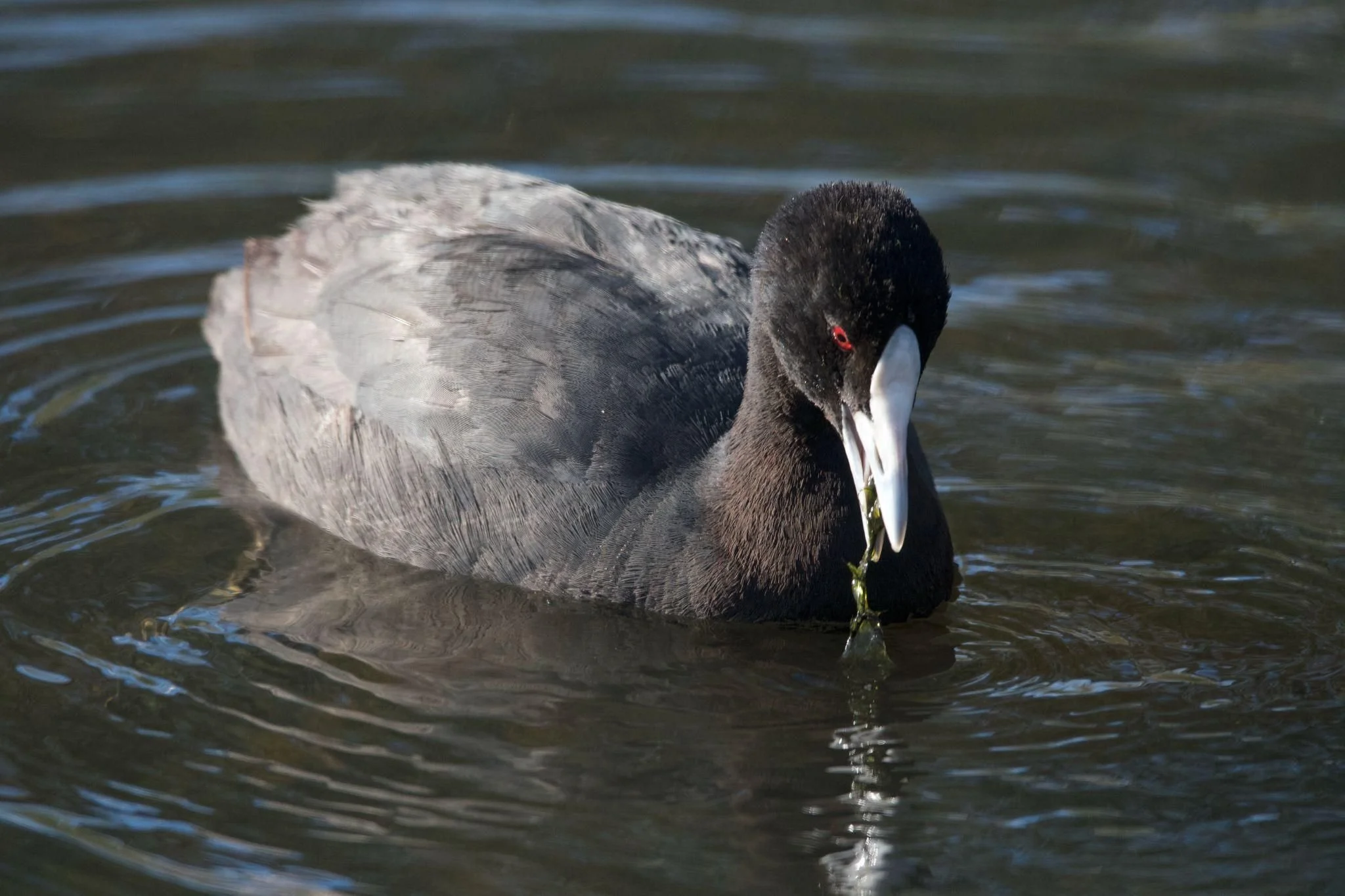
A Eurasian Coot feeding on aquatic vegetation in Victoria Park / Pakapakanthi (Park 16). Photograph: Adelaide Urban Birding.
While adult Coots have a bold and sleek appearance, the same cannot be said of their offspring. Newly hatched Coots are unlikely to win any beauty competitions: their bodies are covered in a scraggly, grey fuzz with completely bald, red heads that look like a severe sunburn. It is assuring to know they grow out of this unsightly juvenile habit!
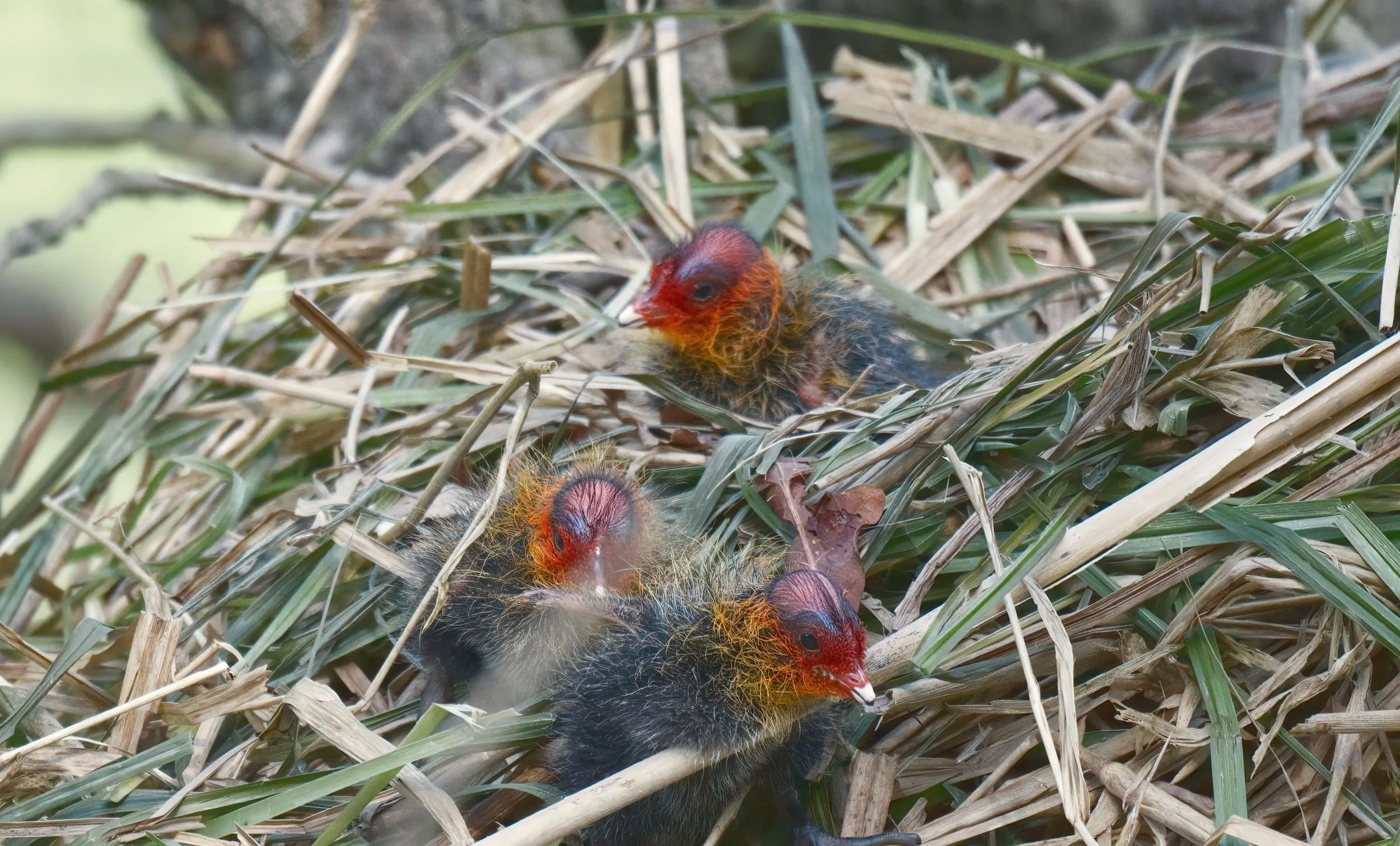
Newly-hatched Eurasian coot chicks. Pic: Shutterstock
Their preference for slow moving water means Coots have done exceptionally well in urban environments and your Adelaide Park Lands in particular. They will often form large flocks where food and habitat are of sufficient quality, although their needs are not particularly fussy: Coots require large open bodies of water, preferably fringed with reeds and grasses for building floating nests.
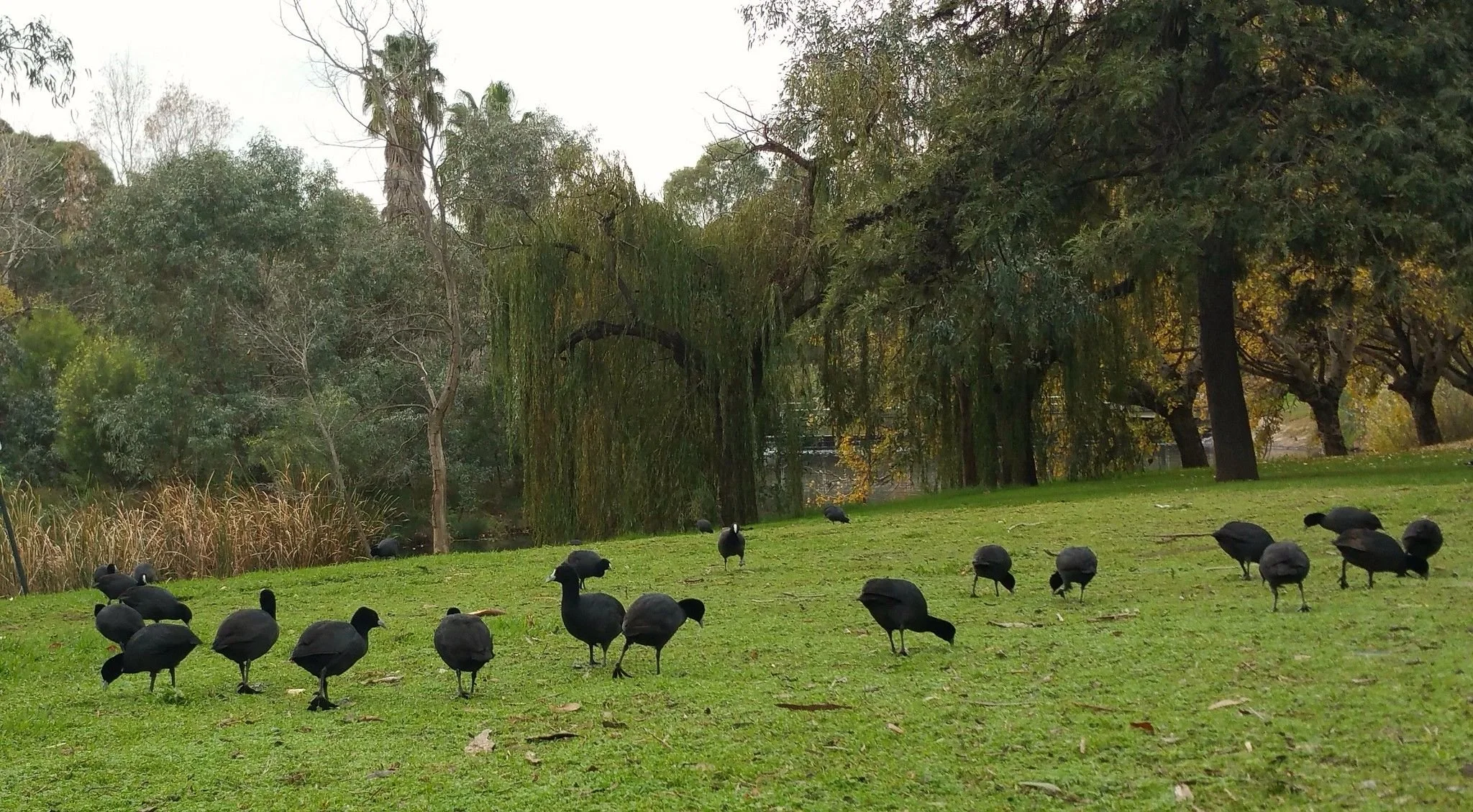
A flock of Eurasian coots on the banks of the River Torrens / Karrawirra Pari in Bonython Park / Tulya Wardli (Park 27). Pic: Shane Sody
Within your Adelaide Park Lands, Coots can be seen regularly along all the Parks that border the River Torrens, as well as in Victoria Park / Pakapakanthi (Park 16), the Adelaide Botanic Garden (Park 11), and Rymill Park / Murlawirrapurka (Park 14).
There is an iNaturalist page, which can show you exactly where citizen scientists (like you!) have observed Eurasian coots in Adelaide and elsewhere.
To find out about other birds in your Adelaide Park Lands, check out our What Bird is That? series.
Top (banner) photo: Eurasian Coots in the Adelaide Botanic Garden (Park 11). Photograph: Adelaide Urban Birding.
Nicholas Munday is an Environment and Planning Lawyer with degrees in Law and Science (Evolutionary Biology and Ecology) from the University of Adelaide. He has a strong interest in biodiversity conservation and runs the ‘Adelaide Urban Birding’ Instagram (@adelaideurbanbirding) account dedicated to his photography of native birds in the Adelaide Metropolitan area.
In his free time, Nicholas is well-known in the Adelaide choral music and theatre communities, and also enjoys bushwalking, writing, and (of course) photography.
The opinions expressed in this article are entirely those of the author. This author is not affiliated with the Adelaide Park Lands Association Inc.


