
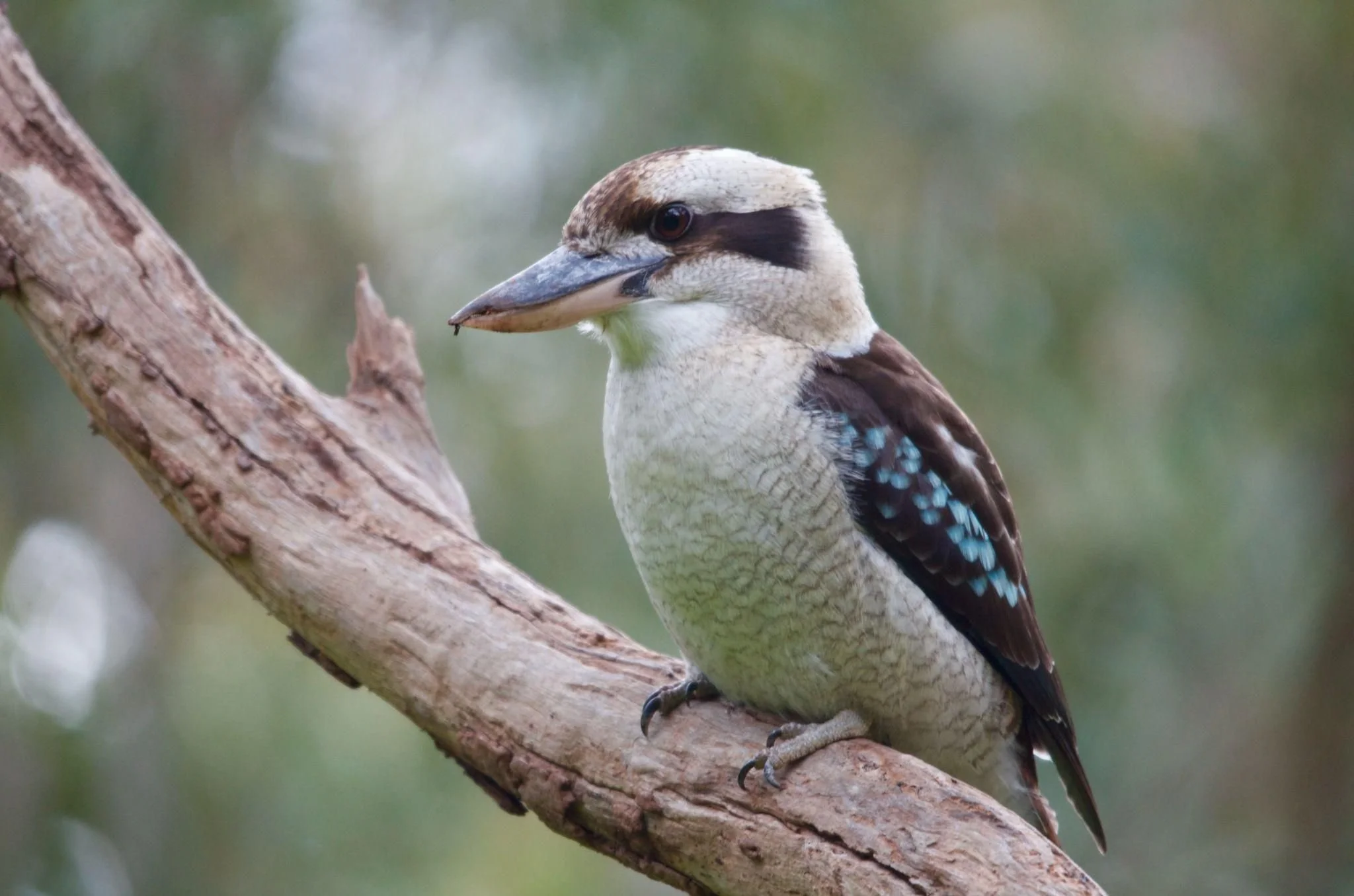
by Nicholas Munday, Adelaide Urban Birding.
The subject of this article is one of Australia’s most iconic and unmistakable birds: the Laughing Kookaburra (Dacelo novaeguineae).
Famous for its raucous, cackling call - the eponymous “laughing” that echoes through the landscape - the Laughing Kookaburra is emblematic of the Australian bush, but has adapted fairly well to urban environments and is a familiar resident of your Adelaide Park Lands.
Kookaburras are the largest of the kingfisher family (Halcyonidae) and tower over most kingfishers by a substantial margin.
Australia is home to ten species of kingfisher, including two species of Kookaburra: the Laughing Kookaburra, found across the eastern seaboard and introduced to Western Australia and Tasmania, and the Blue-Winged Kookaburra (Dacelo leachii), found across the tropical north of the country.
Confusingly, Laughing Kookaburras also have some blue across their wings, although this colouration is much more striking in the Blue-Winged Kookaburra.
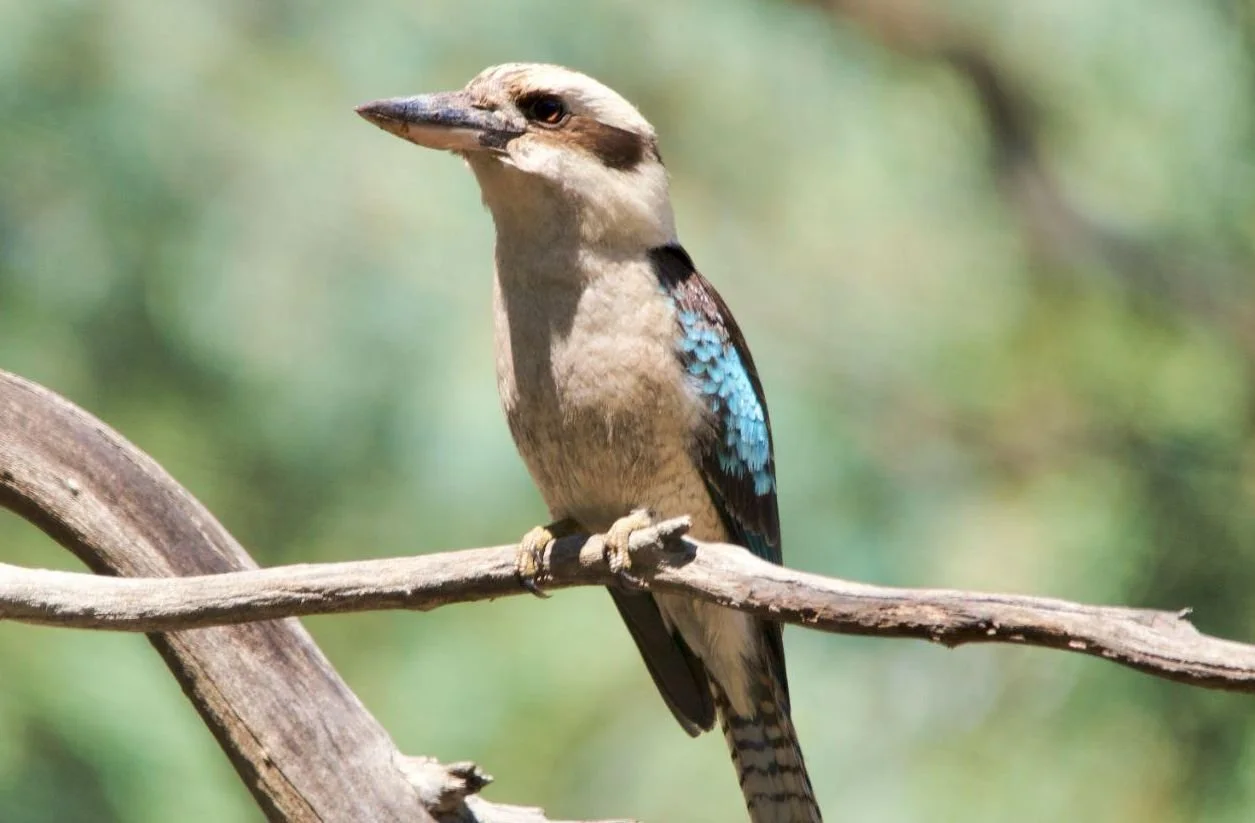
Laughing Kookaburras, confusingly, often have pronounced blue feathering on their wings (like this individual here from the Flinders Ranges). Photo: Adelaide Urban Birding.
The name ‘kingfisher’ is a bit of a misnomer in the Australian context, as only two species - the Azure Kingfisher (Ceyx azureus) and the Little Kingfisher (Ceyx pusillus) - feed exclusively on fish and aquatic invertebrates. Other kingfishers will feed readily in dryland areas away from watercourses.
This is true of the Kookaburras, which are much more strongly associated with bushland than rivers, and will eat all manner of invertebrates such as worms, insects, and spiders, together with vertebrates including lizards, snakes, and occasionally small mammals.
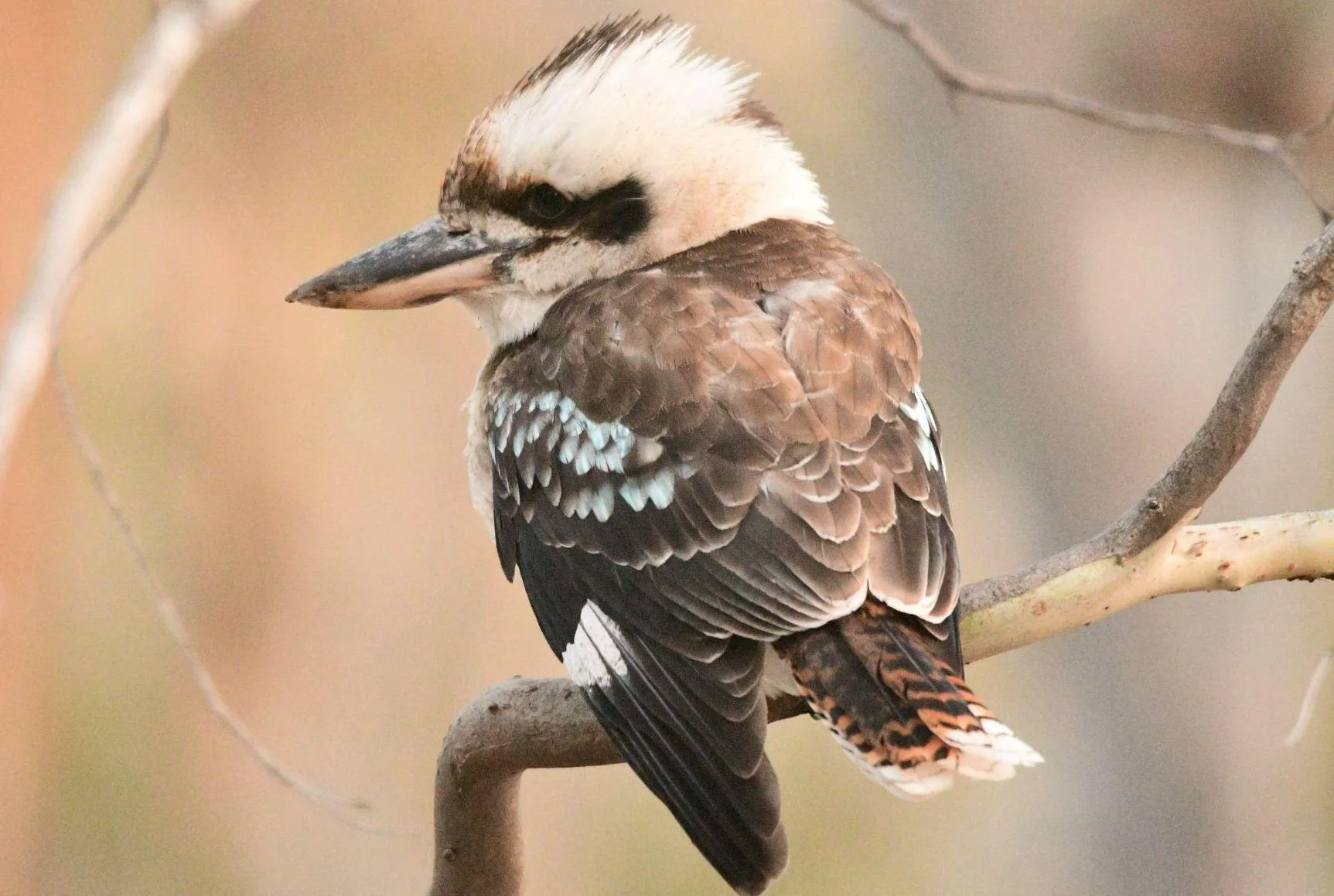
Poised: a Laughing kookaburra surveys for unsuspecting prey. Photo: Adelaide Urban Birding.
With its robust build, oversized head, and thick, powerful bill, the Laughing Kookaburra is instantly recognisable. Its plumage is mostly pale brown and cream, with a bold dark eye stripe and the aforementioned wash of blue on the wings.
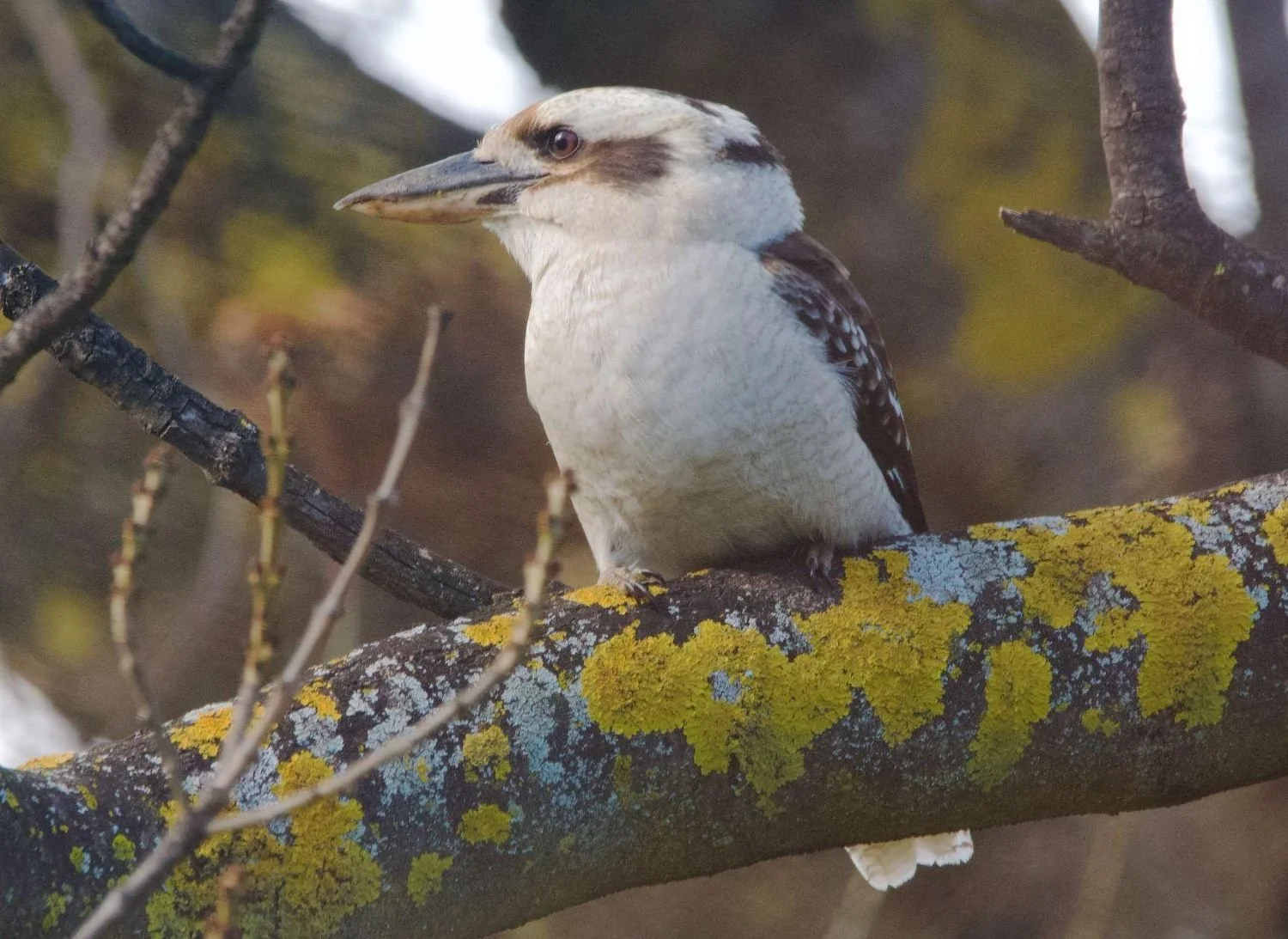
Laughing Kookaburra perched in a tree in Veale Gardens (Park 21); a posture and silhouette familiar to many Adelaide residents. Photo: Adelaide Urban Birding.
Kookaburras are highly social birds and often live in extended family groups. Their famous “laughter” is not an expression of joy, but a cooperative territorial call used to advertise ownership of an area. These choruses are most commonly heard at dawn and dusk, when neighbouring groups respond in kind, creating a rolling soundscape that carries across parks and suburbs alike.
Breeding usually occurs in tree hollows, particularly in large, old eucalypts, although in some areas Kookaburras will nest in arboreal termite nests. Both parents, and sometimes older offspring, assist with incubating eggs and feeding chicks, in a cooperative breeding act that ensures a greater chance of survival for related individuals.
Laughing Kookaburras have taken full advantage of the Adelaide Park Lands’ mix of open lawns, wooded areas, and watercourses. They are regularly encountered along the River Torrens / Karrawirra Pari, particularly where tall trees overlook grassy banks. They are commonly seen in the Adelaide Botanic Garden (Park 11), Bonython Park / Tulya Wardli (Park 27), Victoria Park / Pakapakanthi (Park 16), and Rymill Park / Murlawirrapurka (Park 14).
Top (banner) photo: Laughing Kookaburra in your Adelaide Park Lands. Photo: Adelaide Urban Birding.
There is an iNaturalist page where citizen scientists (like you) have recorded sightings of Laughing Kookaburras in your Adelaide Park Lands and elsewhere: https://www.inaturalist.org/taxa/2413-Dacelo-novaeguineae
To find out about other birds in your Adelaide Park Lands, check out our What Bird is That? series.
Nicholas Munday is an environment and planning lawyer with degrees in law and science (evolutionary biology and ecology) from the University of Adelaide.
He has a strong interest in biodiversity conservation and runs the ‘Adelaide Urban Birding’ Instagram account (@adelaideurbanbirding), dedicated to his photography of native birds in the Adelaide metropolitan area.
In his free time, Nicholas is well-known in the Adelaide choral music and theatre communities and also enjoys bushwalking, writing, and, of course, photography.
The opinions expressed in this article are entirely those of the author. This author is not affiliated with the Adelaide Park Lands Association Inc.


