
by Shane Sody
How does a bat get out of an artificial lake? No, that’s not the first line of a joke, it’s a real problem that City Council staff are now trying to solve.
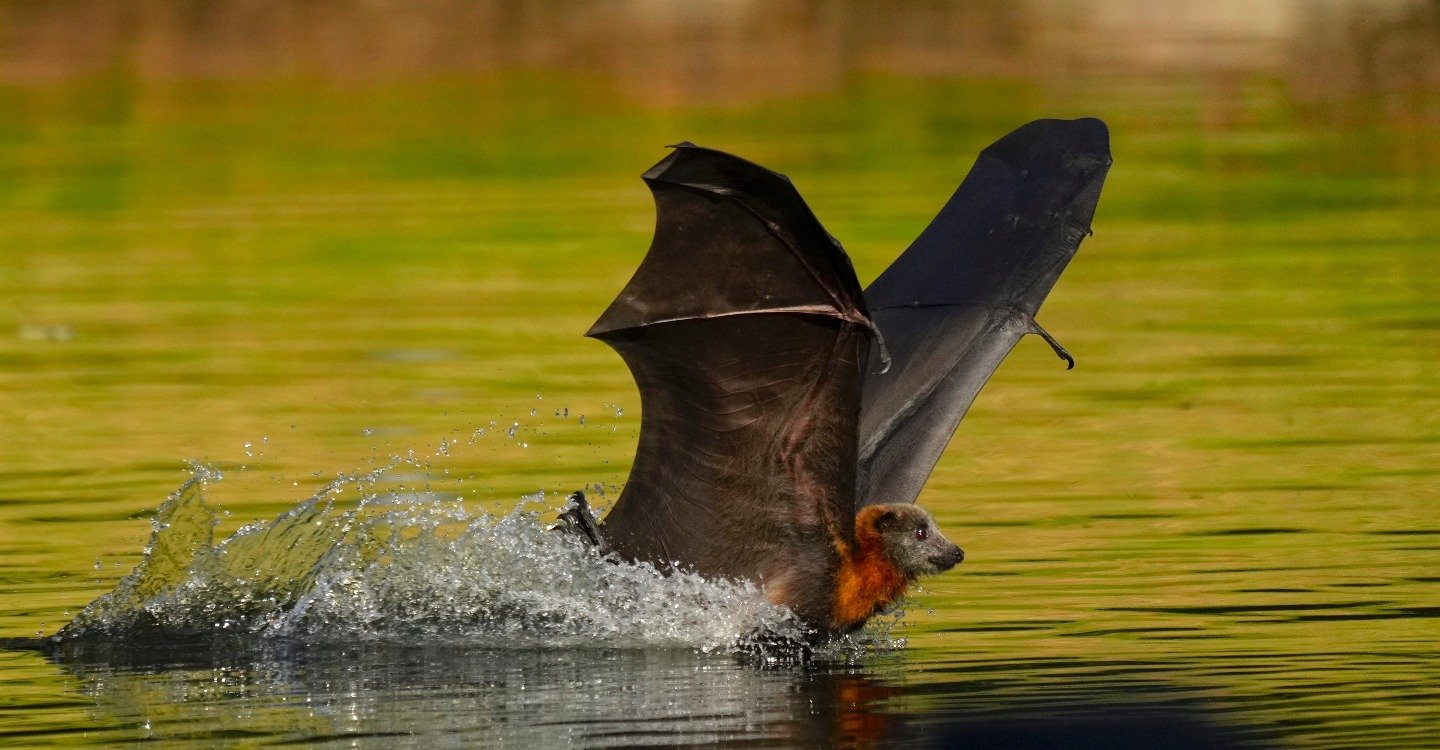
During hot weather, it’s common to see low-flying fruit bats (Adelaide’s grey-headed flying foxes) trying to cool off, by flying low over water - usually over the River Torrens /Karrawirra Pari in Park 12, near Frome Road, close to their roosting colony in Botanic Park, Park 11.
Biologist Michael Lee explains that they “dunk their bellies in the river to cool off and then lick off the water to rehydrate.”
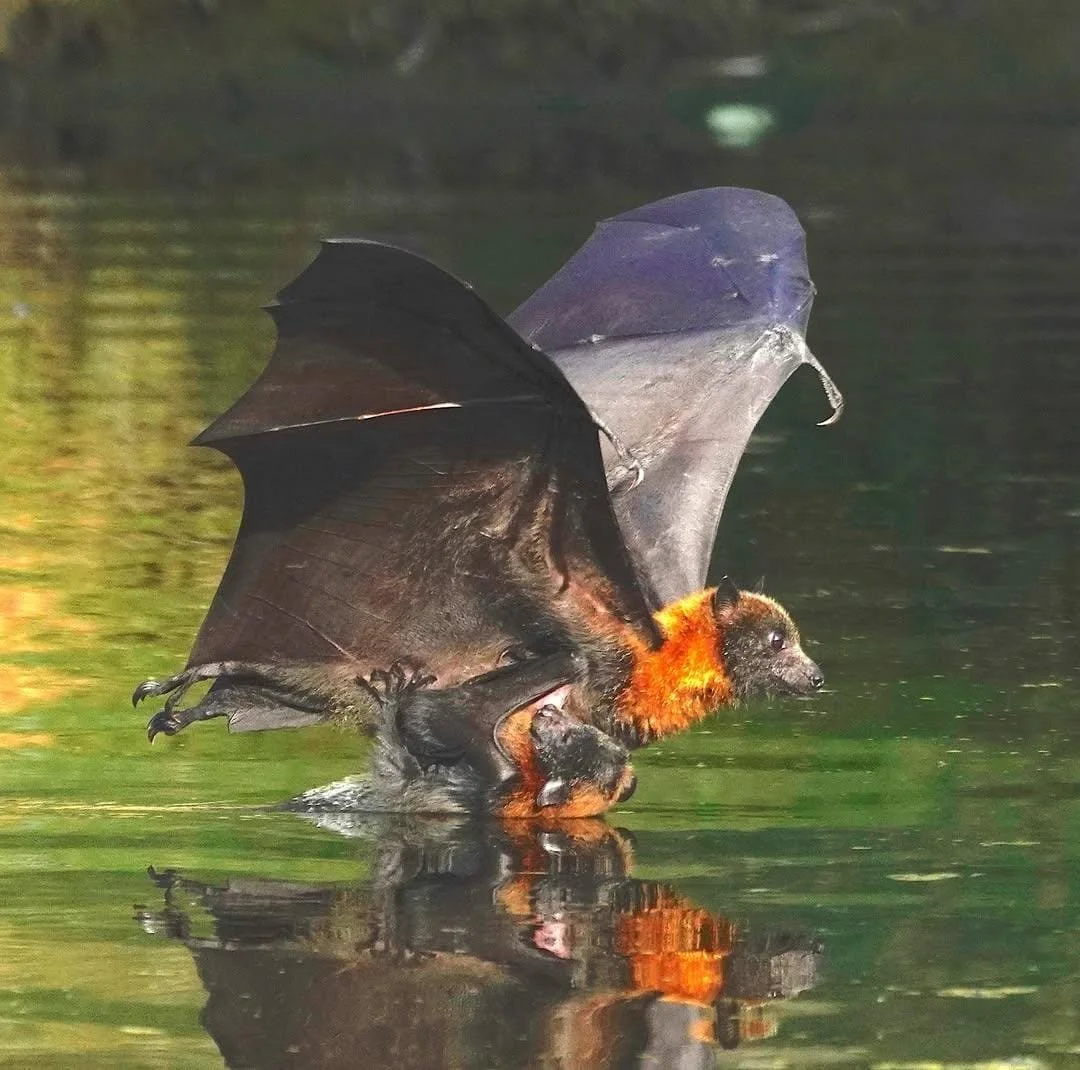
A female holding her baby to the water surface on the River Torrens/Karrawirra Pari. Pic: Michael Lee
But this year, many of the local bats have tried the same thing over the ornamental lake in Rymill Park / Murlawirrapurka (Park 14 of your Adelaide Park Lands).
Unfortunately there have been quite a few that dipped in too deep, during the heat wave and found it impossible to get out.
SA Chair and Co-ordinator Sue Westover told 891 ABC Radio Adelaide’s Breakfast that volunteers have been repeatedly called out to rescue bats and other wildlife trapped in Rymill Lake due to its concrete edges.
"What's happening is they're skimming the water, mainly juvenile bats that are not really good at co-ordination yet, they're skimming the lake and they're landing in the water and not able to get out.
“There's no reeds or anything. We get bats falling in the Torrens River, but they swim to the edge and they climb out on the reeds and they're fine, but with Rymill Park it's just pure concrete. What they [the Council] needs to do is they need to put some sort of platforms in there so that the wildlife can climb out of there without scraping all over the concrete.
“This morning, [28 January] we pulled out another live bat and a possum.”

Sue Westover with a ‘creche’ of bats at home. Photo: Bat Rescue SA.
The issue was raised during a City Council meeting on Tuesday 27 January. Councillors voted unanimously to ask staff to look at what could be done, in the short term.
Councillor Patrick Maher posted on social media the official response from Council administration staff:
“The lake edge and profiles were carefully designed to manage public safety risks, particularly to minimise the risk of children falling into deep water. As such, any interventions must be carefully considered to avoid creating unintended safety consequences.
“That said, Council officers have assessed temporary, low-impact measures that could be deployed quickly to support wildlife egress from the water when required. This includes consideration of removable ramps or similar devices that allow animals to exit the lake, without permanently altering the newly completed asset. Officers are also reviewing suggestions raised regarding grippable surfaces or ladder-type solutions, noting these would need to be assessed for safety, durability, and operational impacts.
“Immediate measure to assist in response to the bats at Rymill Park Lake, some photos attached.”
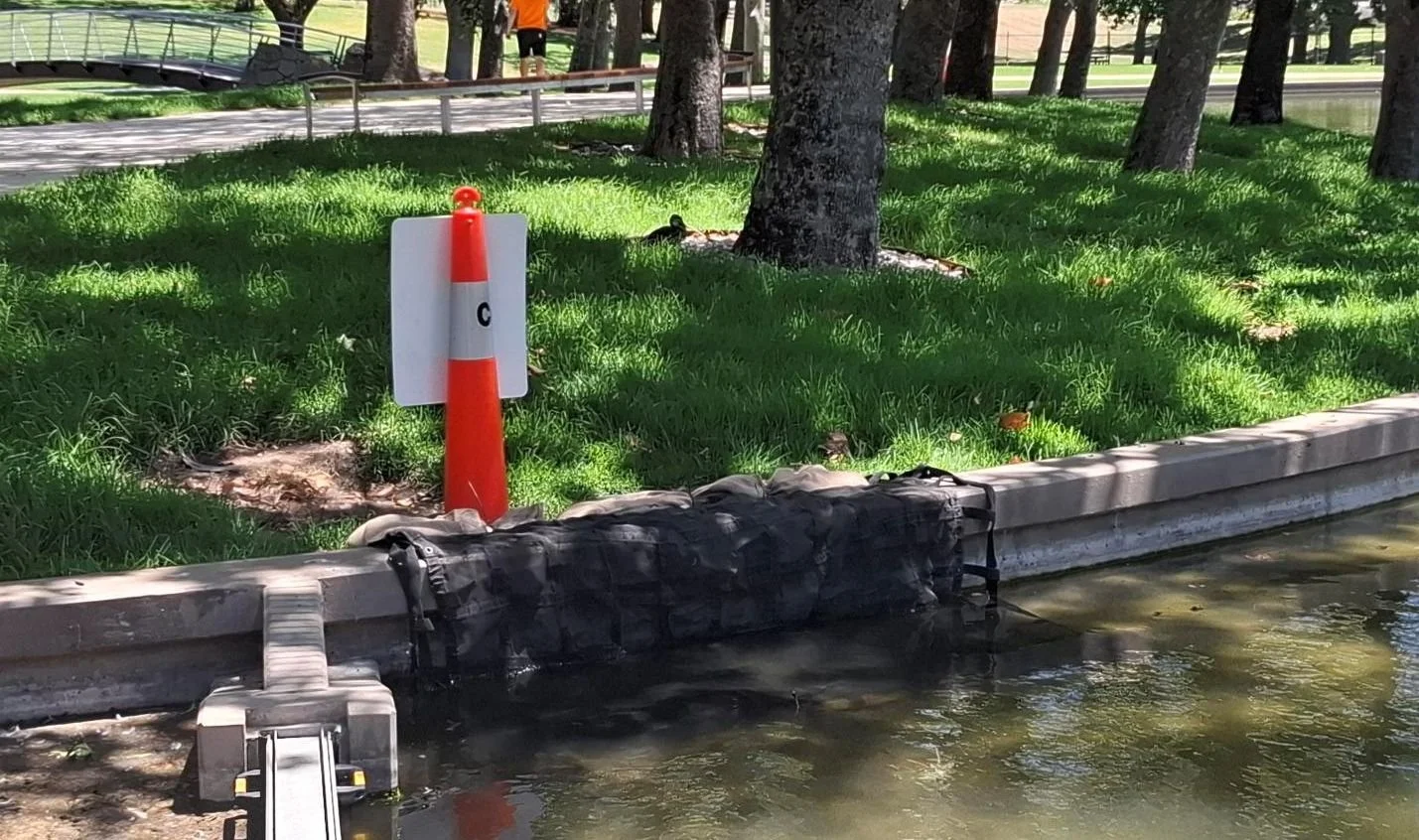
Netting on the edge of the lake, held down with sandbags. Pic: City of Adelaide
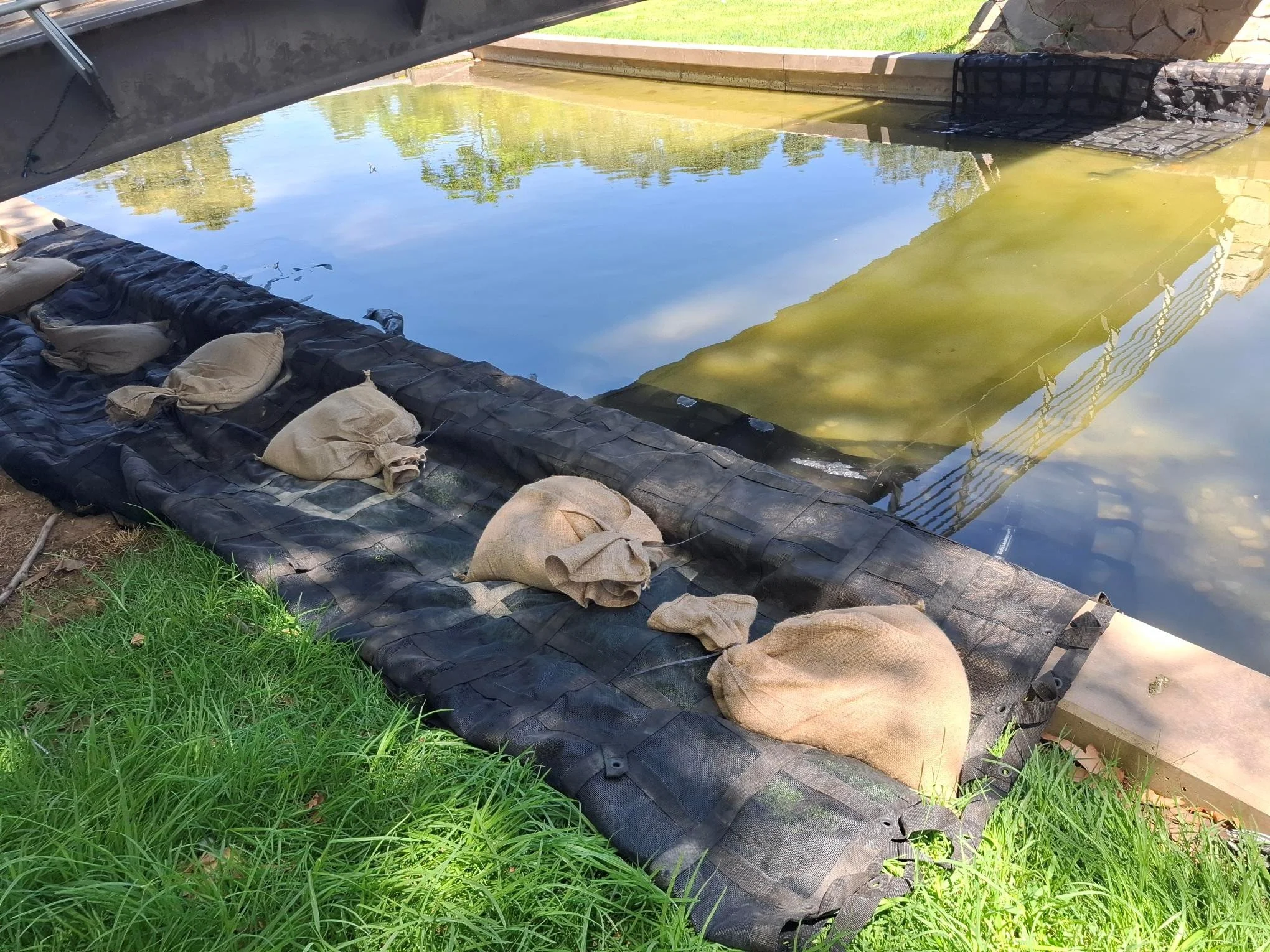
Netting on the edge of the lake, held down with sandbags. Pic: City of Adelaide
“In parallel, Council will continue to liaise with relevant environmental and animal welfare stakeholders to better understand the extent of the issue and appropriate responses. Any longer-term changes to the lake edge treatment would be subject to further technical assessment and consideration of broader safety and asset impacts.
“Council’s Park Lands Rangers will continue monitoring the situation and Council will implement suitable interim measures where appropriate, while ensuring public safety and asset integrity are maintained.”
At the end of the Council debate, the Lord Mayor Jane Lomax Smith also gave a reminder NOT to pick up or touch the bats, as they carry viruses harmful to humans!
Council administration staff will work with Bat Rescue SA Inc - Adelaide Bat Chat and Green Adelaide to work out what to do next.
The issue does not seem to effect ducks in the Rymill Park lake. Concrete ladders built into the lake’s edge make it possible for even tiny ducklings to follow their parents out of the lake!
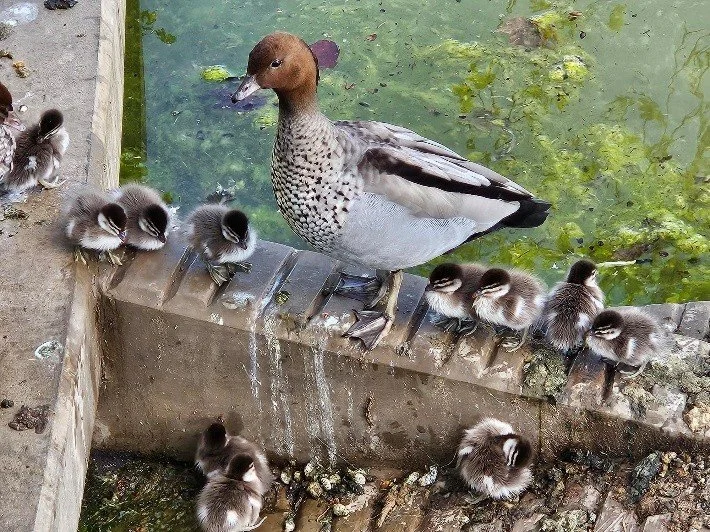
Pic: City of Adelaide

