
OPINION – Jan Bowman
'Mandate is a magic word in the sense that it is used just as magicians use special words to conjure up extraordinary effects to reinforce their spellbinding authority." John Uhr, Deliberative Democracy in Australia (1997)
It was a warm evening at Plant 4 in Bowden on Tuesday 29 September, when around 300 local residents turned up to hear Premier Peter Malinauskas at his community forum for people from Bowden, Brompton and Ridleyton.
There was an unusual formality to getting in. Residents had been invited to register beforehand, and driver's licences were checked at the door.
Outside, protesters made sure they were heard. Drumming, chanting and calls opposing the Government's Park Lands projects continued for much of the meeting, sometimes clearly audible above the discussion inside.
Inside, the mood was mixed.
There were clearly strong supporters of the Premier in the room, with applause for many of his answers. But there were also plenty of people deeply unhappy about the Government's plans for the Adelaide Park Lands, particularly the North Adelaide Golf Course redevelopment, the proposed driving range in John E. Brown Park (Park 27A) and MotoGP in Victoria Park.
At times the exchanges were robust, but largely respectful.
What emerged was a remarkably clear explanation of how the Premier views both his electoral mandate and public consultation.
He believes the election settled the fundamental question of whether his Government's controversial Park Lands projects should proceed, and that future public consultation should be about improving those projects, not stopping them.
But his answers also left some significant questions unanswered.
Election settled the question, says Premier
Mr Malinauskas told the meeting that his Government deliberately announced before the election that 585 trees would be removed for the golf course redevelopment.
He argued that the election then provided the most significant public test of the policy.
When questioned about whether community opposition could result in the development being abandoned, he was clear. The Government's commitment to the broad policy was “absolute”, he said, and the “threshold question” of whether the project would proceed had been settled.
Legislation had been passed, investment allocated and an election held.
The Premier argued that abandoning the policy because people subsequently opposed it would amount to “a breaking of faith” with those who had voted for the Government and its policies.
However, he then went on to acknowledge that there were “degrees of design and detail” that had not been put forward before the election, and which should subsequently be subject to consultation.

Created using Canva
What does ‘real consultation’ mean?
The Premier also gave a particularly clear explanation of what consultation means to him. He divided consultation into two categories, “real consultation” and “BS consultation”.
Real consultation, he said, requires a government to present its plans, listen to community feedback and be prepared to alter those plans to achieve a better outcome.
“The requirement of real consultation is that the proponent has to be open to feedback and change their plans accordingly,” he said.
But there was a “quid pro quo”. People participating in consultation had to accept that “the broad policy is set”.
In other words, consultation can change the details, but not the fundamental decision to proceed.
Mr Malinauskas was particularly explicit about the proposed driving range in John E. Brown Park.
“That consultation process isn’t a question of go/no go,” he said. “It’s a question of how can we make it as good as possible.”
So, in the Premier’s view, if the election settled the fundamental question, consultation could only influence how the policy is implemented.
By way of example, the Premier referred to his engagement with Conservation SA as a way of mitigating the environmental consequences of the MotoGP circuit plan, rather than revisiting the underlying decision.
Created using Canva
John E. Brown Park questions still unresolved
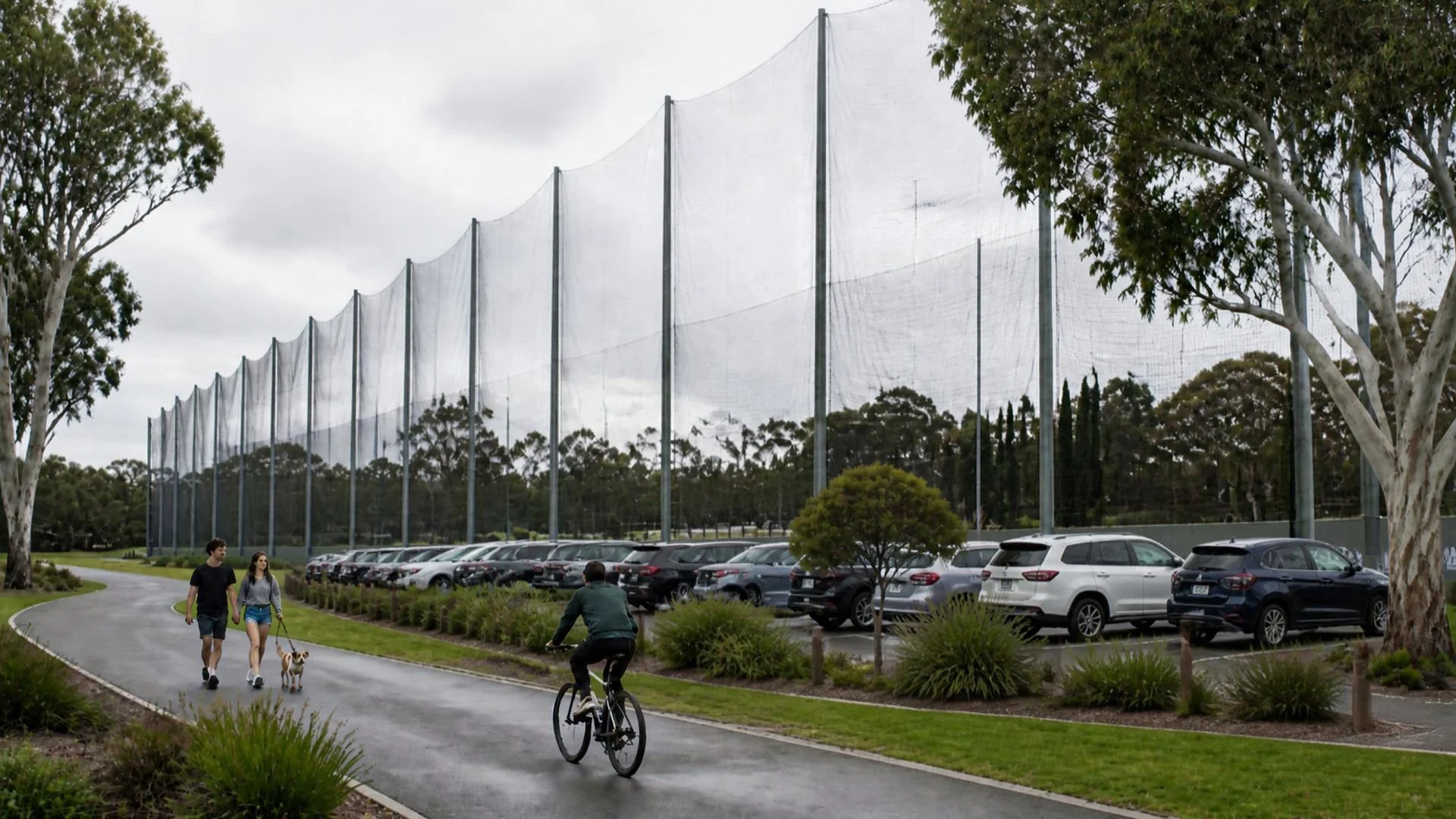
Plans for a driving range at John E. Brown Park was raised directly at the Bowden forum.
Mr Malinauskas answered at length about why the Government believes the driving range and mini golf facilities are necessary. He said the driving range would generate revenue needed to make the golf operation financially sustainable.
One resident questioned how motorists would access the proposed driving range, pointing to the constrained entrance near Park Terrace and Port Road. But the Premier did not provide a substantive answer about the proposed car parking or vehicle access.
Later in the meeting the Premier was asked how much information about John E. Brown Park had been available before the election. Mr Malinauskas admitted that detailed design work is still underway.
He specifically identified “where the car park goes” and “how the traffic moves” as matters to be dealt with through the design and subsequent consultation process.
It was a curious response in light of his mandate argument.
If the location and configuration of car parking, traffic movements and other significant design elements had not been determined before the election, those details could not have been endorsed by voters.
Where does it stop?
Another resident raised perhaps the broadest question of the night.
His concern was not necessarily with any one project, but with their cumulative effect of multiple projects impacting the Park Lands, from the Aquatic Centre to the Women’s and Children’s Hospital.
Public open space, he argued, sits uneasily with the constant search for commercial opportunities and financial returns.
“Do we continue to develop commercial opportunities and development across Park Lands from this point on?” he asked.
If this was the stopping point, he suggested, then say so, and set out a pathway to protect the Park Lands and other large public open spaces.
Mr Malinauskas defended the Government's record. He said the new Aquatic Centre would have a smaller footprint and return green space, while the Women's and Children's Hospital project would also provide additional green space. And, he argued that taxpayers should not necessarily subsidise people playing golf or swimming, and that those using facilities should contribute to their operating costs.
The golf course, he insisted, would remain open green space.
The MotoGP was different, he acknowledged. His concern there was what remained once the event “packs up and goes”. Permanent investment should improve Victoria Park rather than leave “some sort of scar”.
“Of course, the Park Lands have to be open, green, public space,” he said.
But the original question remained. Where does it stop?
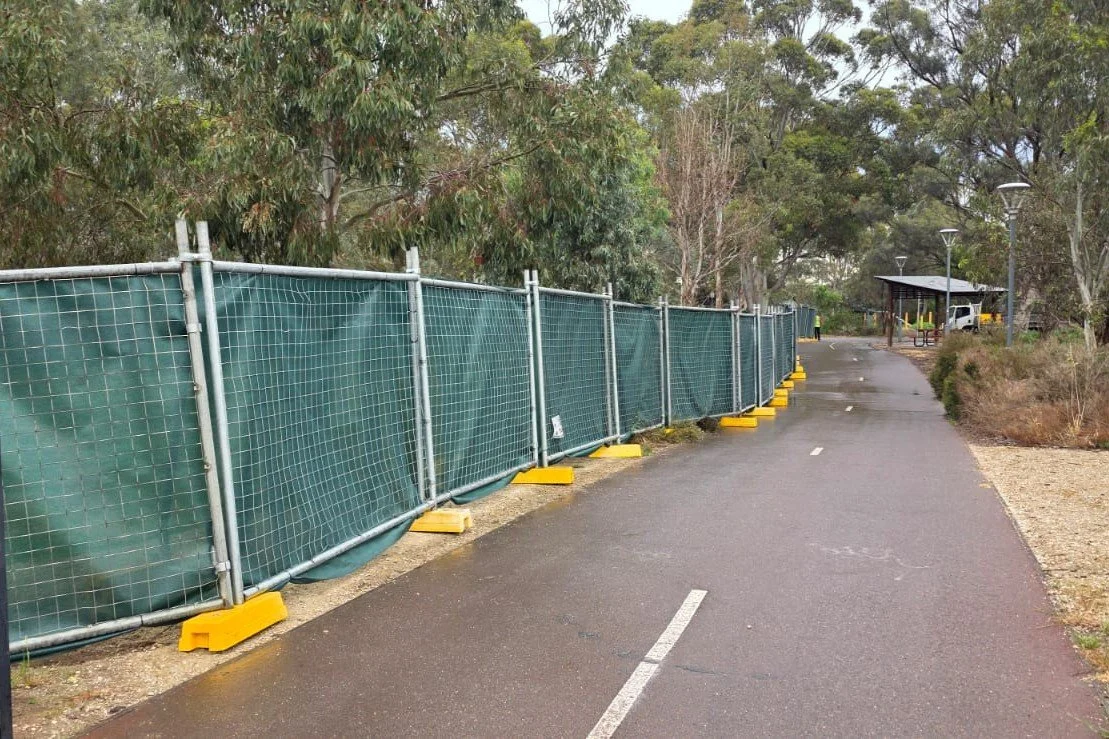
fenced John E Brown Park - Image by Jan Bowman
How much are they actually prepared to change?
Mr Malinauskas’s explanations at the Bowden meeting make his position unusually clear.
He believes his Government put its broad Park Lands policies before voters, won the election and now has an obligation to deliver them.
He also believes genuine consultation can and should change projects, but only within the boundaries of a policy decision that has already been made.
But that leaves a fairly obvious question.
If the driving range is already a given, if the question of “go/no go” has already been ruled out, and if consultation begins only after the Government has decided the project must proceed, how much can the public actually influence?
And if some of the most contentious parts of the project were not known or decided before the election, how much can reasonably be said to have been endorsed by voters?
On Tuesday night, at his constituents’ forum at Plant 4, the Premier acknowledged that the design for the driving range in John E. Brown Park was still not complete.
In response to questions about the park, he said:
" What I can undertake to you and everybody else that's here tonight is that once that design is done, that will go out to public consultation in the exact same way that the track design has."
Two days later, on Thursday, 1 October, the Federal Court ruled against the challenge to the SA Government’s golf course plans brought by Edwin Kemp Attrill and Janette Milera.
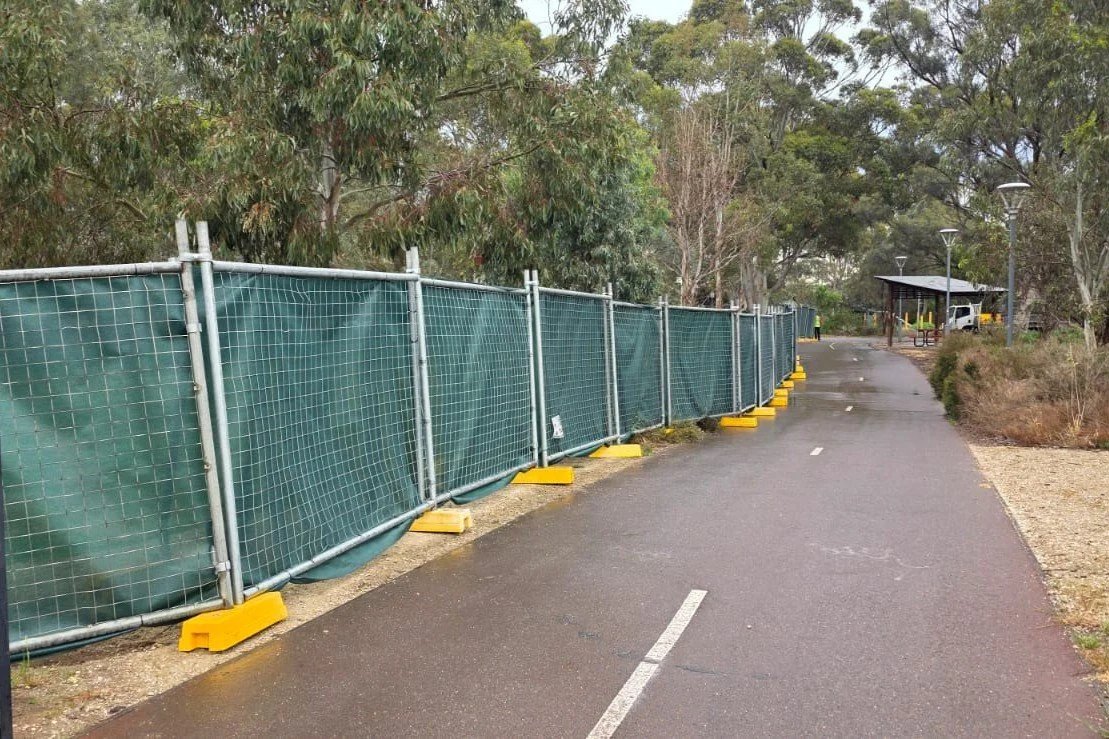
Only hours later, every access point to John E. Brown Park (Park 27A) was closed and the perimeter fenced, including the Workers Memorial Forest. Staff at the site said the closure was for public safety because trucks were operating in the park.
The timing is striking.
On Tuesday, residents were told the design was not complete and would go out for public consultation.
By Thursday, the gates were closed and the fences were up.
The Premier says real consultation requires governments to be prepared to change their plans.
The test now is how much they are actually prepared to change.
NOTE
Department of the Premier and Cabinet added details of construction activity on John E Brown Park 27A on Thursday 1 October 2026. See Link https://www.dpc.sa.gov.au/responsibilities/major-projects/north-adelaide-public-golf-course/construction

