
By David Winderlich
The Government has found a new angle to justify the destruction of swathes of our Park Lands. The MotoGP, we are told, is part of an ambitious big‑picture vision to secure Adelaide’s economic and demographic future. But what if the roar of the crowds and the gleam of motorcycles have blinded the Premier to a far more powerful — and far more subtle — economic and cultural engine: the bid for World Heritage listing for the Adelaide Park Lands.
A 2026 review of fifty-three peer‑reviewed studies found that World Heritage listing increases visitation to lesser‑known sites by 6.7–10%. For a city like Adelaide, this would be significant. Tourism SA valued Adelaide‑based tourism at $5.9 billion in 2025.
Even a modest heritage‑driven increase would generate ongoing economic returns— without chopping down trees, redesigning roads, or subsidising private promoters. In contrast, the Government’s claimed $200 million economic benefit from motorsports is a one‑off sugar hit, dependent a profit driven footloose multi-national, Liberty Media. They will always be on the lookout for a better offer, a bigger city, and a bigger audience.
And if they go the taxpayer funded investment is wasted.
The State Government does not seem to grasp that World Heritage listing is a very big deal. UNESCO recognises sites of Outstanding Universal Value — the world’s most significant cultural and natural places. It is, the World Cup of Culture, and millions of travellers plan their itineraries around it.1
I have just returned from Indonesia, where thousands of visitors — like me — travelled to see the monumental Buddhist and Hindu temple complexes of Borobudur and Prambanan. We booked accommodation, hired drivers, paid entry fees, bought lunch and souvenirs. Our spending supported gardeners, guides, shuttle drivers, maintenance crews, and café staff. The villages surrounding these sites were visibly more prosperous than their neighbours.
UNESCO documents consistently show that World Heritage listing can; increase cultural and educational tourism, lead to stronger international branding, attract investment; and boost creative industries such as art, music, festivals, and design.
These are long‑term, compounding returns based on improving assets that already exist.
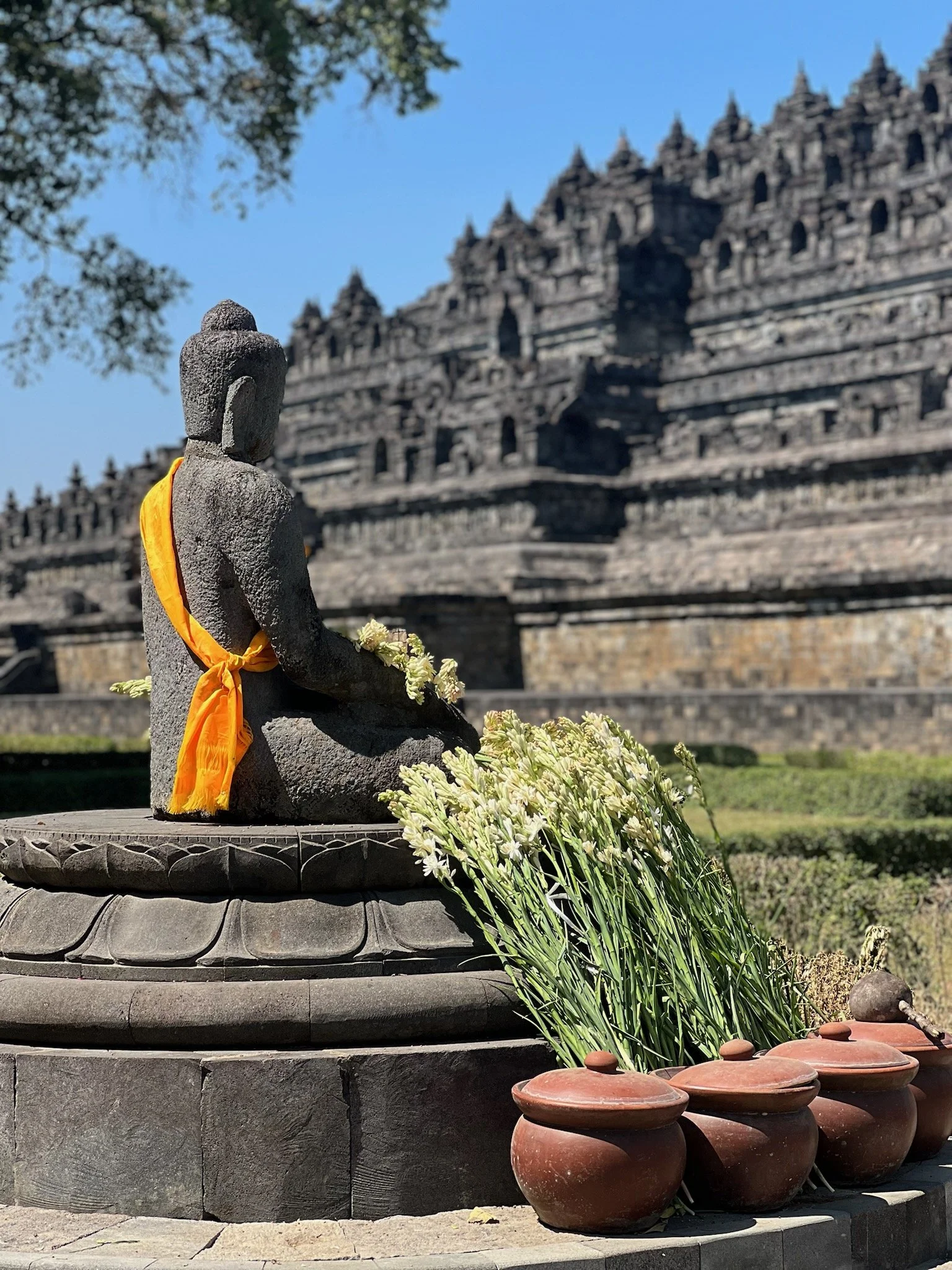
Borobudur, Indonesia by David Winderlich
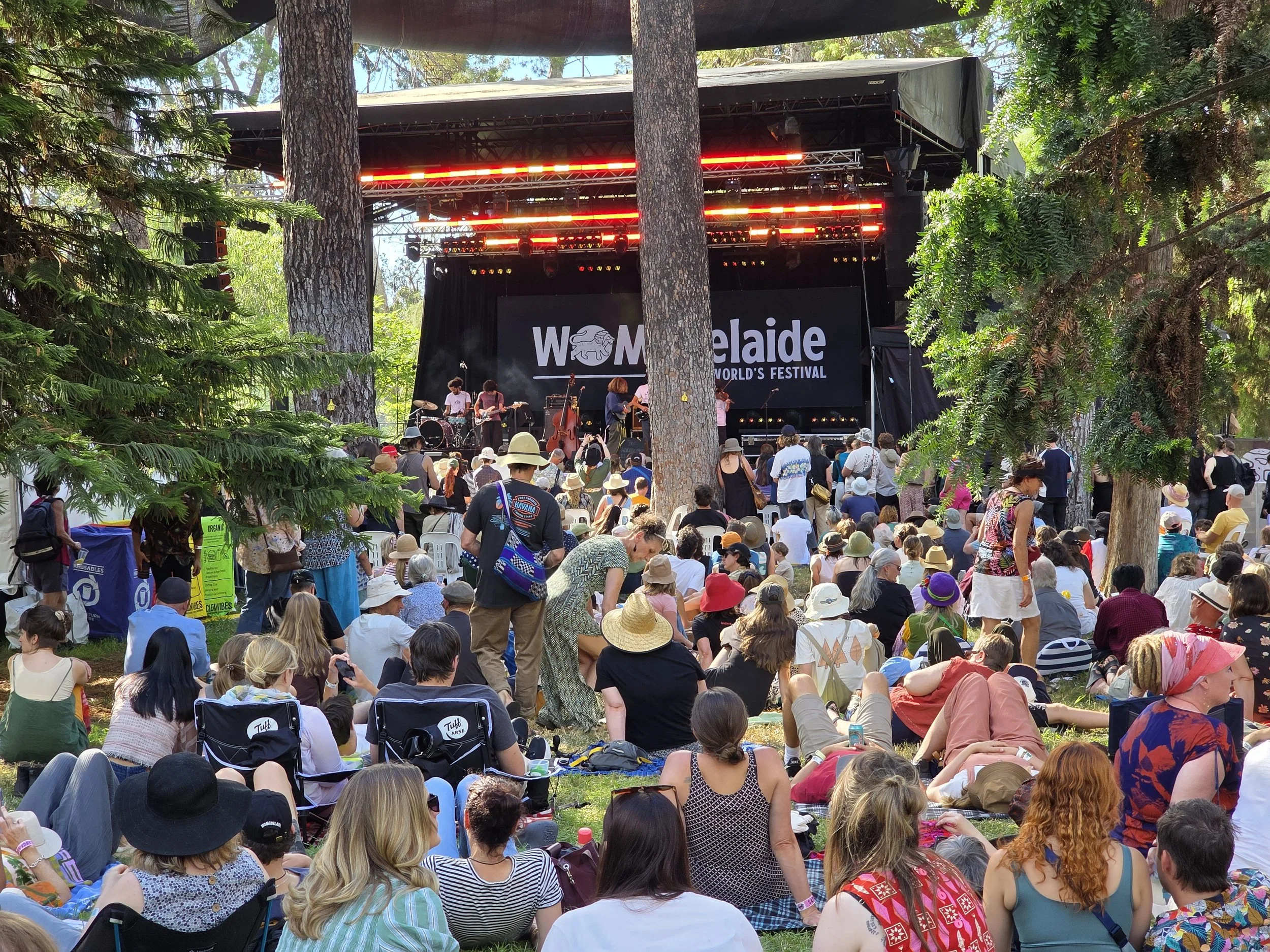
The Adelaide Park Lands are quite different from Indonesia’s temple complexes. Their case for World Heritage listing rests on being one of the most complete and intact examples of nineteenth‑century colonial urban planning anywhere in the world — a concentric green belt that remains legible, functional, and unique. But the Park Lands do not stand alone. They connect naturally with the North Adelaide cultural precinct, WOMADelaide, the Fringe, and Adelaide’s status as a UNESCO City of Music. Together, these assets can form a cohesive cultural brand rather than the current mishmash of disconnected events.
This cultural focus also appeals to younger South Australians. If the campaign to save the Cranker and the record attendance at the Fringe are any guide, significant numbers of young people do value art and culture.
But we can think even bigger. Imagine a network of internationally recognised heritage sites radiating from Adelaide. South Australia already has two World Heritage bids underway. The Cornish Copper Mining Sites of Moonta and Burra have progressed to UNESCO’s Preliminary Assessment stage and are expected to be Australia’s full nomination in 2028. The Adelaide Park Lands bid is in its most sensitive phase, with the Tentative List submission awaiting Traditional Owner consent and State Government endorsement — an endorsement that has been pending since 2022.
Beyond these, our Flinders Ranges contain globally significant fossil sites. The APY Lands connect culturally and geographically to Uluru, enabling community‑led storytelling about deep time and living culture. An hour down the highway, Tailem Bend sits at the gateway to the Murray, the Coorong, and the Ramsar‑listed Lakes Albert and Alexandrina. With investment, Tailem Bend could become a major entry point to stories of colonisation, Indigenous culture, river heritage, and the extraordinary journeys of Chinese gold miners who walked from Robe to Victoria.
A heritage‑driven strategy would unleash a virtuous circle of cultural competition and innovation. Port Wakefield could revitalise its copper port history. Riverton could tell the story of MP Percy Brookfield, assassinated by a White Russian in 1921. The long‑delayed Tarrkarri — Centre for First Nations Cultures — would gain fresh relevance and momentum.
UNESCO consistently values deep time narratives, from the Cradle of Humankind (South Africa) to Göbekli Tepe (Turkey), Cornwall & West Devon (UK), and Bath (UK). South Australia is rich in these stories. We simply need to tell them.
Unlike the MotoGP, World Heritage development does not require tree removal, traffic diversion, or intrusive infrastructure. Unlike the MotoGP, it allows every South Australian community to participate — by sharing its history, culture, and landscape. And unlike the MotoGP, heritage investment is not wasted when a bigger state waves a larger cheque book at private promoters. Each heritage project adds another layer to our story, attracting new audiences year after year.
Tourists who come for major attractions — the Park Lands, WOMADelaide, the Flinders — will also be drawn to quirky regional museums and local festivals. Everything from the Adelaide Festival to the Wallaroo Nautical and Heritage Museum which proudly features George the Giant Squid, and the Booleroo Steam and Traction Rally would benefit from and contribute to this cultural mosaic.
All of us, from the volunteer taking tickets at Talem Town to the most seductive chanteuse at the Cabaret festival can be a part of this vision.
Motorsports, let alone the MotoGP just cannot compete.
The MotoGP, in the wrong place, is a party — loud, brief, and messy. But in the right place, such as Tailem Bend, it can complement other tourism assets rather than cannibalising them.
World Heritage listing, however, is fragile. It can be jeopardised by a lack of coherent vision, weak government commitment, or insufficient consent from Traditional Owners. One of the most common risks is unregulated urban development. Vienna’s Historic Centre was placed on the World Heritage in Danger list due to high‑rise hotel proposals. Dresden lost its listing entirely after building a four‑lane bridge across its cultural river valley.
And yet the chainsaws roar in Adelaide as the Government plays footsie with the fickle, footloose world of private sporting events.
The Premier claims South Australia is being held back by NIMBYs. But the deeper problem may be a lingering colonial cringe — a tendency to chase short‑term imported spectacles instead of valuing the world‑class assets we already possess. Perhaps our biggest obstacle is not NIMBYs but SMOFEIs: small‑minded, old‑fashioned economic ideas.
Ideas like putting motorsport events in the wrong place.

