
Opinion – by Jan Bowman
We often tell ourselves that Australia is a sporting nation. We love our footy and cricket. We excel at the Olympics, where we punch well above our weight for a country with a relatively small population.
But does our love for sport have to come at the expense of our equally important need for free, open green space?
The current debate is pitting open space against sport but a casual walk through Victoria Park on the weekend shows that our most popular sports, football, soccer, and cricket depend on access to public open green space. And the two have happily co-existed for decades. But some sports, those that demand large-scale permanent facilities are threatening to destroy rather than share our open spaces.
In South Australia, the debate has focused on our nationally significant Adelaide Park Lands being used for commercial and elite sporting purposes, including golf tournaments and the MotoGP.
In Queensland, opposition has centred on plans to build a 63,000-seat Olympic stadium in Victoria Park / Barrambin for the 2032 Brisbane Olympics, transforming a large part of one of the city's most important public green spaces. See details at Save Victoria Park
One state is governed by the Liberal National Party, the other by Labor, but the parallels are striking.

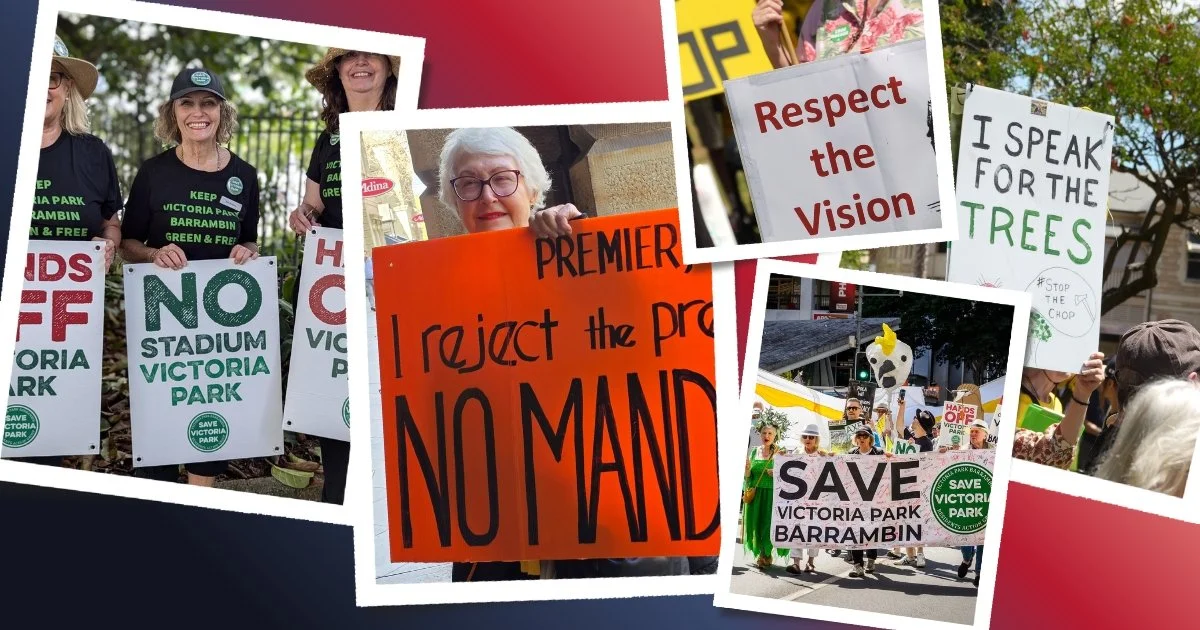
Image by Save Victoria Park, Brisbane
In both states:
The park lands have deep cultural significance for Traditional Owners. Victoria Park/Barrambin is significant to Aboriginal people in Brisbane, while the Adelaide Park Lands are part of Kaurna Country and contain places of particular cultural significance.
Alternative sites have been proposed. In Adelaide, The Bend at Tailem Bend is an existing international motorsport facility, while Kooyonga and Grange are established championship golf courses. In Brisbane, alternative Olympic stadium options have been proposed that would avoid building in Victoria Park.
Consultation and transparency have been questioned. Both governments have been criticised for making major decisions before communities have had a meaningful opportunity to have their say, and for failing to release important information.
There are significant risks to trees, wildlife and habitat. In Adelaide, hundreds of trees have already been removed for the North Adelaide golf course redevelopment, while the proposed MotoGP circuit would further affect the Park Lands. In Brisbane, the stadium would mean major changes to Victoria Park and the loss of established green space and habitat.
Community opposition has been vocal and visible. Thousands have rallied to protect the Adelaide Park Lands and tens of thousands have signed a petition. In Brisbane, five former lord mayors from both major political parties have publicly opposed the stadium proposal. On 23 August, people took to the streets in both cities to defend their park lands.
Opponents have been labelled NIMBYs or accused of standing in the way of progress. But protecting public green space is not about opposing change. It is about questioning what sort of change we want, who benefits, and what we might lose.
Communities have turned to legal processes to protect their park lands. In Brisbane, four applications for permanent protection of Victoria Park/Barrambin were lodged in 2025 under federal Aboriginal heritage legislation. The Yagara Magandjin Aboriginal Corporation has also sought emergency protection. Advocates have expressed frustration at delays while works continue. These are applications for ministerial protection rather than court cases.
In Adelaide, legal action has challenged the North Adelaide Golf Course redevelopment over heritage concerns. The Federal Court dismissed the challenge on 1 October, leaving questions about an appeal and legal costs. A separate legal challenge has also been brought over the proposed MotoGP circuit.
Both campaigns are calling for stronger protection of public green space. They have exposed how vulnerable these places can be when governments decide they want to use them for something else.
Even the slogans and protest signs are strikingly similar. In Brisbane, campaigners carry signs declaring "Hands Off Victoria Park", "No Stadium" and "Keep Victoria Park Barrambin Green and Free". In Adelaide, we've seen "Stop the Chop", "Hands Off Our Trees" and calls to keep our Park Lands open, green and public. Different cities, different sporting projects, but much the same message.
These disputes raise important questions about whether our heritage and environmental laws can protect significant public land before the damage is done.
But there is a bigger question.
As our cities grow and more people rely on public green space, why do governments continue to act as though they can do whatever they like with our park lands?
Sport matters but so does open green space. The MotoGP would degrade both our park lands and the public sporting fields that nurture our future stars and promote health and community cohesion.
Surely South Australia is smart enough to find ways to accommodate sports while keeping our green space free, open, and public.

