By Dr Noris Ioannou
The olive tree (Olea europaea) and the Mediterranean are inextricably and profoundly intertwined in a historical, economic and cultural ways. From around 5000 to 6000 BCE, the tree and its fruit, the olive, provided food and the extraordinary health benefits and uses of its olive oil, as well as developing deep cultural meanings and customs throughout the Mediterranean region and beyond. Olive trees are known to grow and survive to a great age: one tree on the island of Naxos is estimated to be 5,000 years old! In Cyprus, just outside my birth town of Larnaca, is a venerable olive tree with a girth of over 10 metres, is hollowed out yet estimated to be at least 800 years old and still producing fruit!
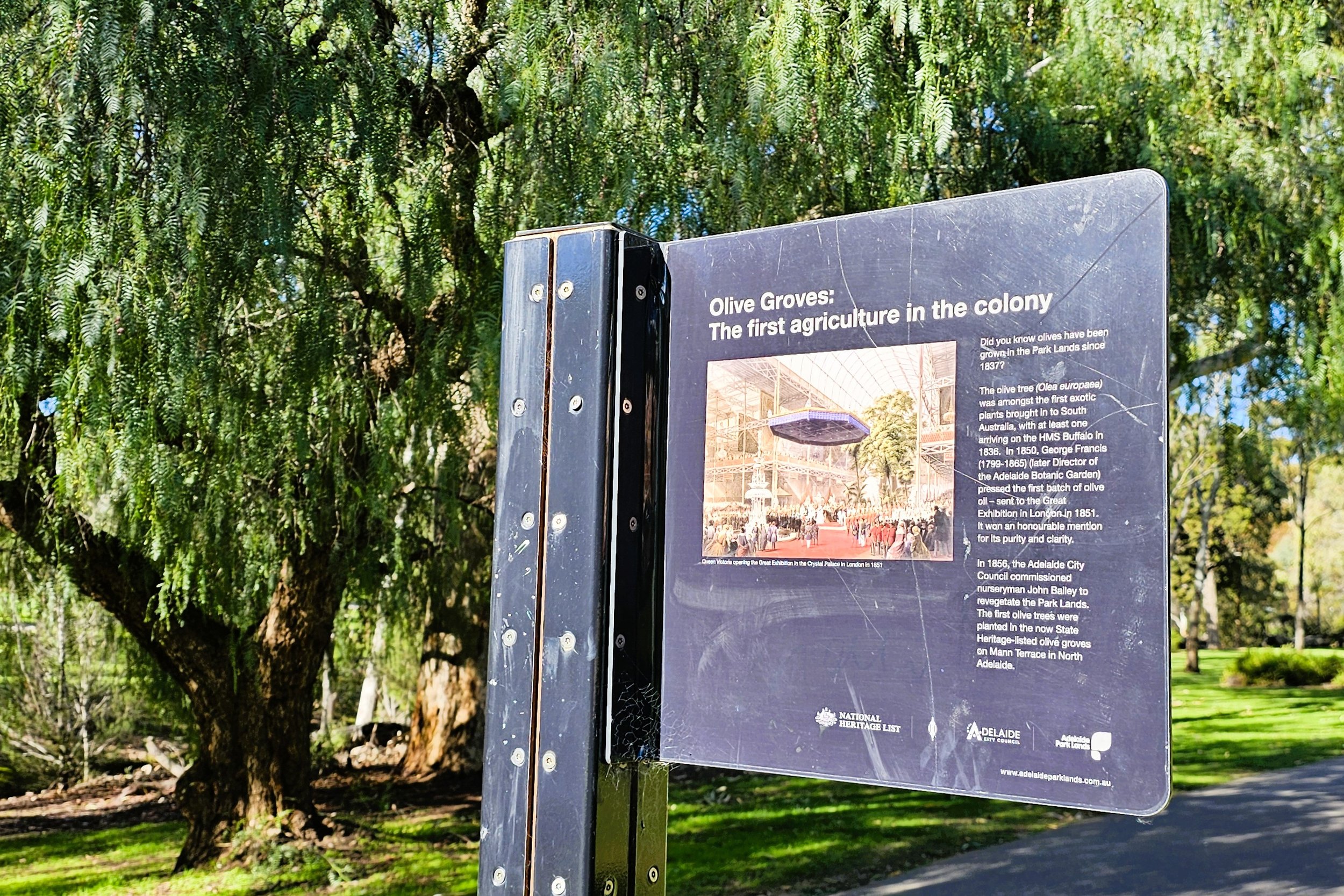
So significant was the olive tree considered by the British that the olive tree was amongst the first exotic plants brought to South Australia, with at least one arriving on the HMS Buffalo in 1836 and planted within the year on private property in North Adelaide. Within months, in 1837, olives trees had been planted in the Park Lands. Even more olive trees were brought into South Australia in 1845 by Sir Samuel Davenport, who recognised the value of farming olive trees given our climate being similar to that of the Mediterranean, and for the export value of the oil they could produce. He planted large groves of olives around his property, Beaumont House, in the eastern suburbs of Adelaide, and by 1864 he had established a plantation of some 14,000 trees, also creating the village of Beaumont. For this reason, he is credited as founding the olive oil industry here, earning the title of the "Father of the Olive Industry in South Australia". The Davenport Olive Reserve conserves a part of the early olive plantation established by him in Beaumont.
King Rodney Park / Ityamai-itpina (Park 15) - Rod Lewis
Curiously, it was the first director of the Adelaide Botanic Gardens, George Francis (1799-1865) who pressed the first batch of olive oil, presumably from olives collected from trees in the Park Lands, and perhaps on private properties, and which was sent to the Great Exhibition in London in 1851: it won an honourable mention for its purity and clarity.
Incidentally, Francis revived the Acclimatization Society of South Australia. Francis is credited as having popularised the planting of peppercorn trees (Schinus areira) in South Australia, particularly as shade trees in schoolyards throughout the state. (I’m wondering if this is a ‘invasive’ species? If so, schoolyard children and others with these graceful and aged trees beware…they may be chopped down by you-know-who!)
By the early 1890s, the establishment of the Stoneyfell Olive Oil Company led to extensive olive tree plantings in the Adelaide foothills so much so, they were considered the largest olive oil plantation in the Southern hemisphere.
In 1856, the Adelaide City Council commissioned nurseryman John Bailey to revegetate the Park Lands which had been progressively cleared of their substantial and magnificent River Red Gums for firewood (and to provide views of the ‘city’ by wealthy owners of mansions especially in North Adelaide). So, olive trees were gradually planted in the Park Lands beginning with Mann Terrace, North Adelaide (now State Heritage-listed), so that by the late 1870s an almost continuous band of plantations existed from there to the Botanic Gardens, the East Park Lands and into South Terrace. By 1875 there were reportedly 30,000 olive trees planted in the Park Lands, although their success in commercial production was mixed.
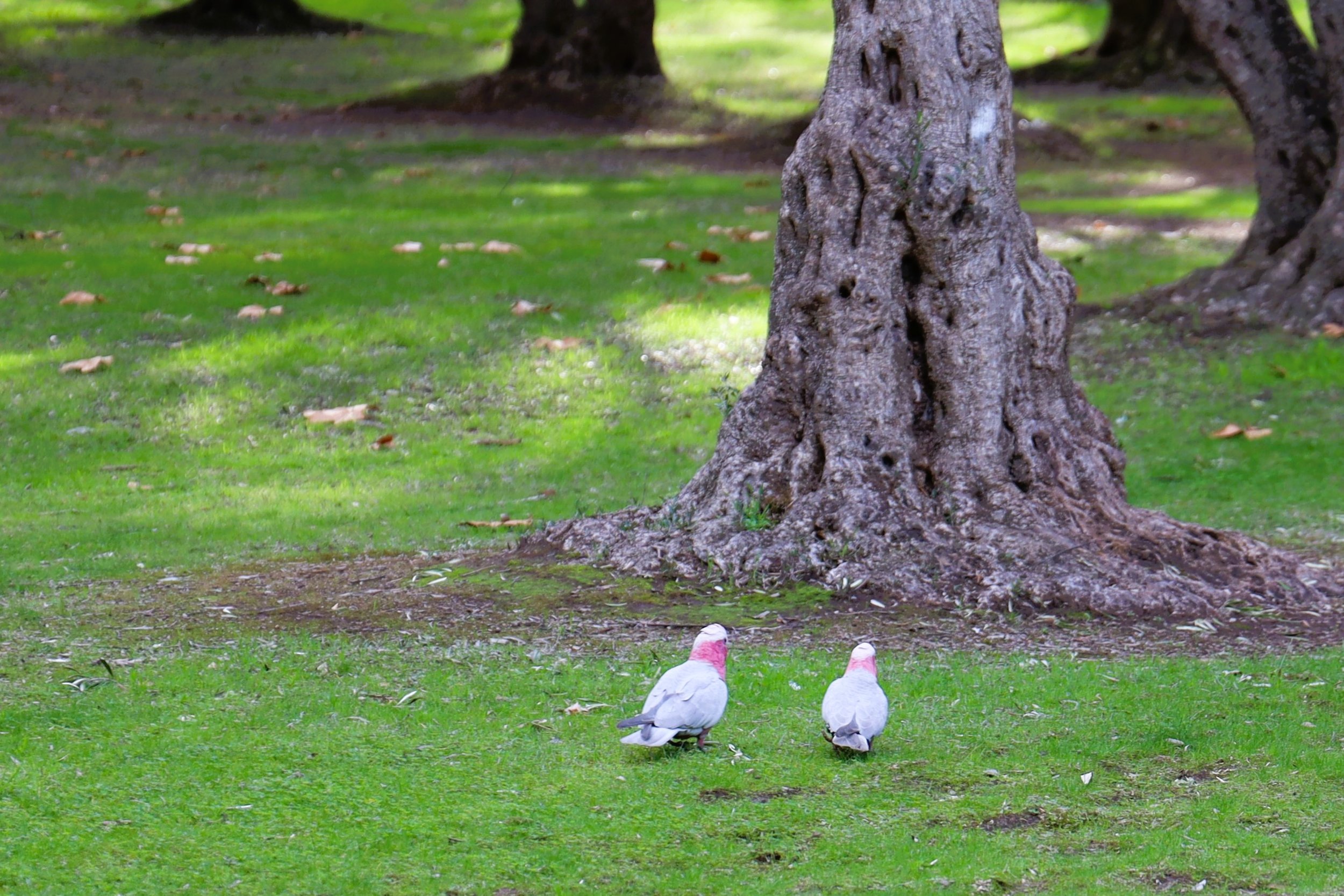
King Rodney Park / Ityamai-itpina (Park 15) – Jan Bowman
Under the Natural Resources Management Act 2004, olives trees are now a Declared Plant, that is a weed, or ‘invasive species’: a volatile word much favored by our present Labor Government and used indiscriminately to refer to established trees 150 years and older that are heritage listed, or about to be..!
Our olive groves record, embody, and declare a significant part of Adelaide’s history. Who dares uproot them would they also dare to burn history books?
From the 1940s and 1950s onwards, the post second-World War wave of migrants from southern European counties notably Italy, Greece and Cyprus (are they an invasive species?) to whom Olive oil was an essential culinary commodity, came at the time the olive oil industry was in its doldrums. Personally, I remember my mother stating how she had difficulty finding olive oil for cooking and other culinary purposes in Adelaide in the early 1950s, eventually finding it available in chemist shops, until the Star Grocery was established in Hindley Street, and started importing it from Greece and Italy.
To me olive trees are such an important culinary and cultural part of my being, that it’s a no-brainer.
I appreciate their noble presence in my regular walks in the Park Lands. I do not see them as an invasive species nor am I concerned about the hundreds of other 'non-native’ plants and trees introduced and co-existing with native plants. (I may be Greek-Cypriot born, but in the 1960s I became an enthusiastic supporter of the native plant revival, and have personally planted over 50,000 native species, re-vegetating some 32 hectares of cleared bush on the Fleurieu Peninsula). Furthermore, while the hills 'invasion' of olive trees has only occurred on areas cleared deliberately by people, they now act as soil stabilisers.
But really, to argue that this 'invasion' by non-native plants as a reason to replace a precious heritage grove with asphalt and air-polluting cars and motorcycles is desperate and unconvincing. And obviously irrational.
How can anyone who has strolled through the magnificent and venerable olive grove wish to destroy it...?
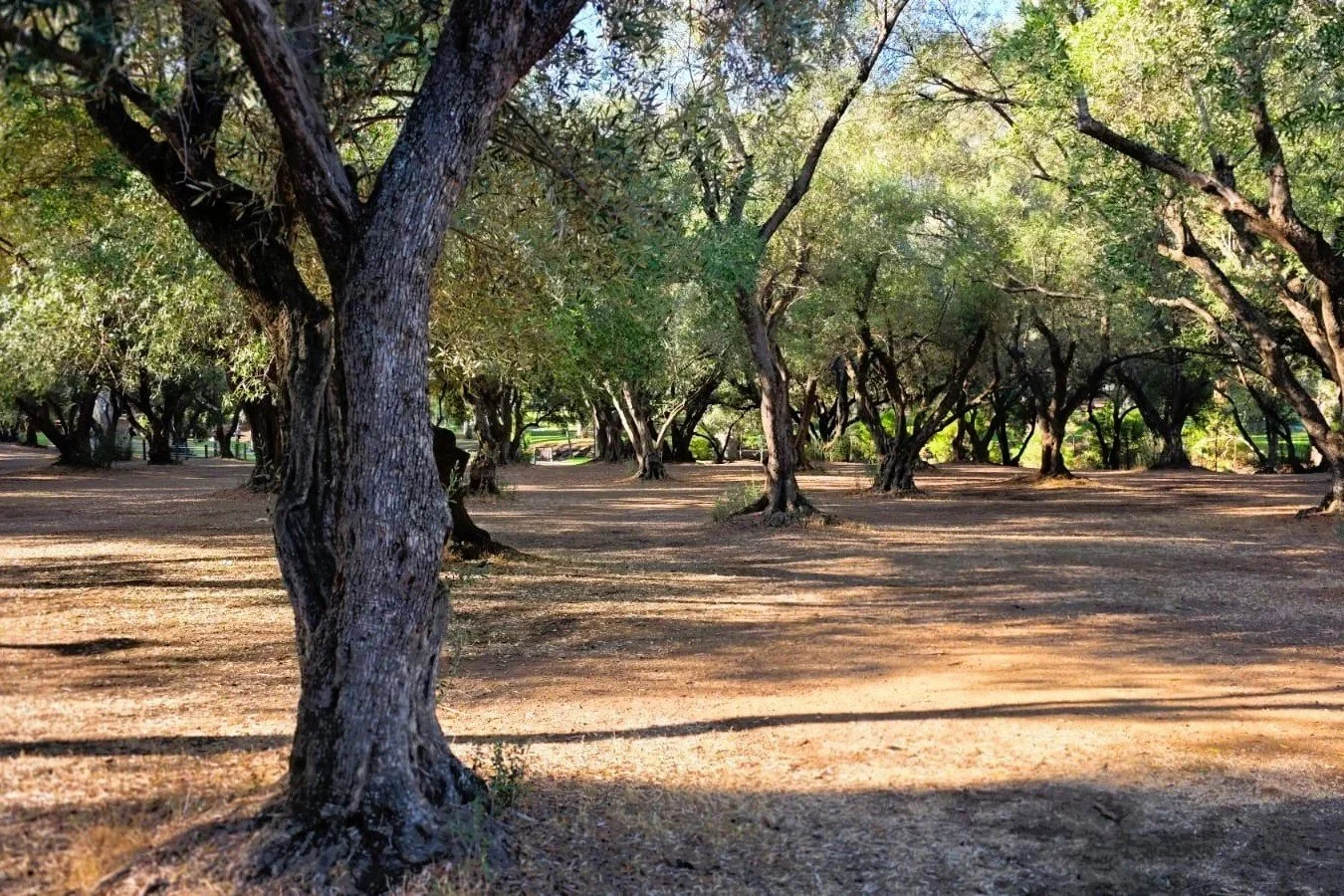
Please go for a walk and through these glorious groves of olive trees, numinous and graced by extraordinary age, gaze in awe at the living sculptural and venerable gnarled trunks clutching and burrowing into the earth for 150 years; enjoy the fresh air, wander in the tranquility of dappled light, feel the spongy green living herbaceous undergrowth of moss and dichondra, and absorb the sounds of many native birds: a favourite feeding ground for the five plus species of parrots that enjoy their olives - hardly ‘sterile’ as government representatives declare (yet another word in their inflammatory lexicon including ‘invasive’!)
This extraordinary location of the East Park lands with their 200+year-old River Red Gums, aged olive tree plantations, together with the landscaped natural water course of First Creek, create a unique landscape of wonderment - a genius loci.
This 150 year olive grove - amongst the oldest in Adelaide and certainly anywhere else in Australia - is a precious gift of past generations, nature and time; it is an essential constituent and a jewel in the environmental and historical integrity of our unique Park Lands.
I say to those that wish to uproot and destroy these magnificent trees: our living humanity depends on them.

Dr Noris Ioannou
Born in Cyprus to Greek parents, Dr Noris Ioannou moved to Adelaide in 1950. His botany honours research at the University of Adelaide sparked an interest in South Australia’s history and environment. He taught science and biology for eight years and later completed a doctorate in visual arts and archaeology at Flinders University, with research at the Barossa Valley site of South Australia’s first potter.
Dr Ioannou is a leading writer on Australian material folk culture and the decorative arts. His first book, Ceramics in South Australia 1836–1986: From Folk to Studio Pottery, won the Australian Heritage Award, and he has written seven other books. He is a former president of the Professional Historians Association of South Australia and was executive director of Nexus Multicultural Arts Centre for seven years.

