
by Sue Wincott
Victoria Park/Pakapakanthi (Park 16) its wetland and indeed its future, are very much on people's minds at present. No more so than in the wake of another wonderful SA Nature Festival which highlights the value of and the awe inspired by our natural world.
We attended a few events, the most fun being the Birds and Bingo event in the Victoria Hotel at Strathalbyn. The Bingo ball cage is rotated and birds’ names are then plucked out randomly - we are all familiar with the principles of Bingo. This was somewhat more humorous as some of the names are long and weird and indeed the crowd was not as serious and disciplined as your average club Saturday night games! From the room full of hopefuls (hosted - and herded at times - by self-confessed bird nerd, Sputnik, who will be known to many ABC listeners), eventually comes the cry of ‘Bingo’ as one row of birds on the game sheet is completed and another winner is rewarded: about 16 games and 16 winners on the day. It's pure fun.
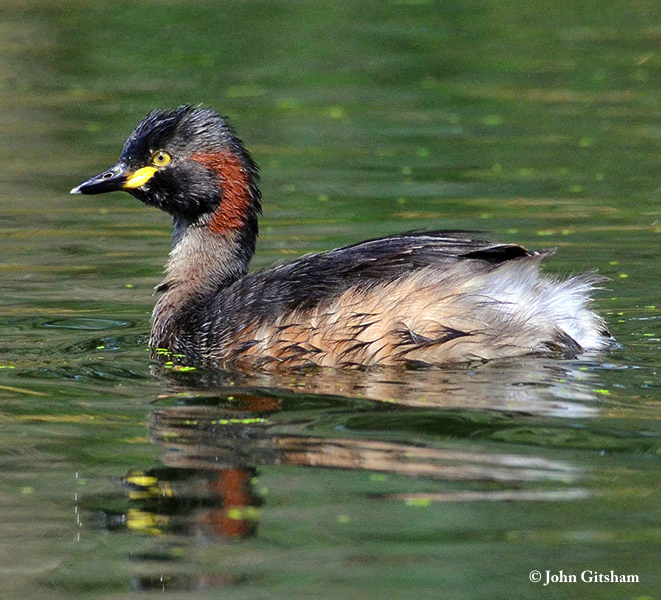
At this event, the calling out of the Australasian Grebe brought to mind our first Nature Festival event back in 2022 only a few months after our move to Adelaide from the East Coast. We eagerly attended, binocs in hand, a guided wetland walk in Victoria Park/Pakapakanthi (Park 16). It was our first experience of any of the Adelaide Parklands parks and what a stunning precinct it is. The guiding was educational and relaxed but the highlight for us was seeing our first Australasian Grebe in the wild. Birding for us had been confined to mostly non-water species - this little beauty was a thrill to see. There were a few adults floating around on the main lake, doing their thing, but more excitingly a delightful juvenile, visible sitting on the vegetation nest in the reeds. It was what we birders call a ‘lifer’ – a first. And a lifer is always enough to make a birder’s day! (An Australian Reed-Warbler was also a lifer for me on that walk - a double bonus.) But the Grebe is special, both in looks and its potential vulnerability to threats against its water environments in Australia.
The Grebes are an ancient group with similar species on all continents except Antarctica. Pre-18th century references show early names of ‘diver’ or ‘dabchick’ reflecting their particularly vigorous upending style of diving. Current etymology shows the family name of Podicipedidae, derived from Latin podex/podicis, meaning anus or vent and pes/pedis meaning foot. Unimaginative perhaps, but it simply indicates their feet are set quite far back on their bodies, exaggerating their classic diving stance. Their dive must be strong and agile, for apart from feeding, they dive rather than fly when threatened. Hence the scientific name is, as many are, an amusing reflection of its habits.
This Australasian Grebe’s subspecies’ scientific name is Tachybaptus novaehollandiae: the New Holland fast dipper! From the Greek takhus for ‘fast’ and bapto to ‘sink under.’ New Holland was an early European name for Australia when bird taxonomy and etymology was evolving here with early scientific exploration.
We went to Birdlife Australia’s online bible to find out a bit more about this lovely bird. Grebe adults at around 24 cm long are charming and pretty birds and as is the case with most water birds, unlike most ‘land’ birds, their young that are active, much smaller than their parents, with different plumage and colouring…and cute!
Many non-water birds’ young ones are not seen until they fledge and leave the nest, by which time they are about the same size as their parents and not too different in looks. [ADD] Grebe chicks can swim almost as soon as they hatch, while still tiny and covered in striped down.
A special bird indeed…take a visit and you might see the growing young-’uns.
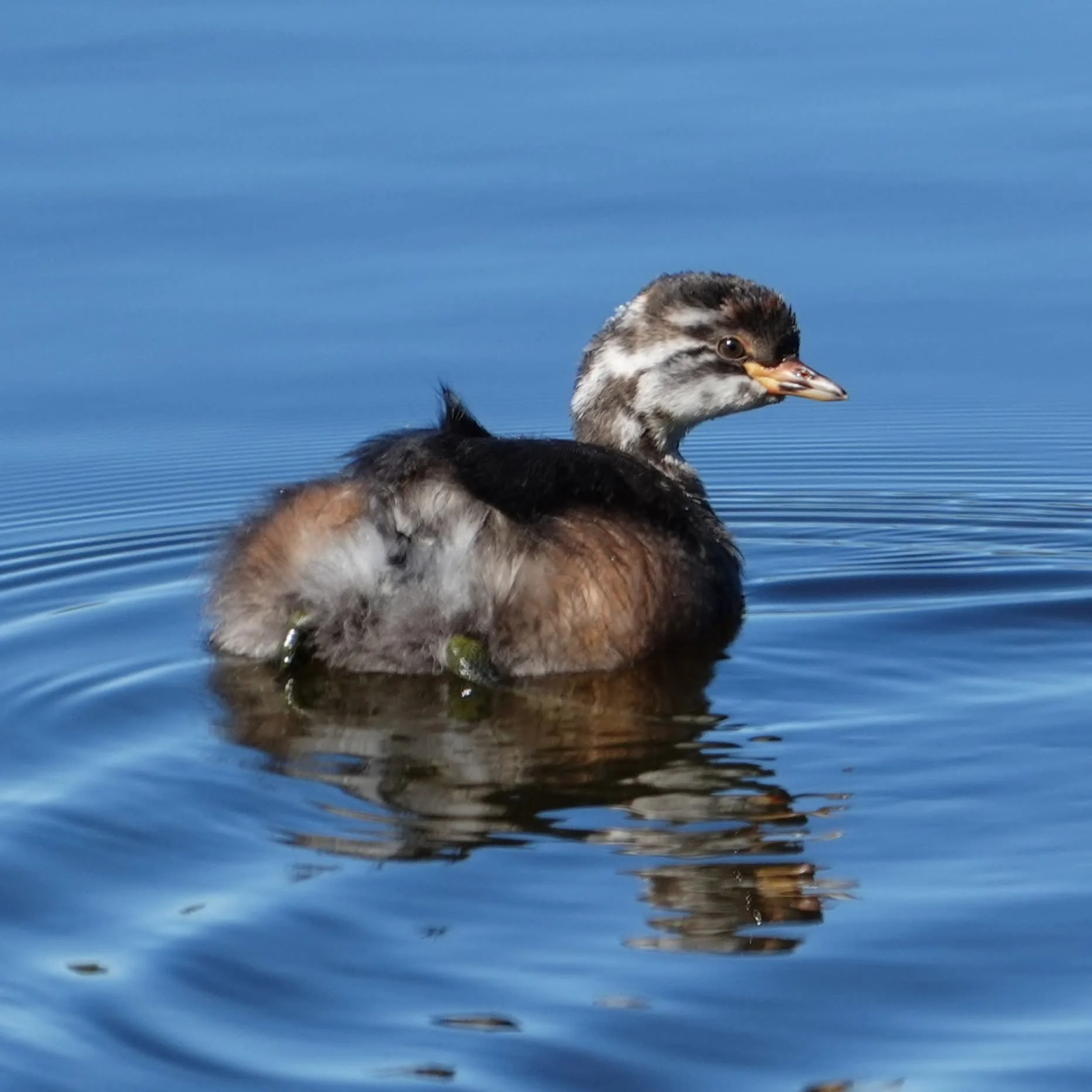
Juvinile Australasian Grebe – Jan Bowman
References:
Australian bird names – origins and meanings, Ian Fraser and Jeannie Gray, CSIRO second edition 2019, Birdlife Australia

