
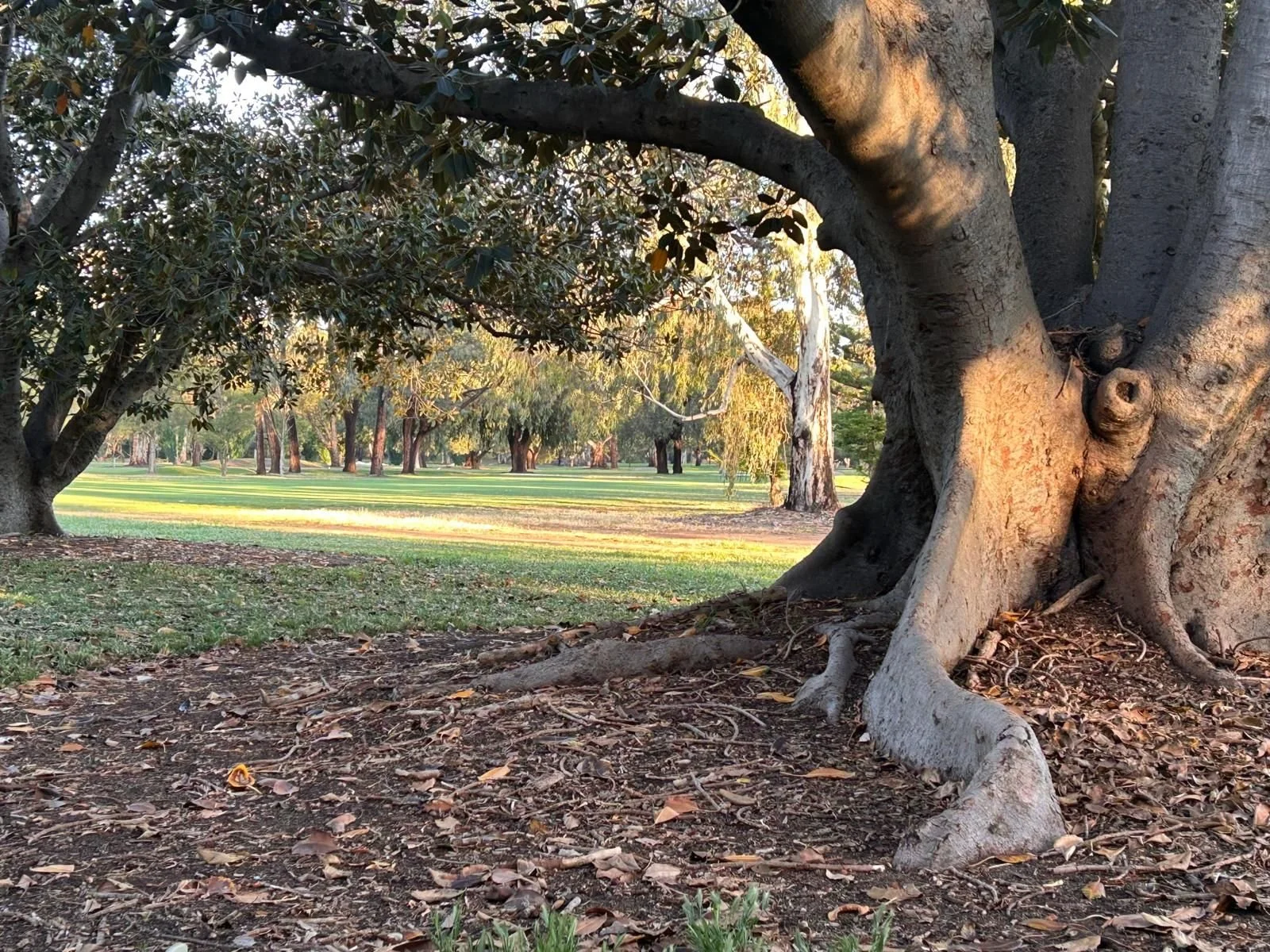
by Chat GPT and Shane Sody
Towering, shade‑casting, and endlessly photogenic, the Moreton Bay fig (Ficus macrophylla) is one of Australia’s most recognisable trees. Native to Australia’s east coast—from southern New South Wales through to Queensland - this species thrives in warm, coastal rainforests, but has since become a favourite feature of urban parks and gardens across the globe.
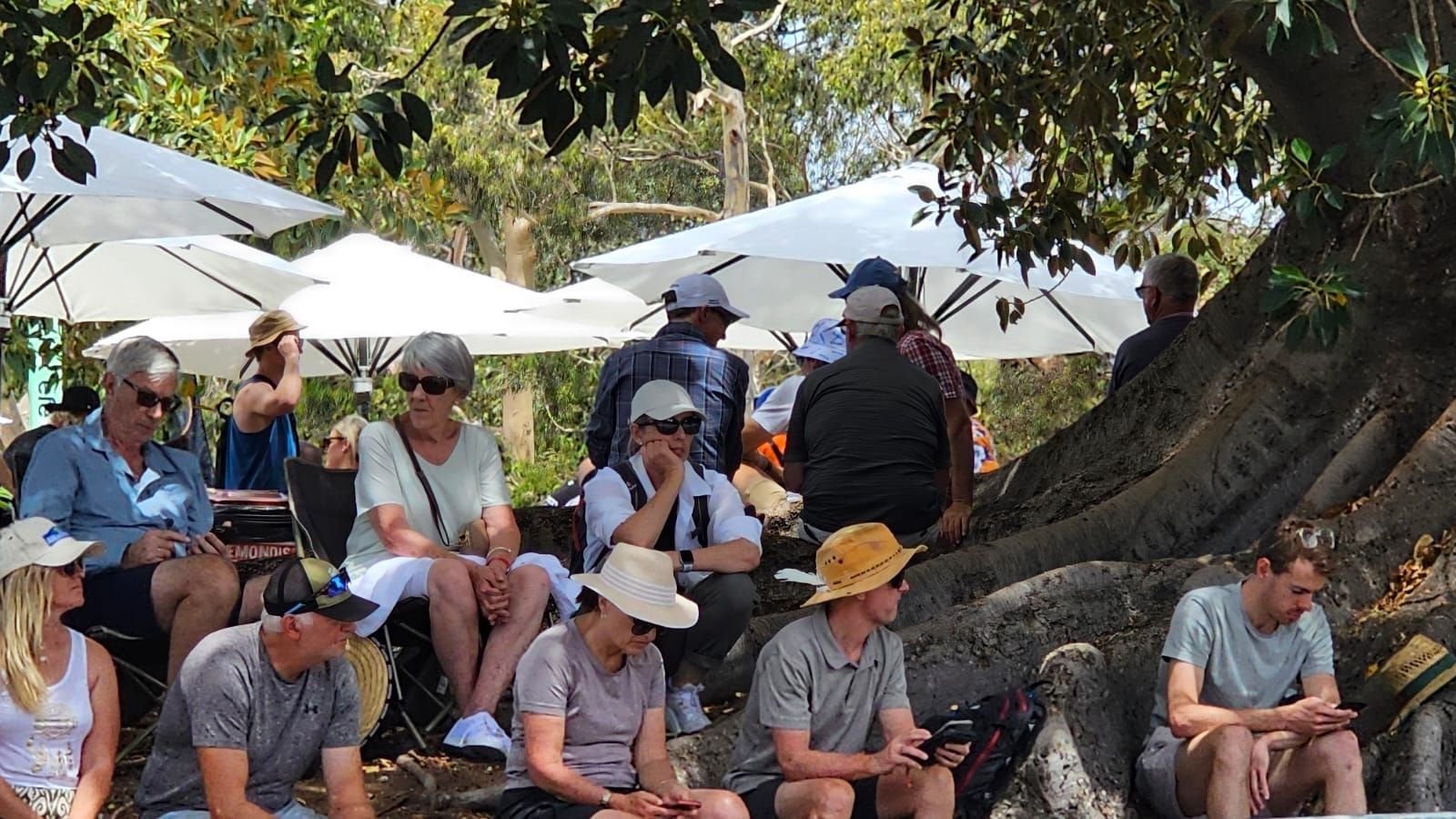
Enjoying the shade of a Moreton Bay fig tree while watching a stage of the Tour Down Under in January 2025. Pic: @janbowpix
Moreton Bay fig trees are feature trees in many parts of your Adelaide Park Lands but they’ve also been introduced to many other parts of the world, including New Zealand, Hawaii and the continental United States.
The Moreton Bay fig’s most distinctive features are its colossal buttress roots and sprawling canopy.
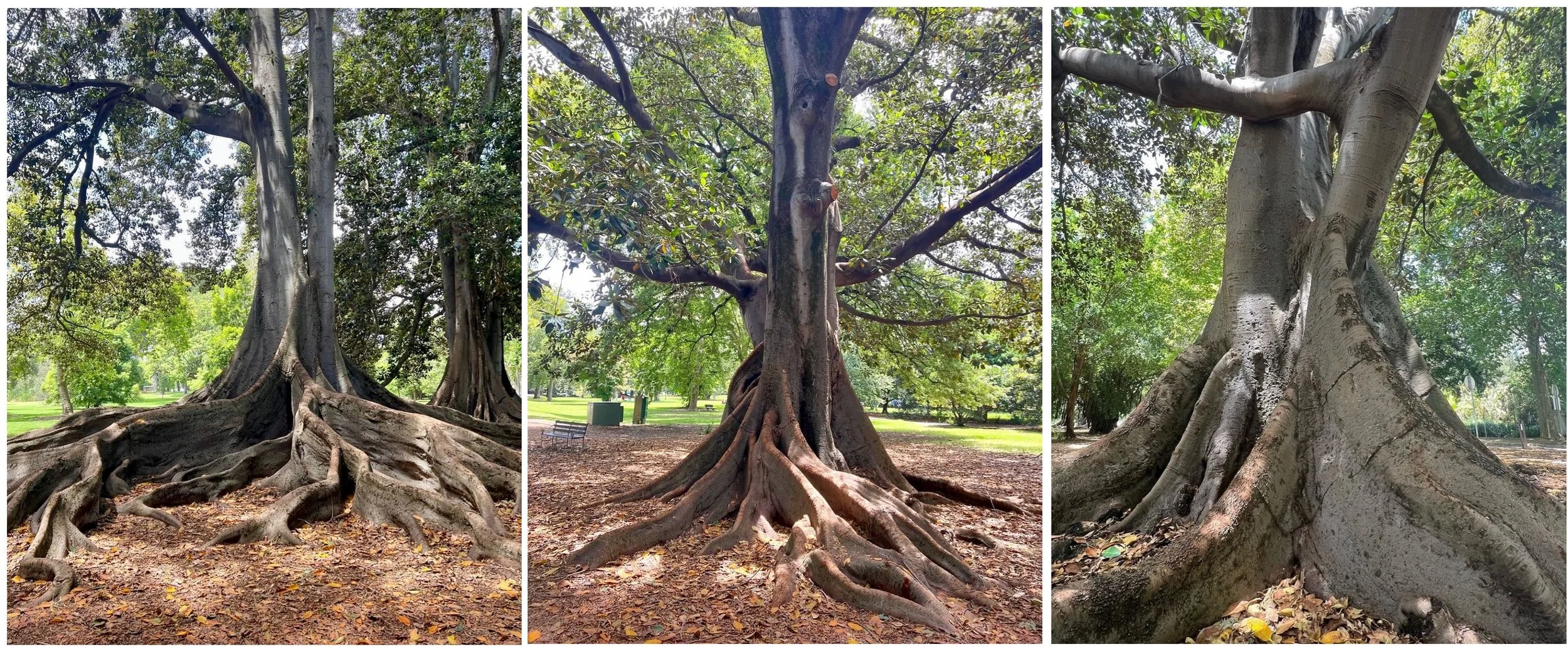
Some of the most well-known trees in your Adelaide Park Lands: Moreton Bay fig trees in Botanic Park / Tainmuntilla. Pics: Samuel Akhorst
Mature trees can reach 50 metres in height, with branches spreading just as wide, creating dense shade perfect for both humans and wildlife..
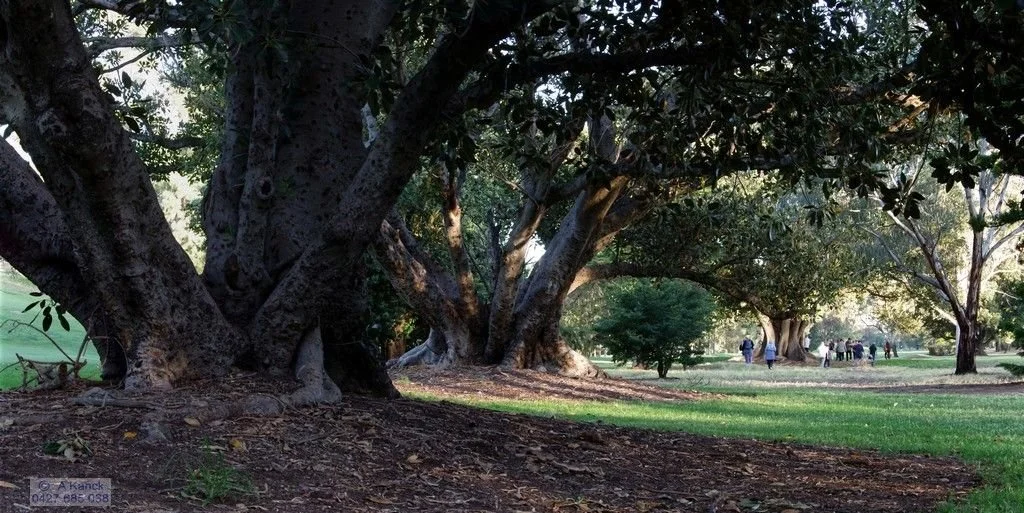
An avenue of Moreton Bay fig trees in Possum Park / Pirltawardli (Park 1). Pic: Asbjorn (Aussie) Kanck
Its thick, glossy green leaves are large and leathery, with a tan underside—a handy clue for identifying it in the field. This detail distinguishes it from its slightly smaller cousin, the Port Jackson fig (Ficus rubiginosa), whose leaves are darker and have a rust-coloured fuzz rather than a smooth surface.
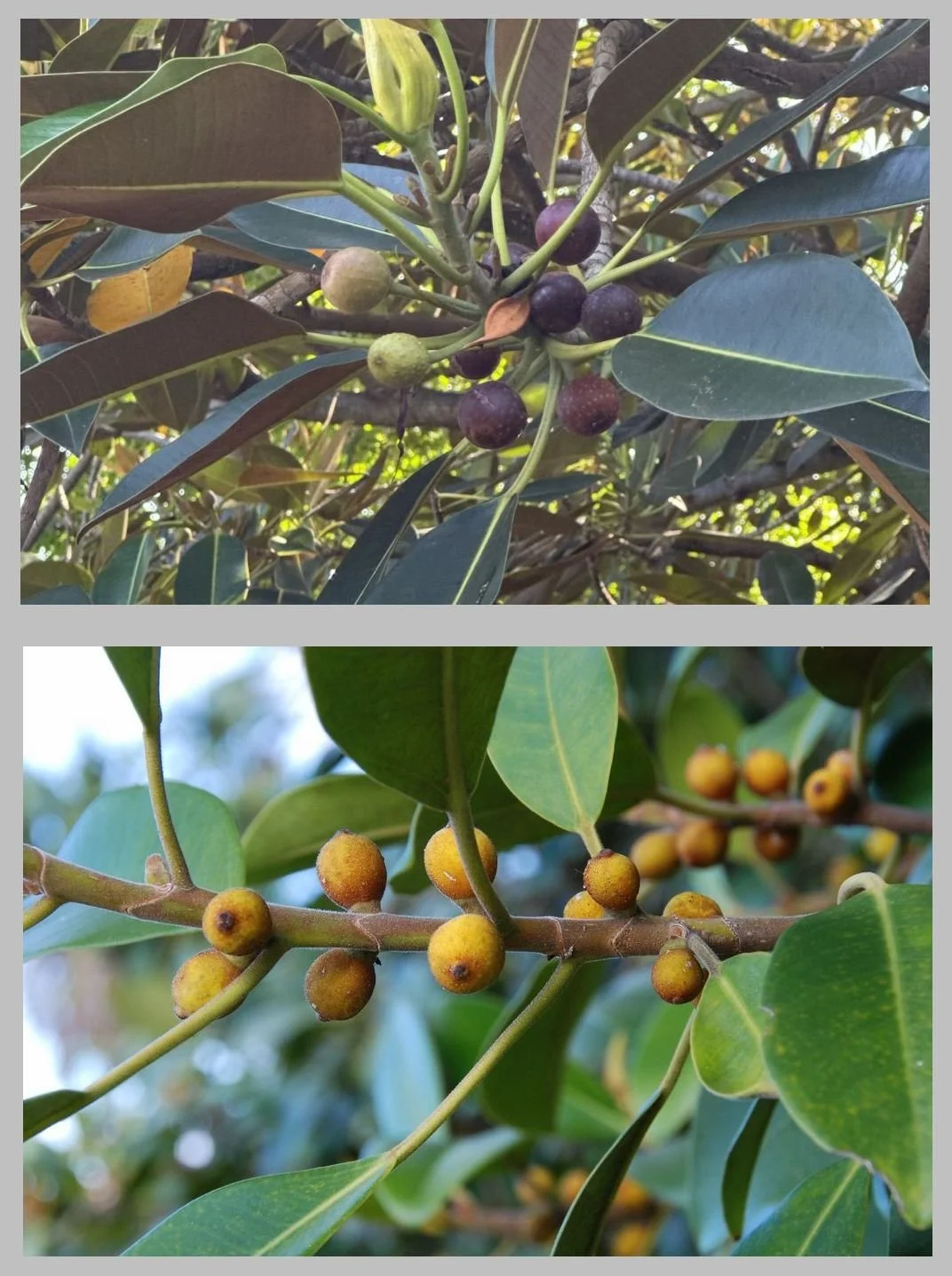
Top: leaves and fruit of the Moreton Bay fig (Ficus macrophylla) Pic: iNaturalist @jbjonesuf
Bottom: leaves and fruit of the Port Jackson fig (Ficus rubiginosa) Pic: iNaturalist @benjamis
Like all figs, the Moreton Bay fig’s fruit has a fascinating life cycle. The small, greenish-purple “figs” appear on the branches and ripen mainly from late summer to early autumn. While they’re not prized as a snack for people due to their somewhat bland and fibrous taste, they’re a feast for birds, Adelaide’s colony of flying foxes, and other animals.
These creatures, in turn, spread the seeds far and wide, helping new generations of figs take root high in the canopy of host trees—a process that sometimes leads them to “strangle” their hosts as their roots descend to the forest floor.
Where to find them?
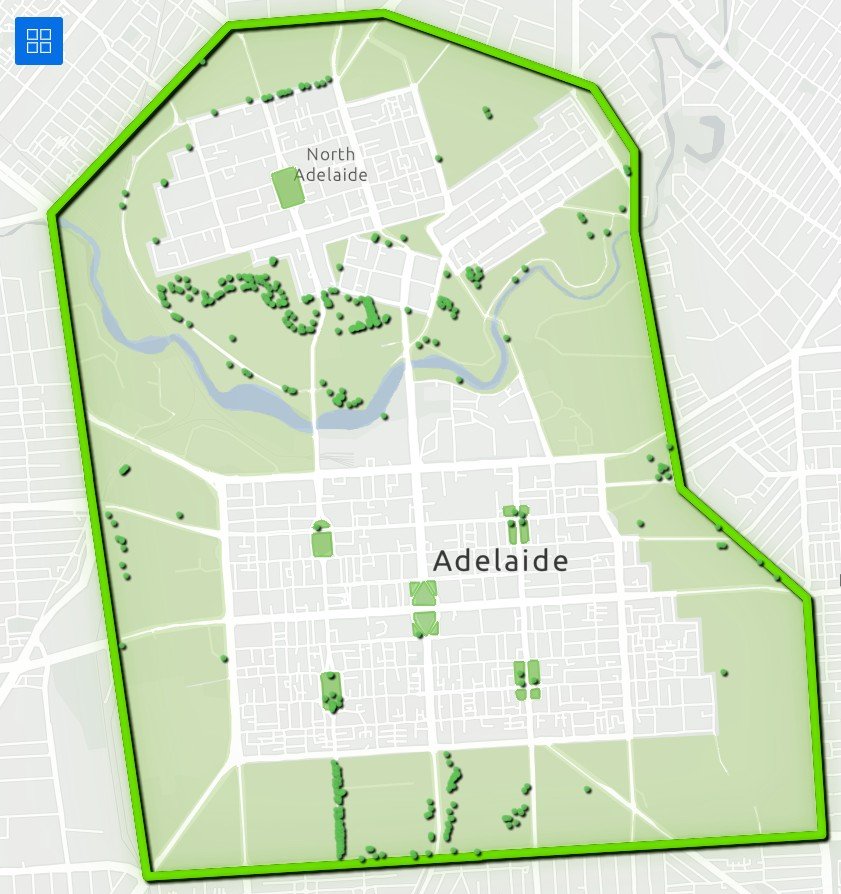
The City of Adelaide tree map pin-points the location of every Moreton Bay fig tree within the City Council-managed parts of your Adelaide Park Lands; i.e. excluding those in Botanic Park.
Your Adelaide Park Lands boast several picturesque avenues of Moreton Bay figs. Many of these graceful giants date back to the 1860s and 1880s, when city planners, inspired by European design, planted them to line carriageways and adorn public spaces.
The most significant collection of Moreton Bay fig trees in your Park Lands might be in Possum Park / Pirltawardli (Park 1) where at least some of these trees are under threat from a State Government proposal to “re-develop” the North Adelaide Golf course.

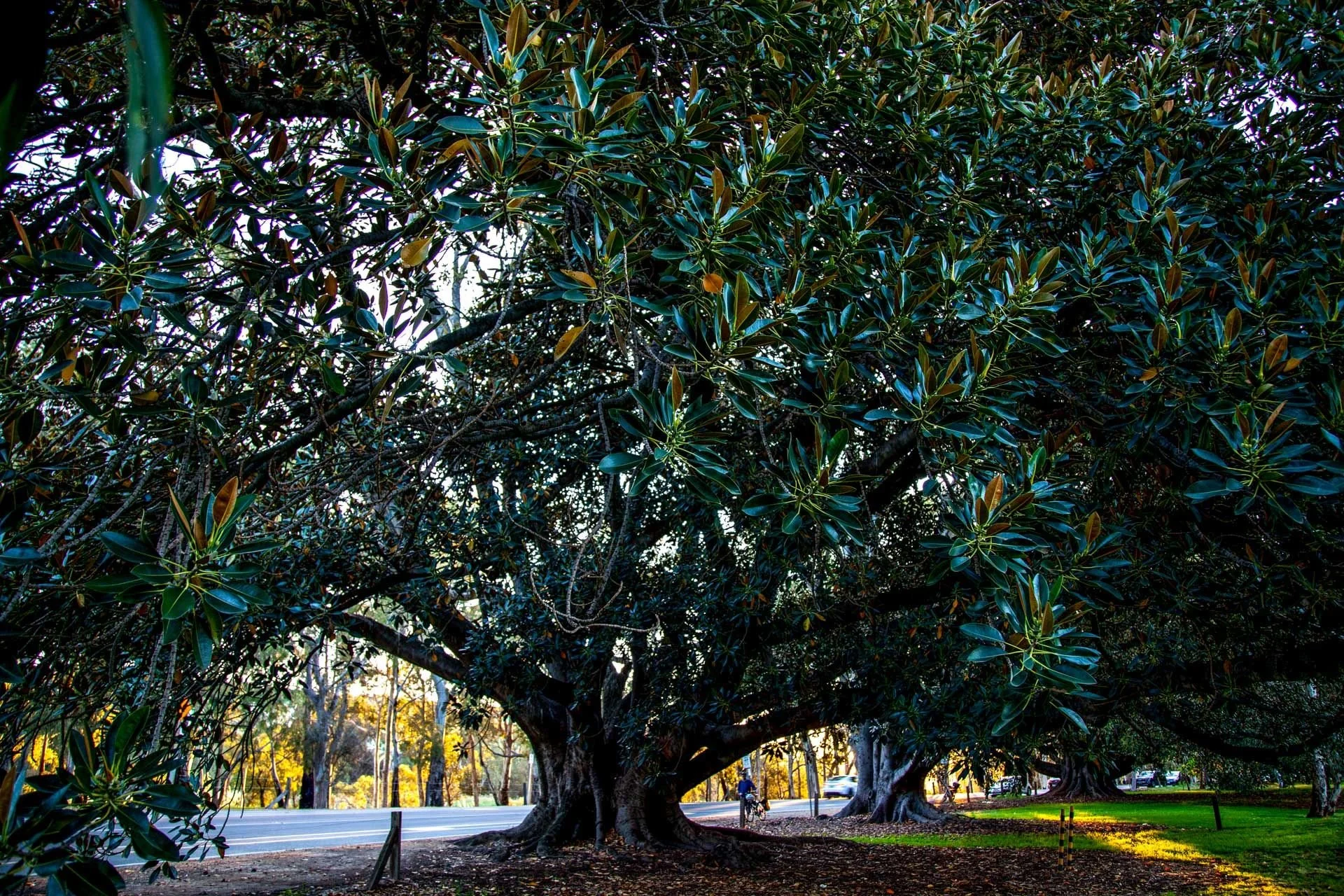
Other magnificent examples can be seen along Plane Tree Drive in Botanic Park and here in Red Gum Park/ Karrawirra (Park 12) where this specimen is believed to have been planted around 1875.
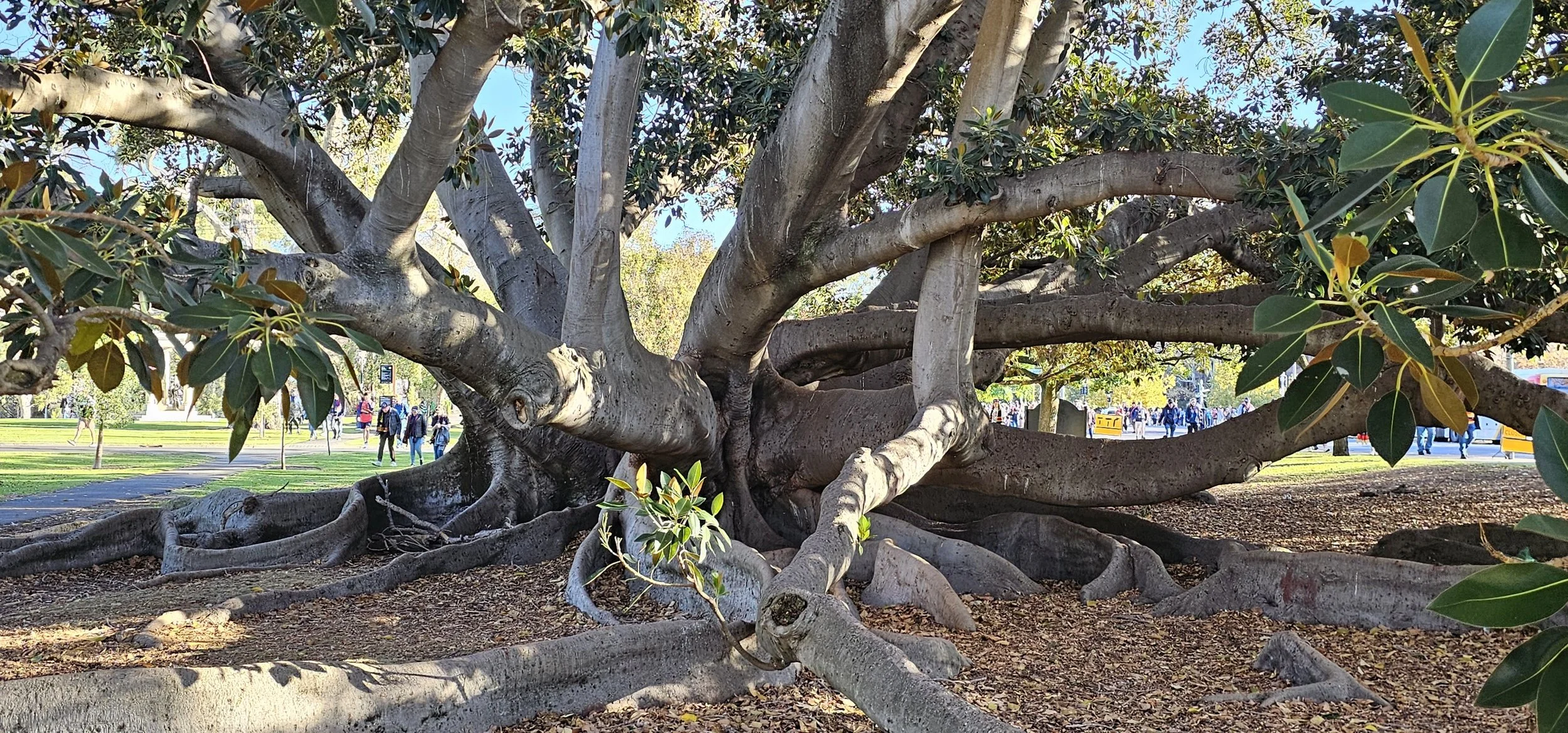
A particularly wide specimen near the corner of War Memorial Drive and Sir Edwin Smith Avenue in Red Gum Park /Karrawirra (Park 12). Pic: Shane Sody
And probably the most famous avenue of Moreton Bay fig trees in your Park Lands would be this one in the Adelaide Botanic Garden, planted in the 1860s.

Probably the oldest surviving avenue of Moreton Bay fig trees in Australia. Pic: Shane Sody
These living monuments remind us just how deeply trees can root themselves in both the soil and the stories of a city—offering shade, history, and wonder in equal measure.
Want to know more about the plants in your Park Lands?
Head over to iNaturalist, where you can record, share, and discuss your findings with fellow naturalists.
See other posts in our series: Know Your Park Lands Plants: https://www.adelaide-parklands.asn.au/know-your-park-lands-plants

