
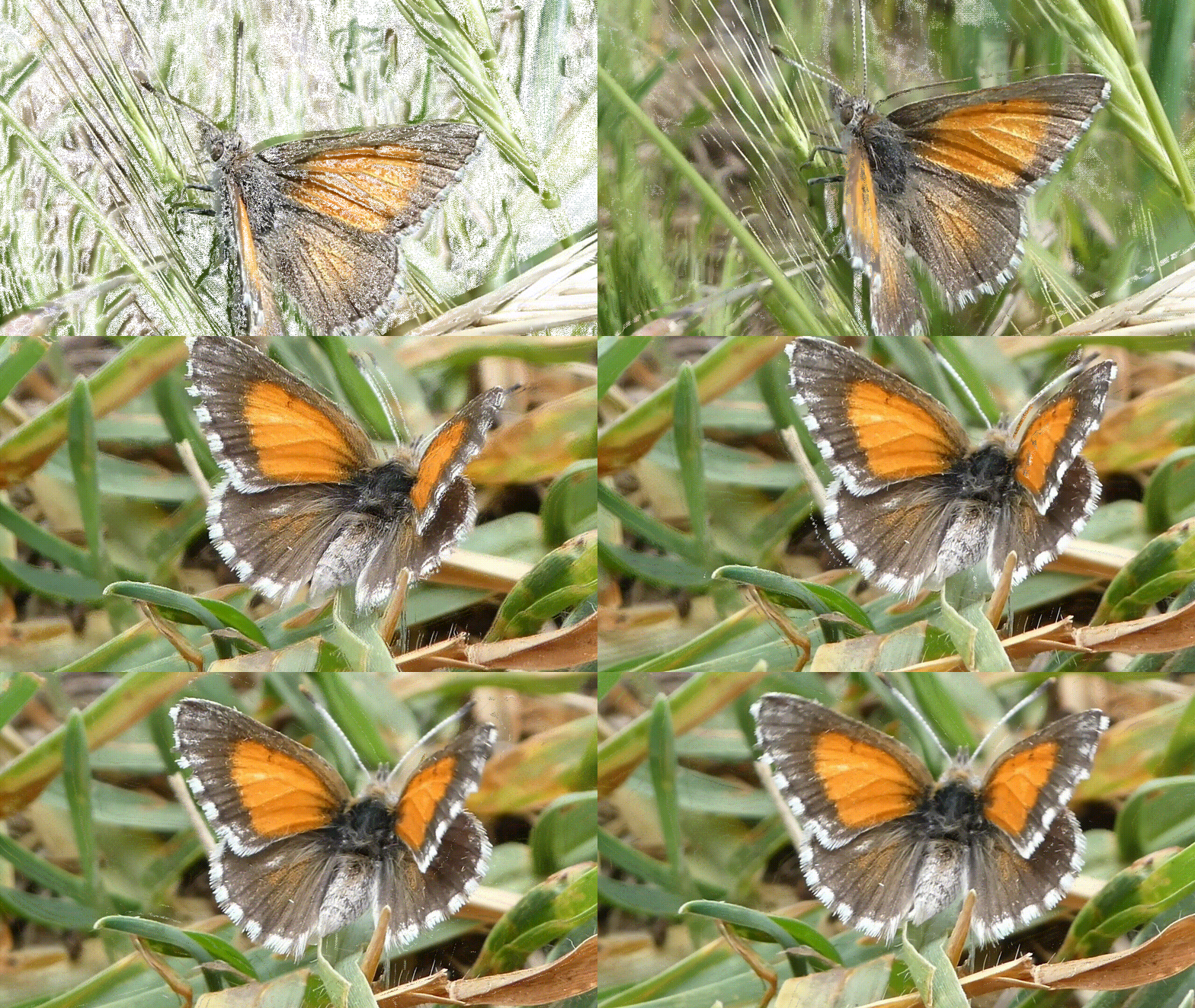
by Jan Forrest and Greg Coote of the Butterfly Conservation Society
The proposed circuit map presented to the media for MotoGP, a motor cycle race through a street circuit in Adelaide, appears to slice right up against the remnant grassland in Victoria Park / Pakapakanthi (Park 16) and its vulnerable colony of the Chequered Copper butterfly (Lucia limbaria).
This is deeply concerning.
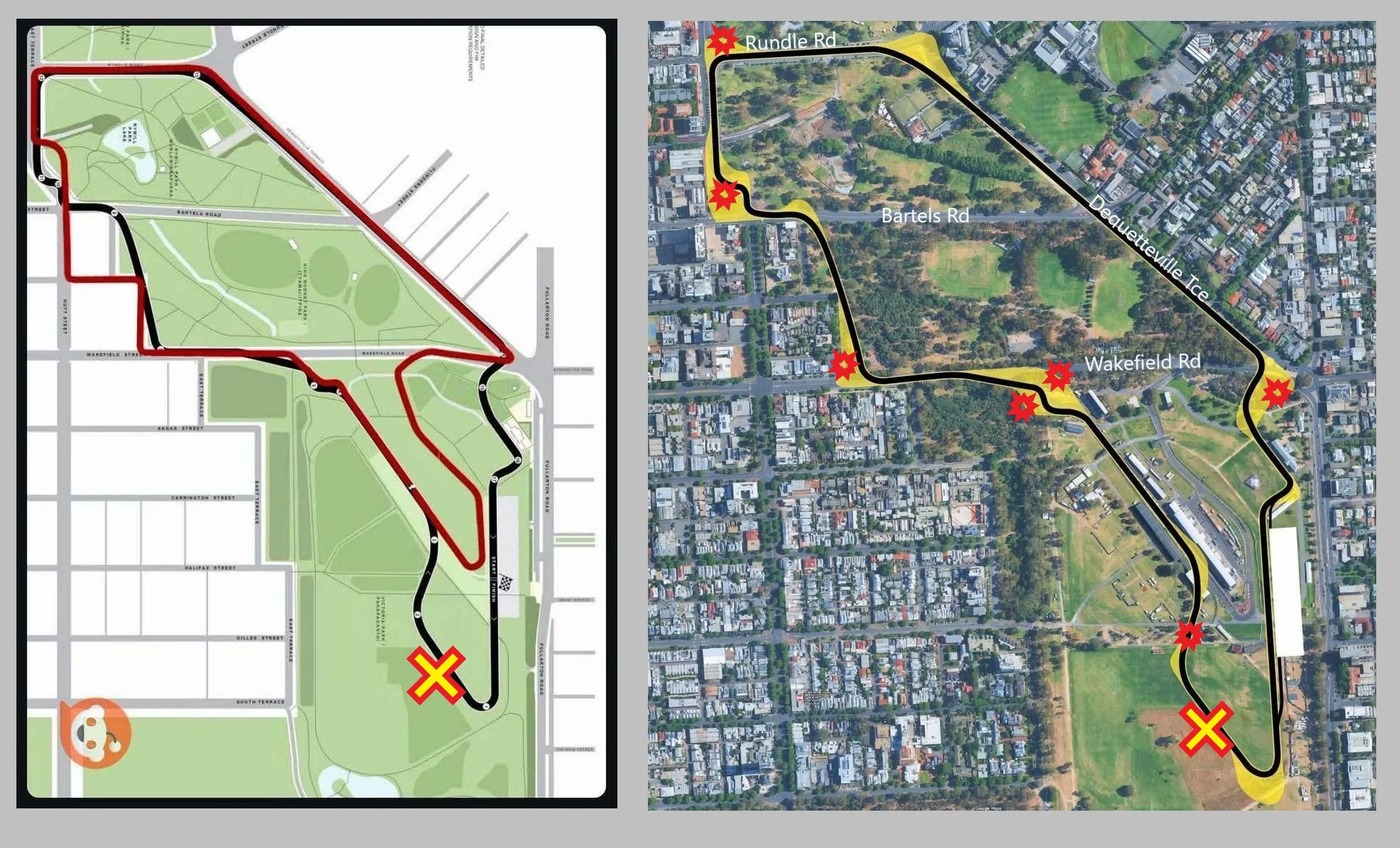
“X” marks the spot where the State Government’s proposed Motorcycle Grand Prix circuit would abut the protected native grassland habitat of the rare Chequered Copper Butterfly in Victoria Park / Pakapakanthi (Park 16). The other red markers, on the right-hand image are locations where significant trees would have to be felled to build the circuit.
Currently only grass can be seen and observers may have no understanding of the importance of native grasslands, the plants, animals and invertebrates that make this a biodiversity hotspot.
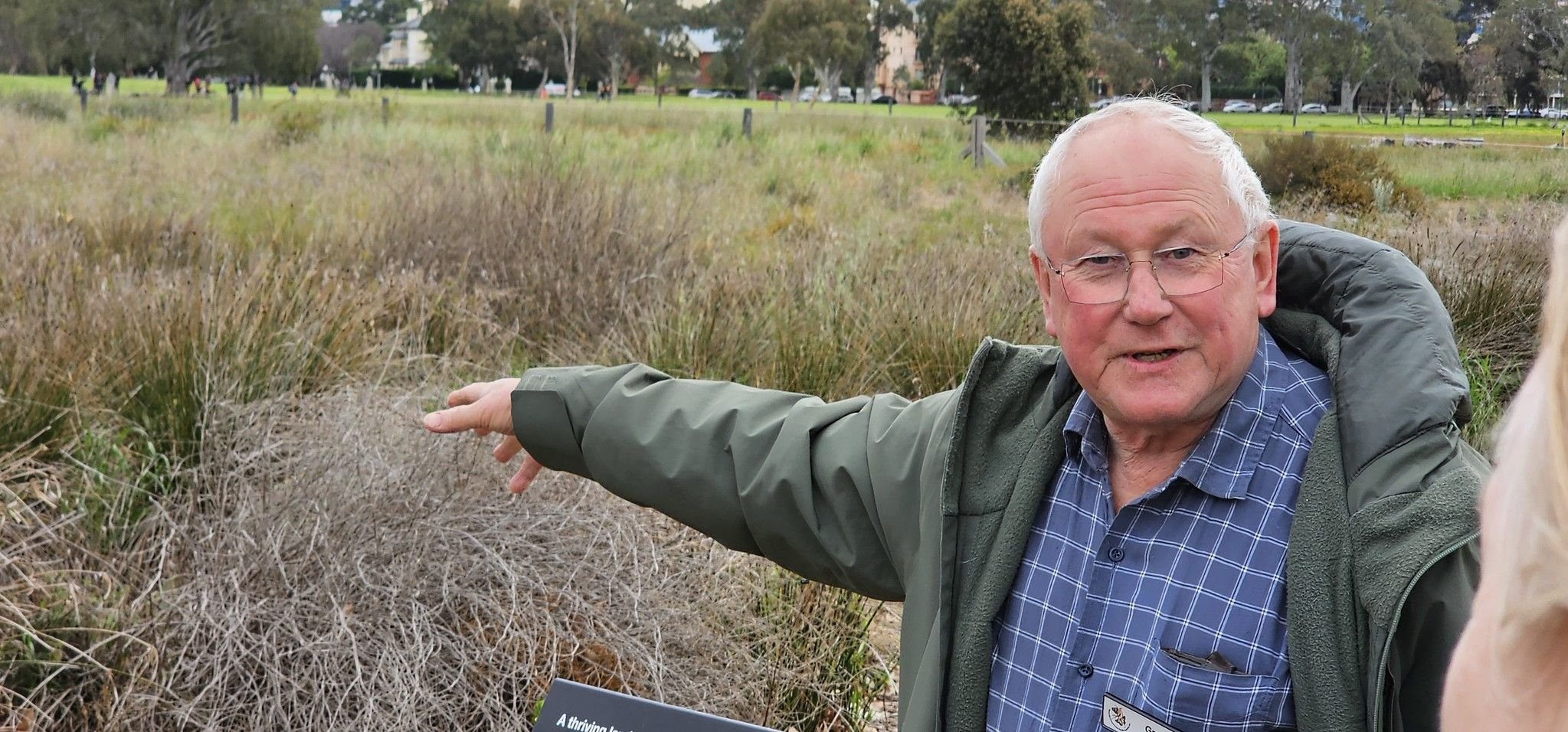
Greg Coote of the Butterfly Conservation Society pointing out the grassland habitat of the Chequered Copper butterfly,
Following rain, the host plants for the Chequered Copper butterfly (Lucia limbaria) grow, and an amazing interaction begins, between ants and caterpillars.
The Chequered Copper butterfly had not been recorded on the Adelaide plains for 60 years when it was re-discovered in Victoria Park in 2011, although it would have been common on the Adelaide plains in pre-European times. This was an exhilarating discovery after many decades.
The motorcycle Grand Prix circuit proposal is being presented as though it is nothing more than an extension to the current Adelaide 500 circuit and merely a return to what existed during the life of the Adelaide Formula One Grand Prix from 1985 to 1995.
In fact, much has changed in the ensuing thirty years. Rather than simply being a broad expanse of irrigated turf, the southern part of Victoria Park / Pakapakanthi (Park 16) has become a showcase for biodiversity management and a refuge for community engagement in an urban environment.
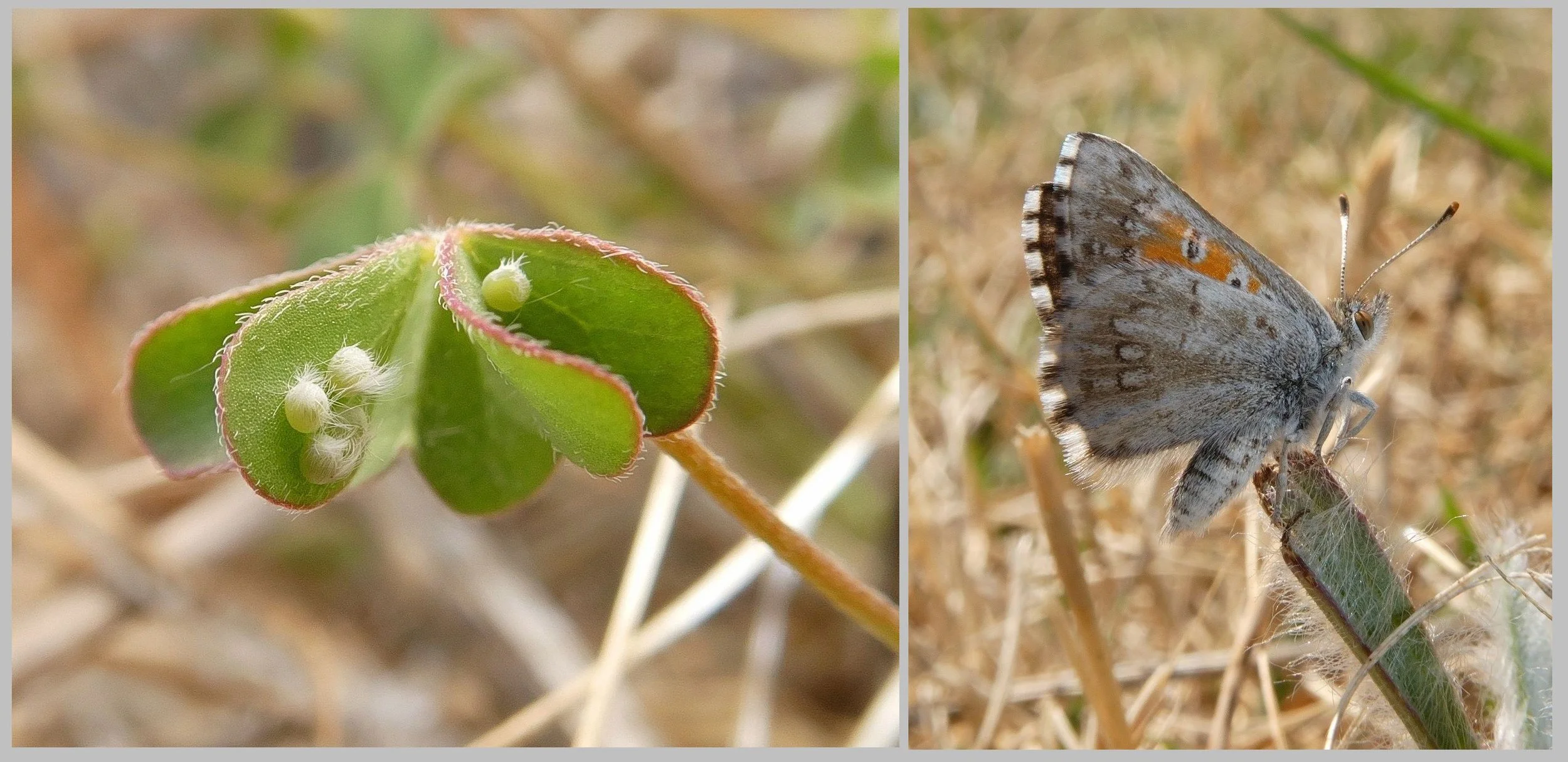
The Chequered Copper butterfly; and its eggs laid on Native Sorrell (Oxalis perennans) in Victoria Park / Pakapakanthi. Pics: Greg Coote.
This important remnant vegetation not only houses this remarkable butterfly colony but also its obligate Rainbow ant (Iridomyrmex rufoniger) and the caterpillar food plant Native Sorrell (Oxalis perennans).
Survival of the Adelaide Copper totally depends on the presence of the ant and the caterpillar foodplant. This species is particularly vulnerable because the caterpillars are reared in the ant’s nest, the ants protect them and in return are rewarded by feeding on ‘honey dew’ from the caterpillar’s dorsal nectary glands.
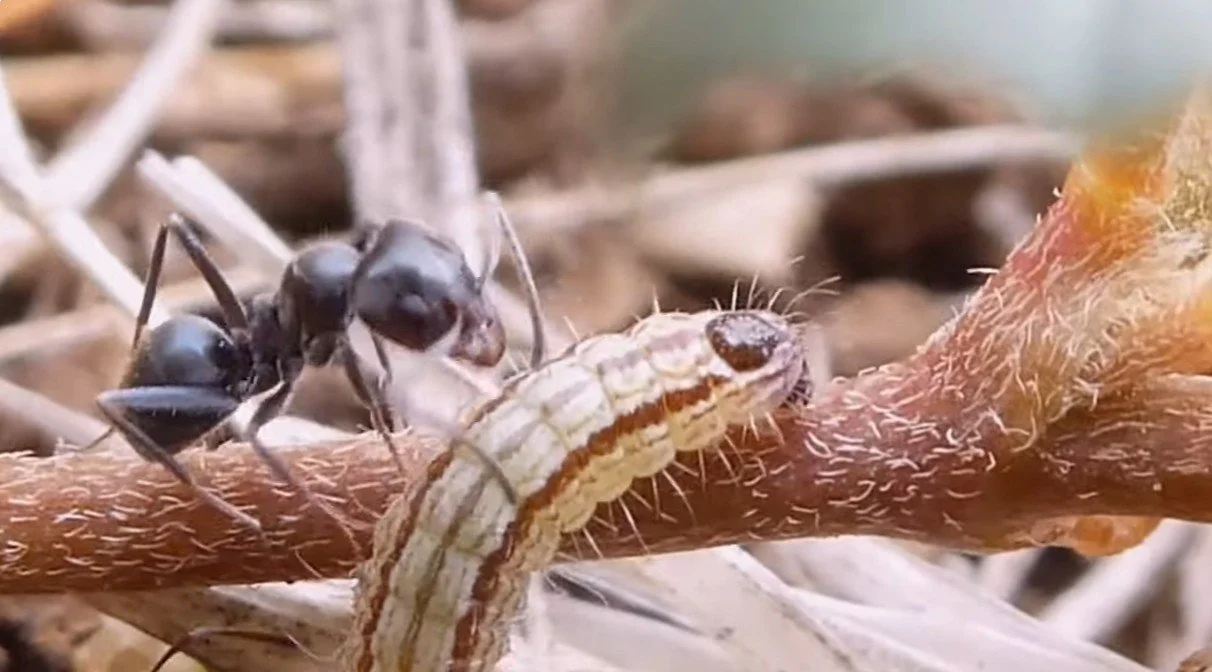
A Rainbow Ant, herding a caterpillar of the Chequered Copper butterfly. Pic: Greg Coote
The butterfly is dependent on this complex interaction between caterpillar, plant and ant.
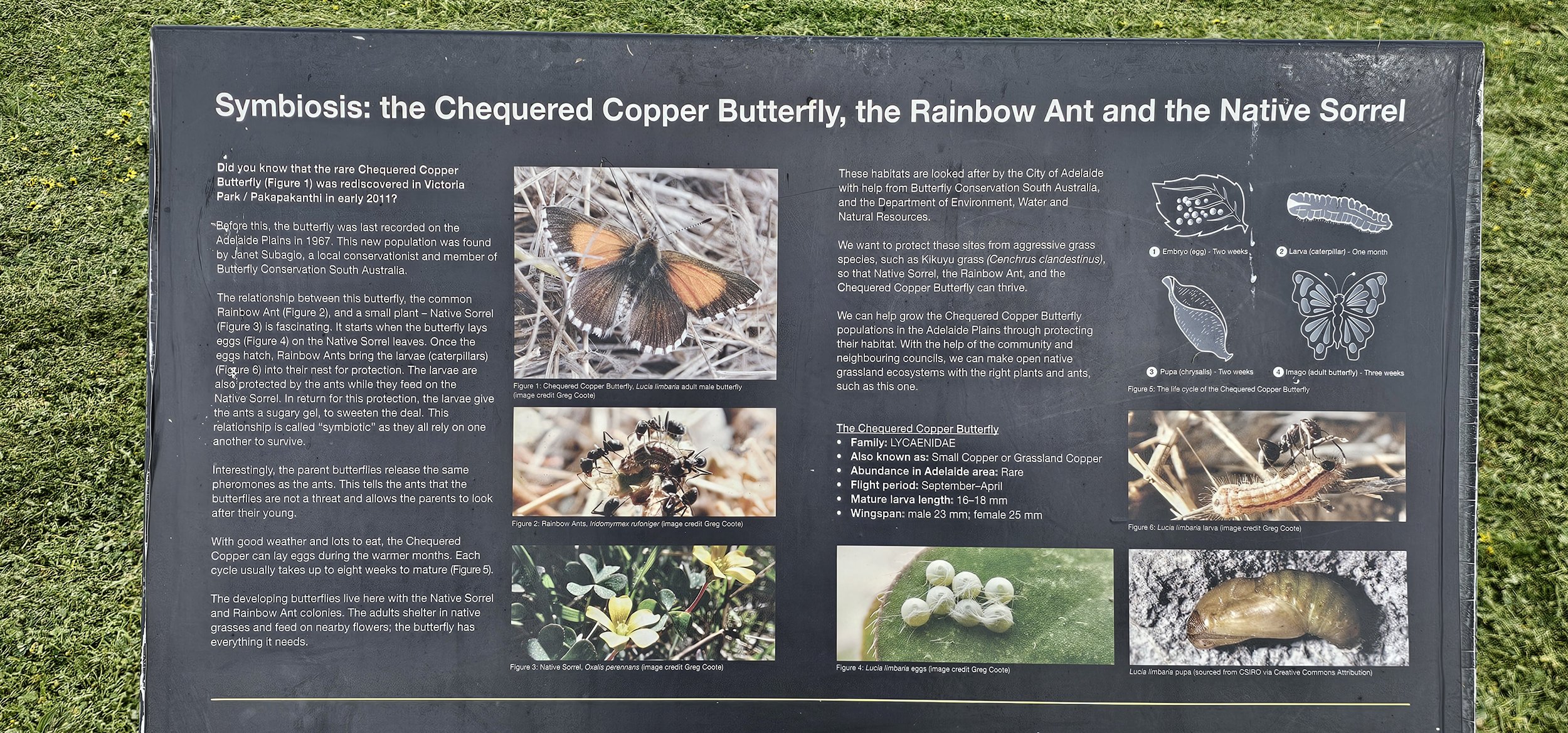
City of Adelaide sign in Victoria Park / Pakapakanthi (Park 16) explaining the life cycle of the Chequered Copper butterfly and its symbiotic relationship with Native Sorrel and the Rainbow Ant.
The host plant is small and low and would have been reasonably common in the past, however, as it is prone to being overcrowded by weeds, it is rarely seen now in areas that do not provide protection such as this site in Pakapakanthi (Park 16).
Because it is home to a range of important habitat plants, Park 16 is visited by other butterflies such as the Common Grass Blue, Meadow Argus, Grass Yellow, and Painted Lady, in addition to other insects.
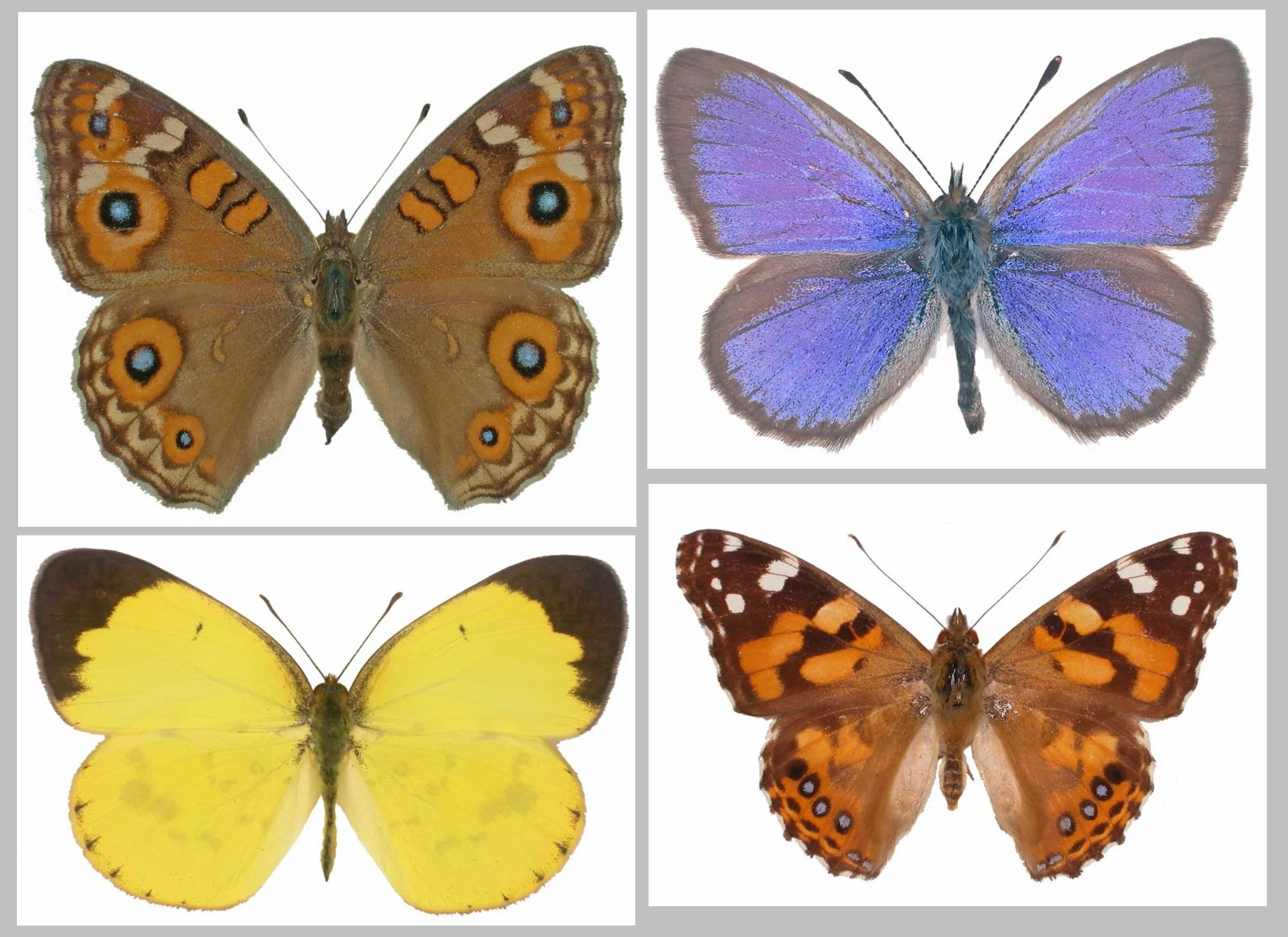
Clockwise from top left: Meadow Argus, Junonia villida calybe; the Grass Blue (Zizena labradus), Painted Lady Vanessa-kershawi; and the Grass Yellow (Eurema smilax). Pics: Trevor Rowe / Roger Grund, Butterfly Conservation SA.
The adjacent wetlands are now a haven for birds and other animals, an environment rich in biodiversity but where disruption by large crowds and excessive noise needs to be carefully managed.
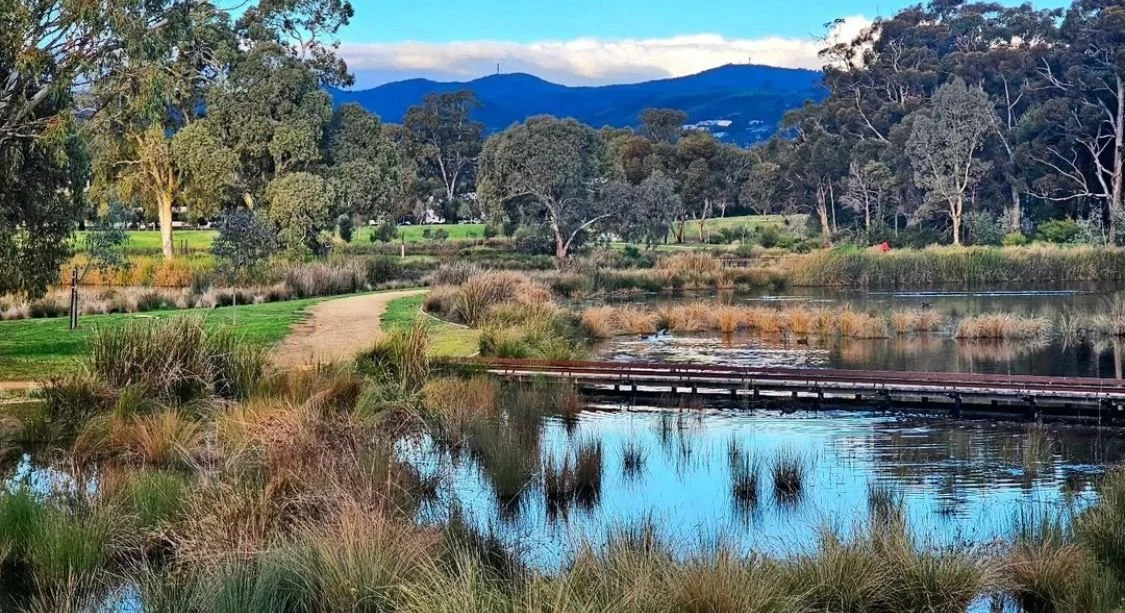
Wetlands, in Victoria Park /Pakapakanthi (Park 16). Pic: @bottlo74
Although the Adelaide Park Lands support three colonies of the Chequered Copper butterfly, this circuit proposal has the potential to decimate our largest, most closely monitored and most valuable site. The species range is throughout the remnant grassland site. The only other reasonably secure site on the Adelaide Plains is on Beaumont Common, where the species was found in 2022.
While our knowledge of other locations of this rarely seen species on the Adelaide plains has improved over the last few years thanks to iNaturalist, Lucia limbaria continues to be locally vulnerable. Most colonies are small and found in suburban areas on road verges, house blocks and small parks and localities interstate.
This species’ remarkable symbiotic story has been the subject of the play and VR experience Herding Caterpillars, first performed during the 2022 Nature Festival then during a butterfly festival at the Adelaide Botanic Gardens in 2024, and now hundreds of children and their parents experience this VR experience during Science Week at the Adelaide Showgrounds every year.
Given the local vulnerability of this butterfly, its host plants and obligatory ants, this government decision to potentially destroy its habitat and not make provision for a wide buffer around the remnant grasslands makes us deeply concerned.
Butterfly Conservation SA has written to the Premier to seek assurances from the Government that the remnant grassland and Chequered Copper butterfly will be protected.
We encourage our readers to do the same.
View the remarkable story of Adelaide’s Chequered Copper Butterfly (Lucia limbaria) on YouTube:
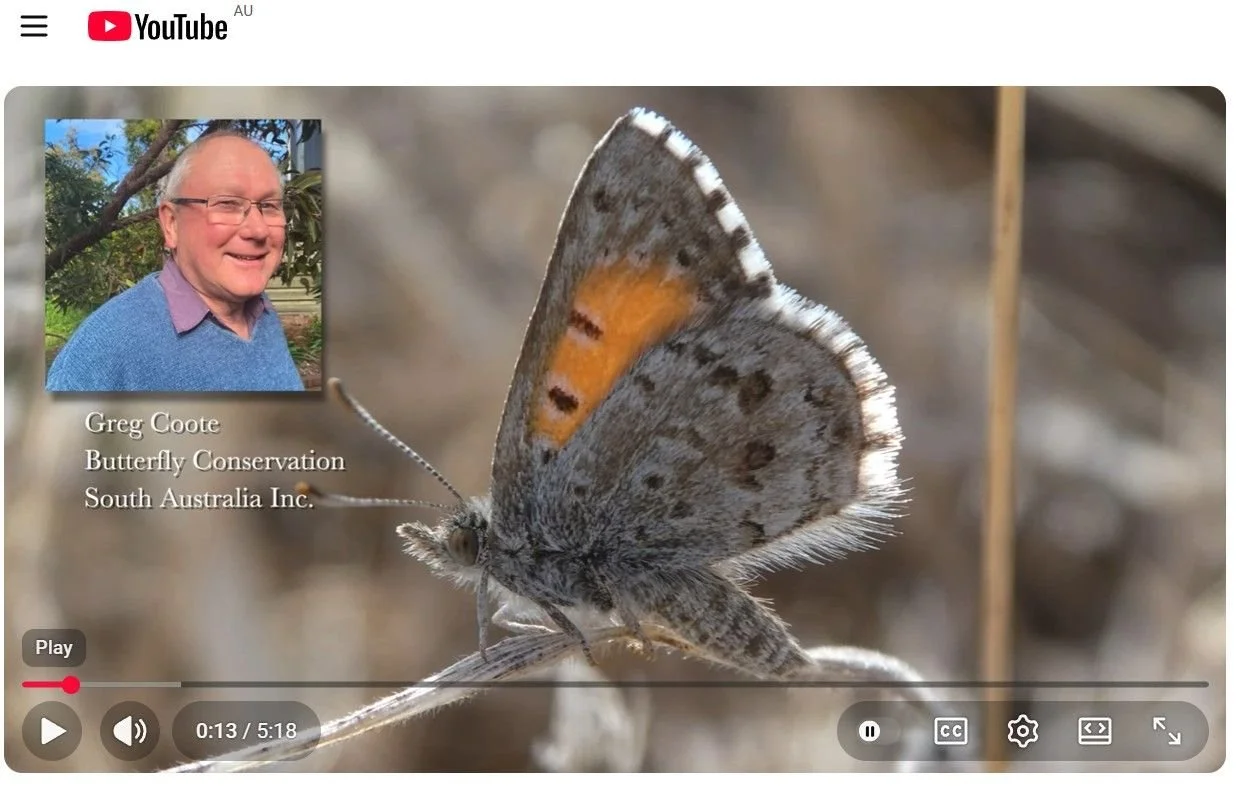
Watch here: https://www.youtube.com/watch?v=b0bQUO_jcvc
The proximity of the colony to the track raises significant concerns. From the map provided to the media the remnant grasslands and colony shows the area appears close enough to the track to accommodate grandstands as well as people moving around behind those stands, amenities and construction.
In this circumstance the colony will not survive.
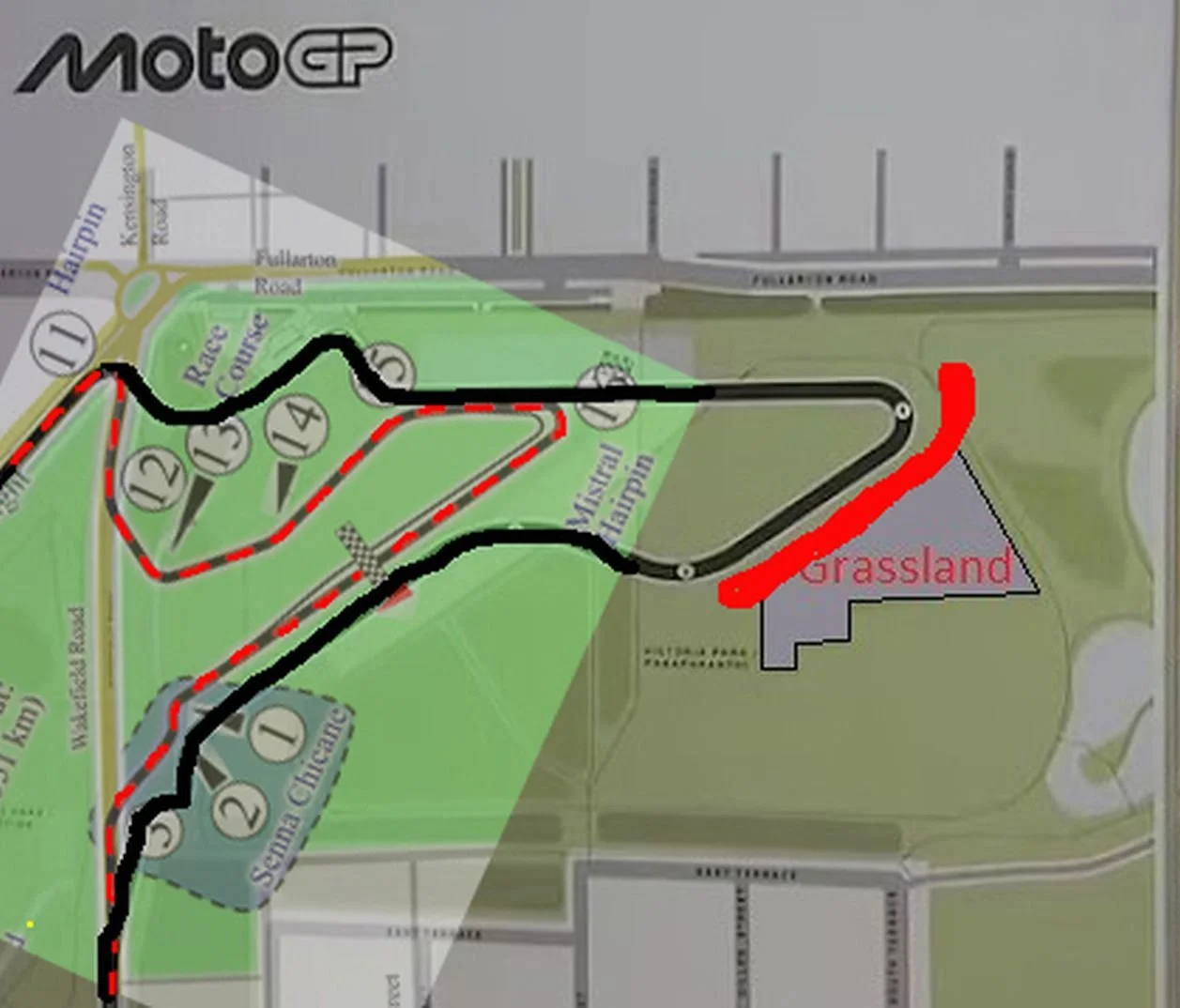
The overlay (in green) of the 1985 - 95 Formula 1’s Australian Grand Prix Track (in red and black) demonstrates just how much further south this MotoGP track will impinge into the park. It will potentially wipe out this thiving healthy butterfly colony which is one of only four ‘secure’ colonies on the Adelaide plains. The red strip indicates where potentially grandstands and other infrastructure could be placed around the proposed track.
We seek an assurance from the Government that the colony will not be impacted and if so, can the southern part of the track be re-aligned?
This butterfly has survived since colonisation and the site is one of only four known ‘protected’ colonies on the Adelaide plains. It is healthy, and has been so since it was re-discovered on the Adelaide plains in 2011.
A longer version of this article first appeared in the Butterfly Conservation SA newsletter.
Additional images have been inserted by the Adelaide Park Lands Association.

