
By David Winderlich
“MotoGP has not raced on a street circuit since 1982, and the reason for that was that riders kept dying.” — Andrew McLarney, MotoGP reporter for GPBlog.
Back in 1982, when the Premier was two, the last urban Grand Prix on a street track was held at the Imatra Circuit in Finland. The hard surfaces, kerbing, and close obstacles of street circuits were deemed far too dangerous for the “dinky little” 500cc two-stroke motorbikes that reached top speeds of 270 to 280 km/h.
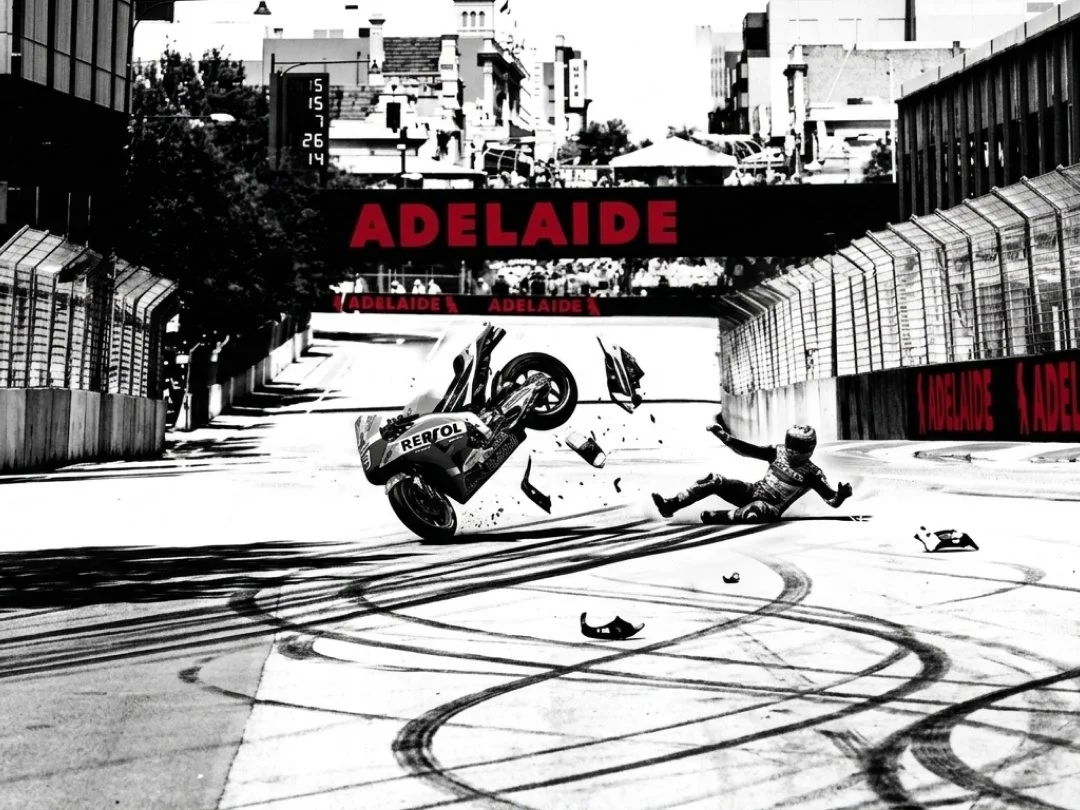
Writing for GPBlog in an article titled No One Wants This, reporter Andrew McLarney noted that the sport abandoned street tracks precisely because of the fatal risks to riders. Yet, plans for a 2027 Adelaide street circuit would launch riders—protected by nothing more than leathers and helmets—around city streets on high-performance machines reaching speeds of more than 360 km/h.
The safety issue, which has been a sleeper to date, may be turning into one of the major drivers of this process. In February, the Premier claimed only 45 trees would be removed. By June, the Adelaide City Council estimated that up to 200 trees could be lost. By August, a leaked map suggested the potential destruction of hundreds more.
Industry insiders have voiced serious safety concerns from the beginning. Freelance MotoGP journalist Simon Patterson told the ABC that there were “valid and justified concerns about safety” for an Adelaide street track, emphasising that "massive changes" would be required compared to designs used for Formula 1 or Supercars. He added: “This is something that we've been trying to move away from, and I think there's going to be an awful lot of scepticism about the success of this event until we see something that looks an awful lot more concrete.”
Motorcycle racing show SPEED also dedicated an episode to the proposal, asking: “Is MotoGP’s Adelaide Street Circuit Too Dangerous for Riders?” Presenters pointed out that MotoGP’s commercial owners are applying the same playbook used for Formula 1: bringing races into city centres to drive crowd engagement and revenue. However, unlike motorcycle riders, F1 drivers are enclosed in rigid carbon-fibre safety cells, held by six-point harnesses, and surrounded by engineered crash structures.
Bob Barnard, designer of the original Adelaide F1 circuit, echoed these concerns in an open letter to the motorsport industry. Speaking to the ABC, Barnard noted that the circuit layout would require drastic alterations to satisfy motorcycle safety standards.
“Look at the Albert Park area and see the vast expanses of gravel traps that are needed for a Formula One race," Barnard said. "Imagine someone on a motorcycle doing 200 miles an hour outside of their vehicle, not nicely strapped inside. You're dealing with a totally different problem, and this is not going to be easy.”
Bob Barnard thinks that the only way to make it work is to cut down lots of trees and spend north of $100m. A high price on two fronts.
It is becoming apparent that we are witnessing a series of interlinked dilemmas.
Significant sections of the industry have grave misgivings about safety but they are being driven by a powerful investor. The Premier faces a political revolt, but he is, presumably, being driven by sunk costs and the, admittedly fading, promise of positive photo ops. And the issue of safety itself is finely balanced. At the moment it is driving the forces of destruction but if the rules of the International Motorcycling Federation about rider and track safety came into play, momentum could swing back in favour of the Park Lands.
It must be getting tense in the State Administration Centre.
David Winderlich is the Executive Officer with Adelaide Park Lands Association

